




















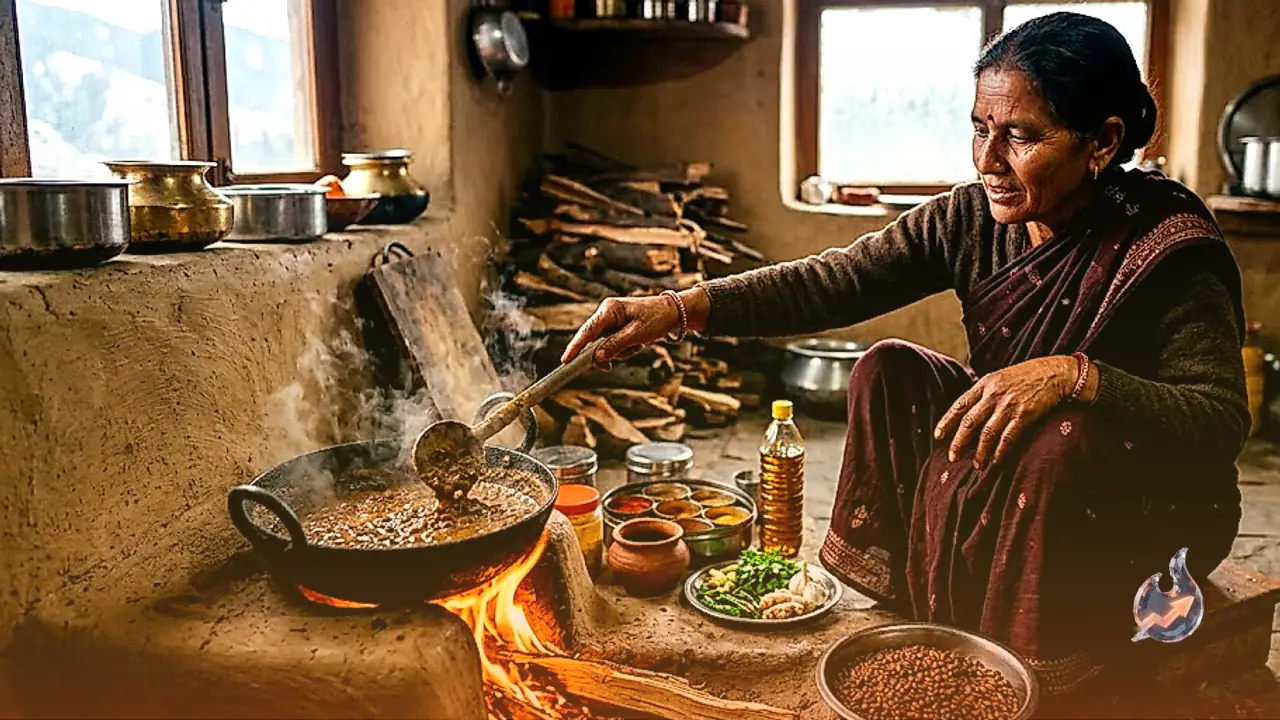

Uttarakhand's mountainous terrain is home to a rich variety of culinary traditions that are deeply intertwined with the local climate and agrarian lifestyle. Among these rustic preparations, Kulath dal, also widely known as Gahat dal, stands out as a comforting staple. Primarily consumed during the chilly winter months, this legume is prized for its earthy flavor profile and its ability to keep the body warm. Made using simple ingredients, it represents the heart of mountain cooking.
Understanding Gahat Dal and Pre-cooking Preparation
Kulath is a unique variety of legume characterized by its dark, deep coloration compared to everyday lentils. It carries a distinct, mildly earthy taste that reflects the soil of the Himalayan foothills. In local households across the hills, this dal is cooked in a straightforward manner and served alongside steamed rice or local flatbreads. Beyond the standard dal preparation, locals also use it to make other regional delicacies like Gahat ka Phanu, thick stews, and stuffed Gahat parathas.
To begin the cooking process, proper preparation of the raw legume is essential. You must first wash the Kulath grains thoroughly under running water to remove any dust or impurities. Once cleaned, submerge the dal in water and allow it to soak for about 6 to 8 hours, or ideally overnight. Soaking is a critical step because it softens the tough outer skin of the horse gram, ensuring it cooks evenly and quickly.
Boiling the Soaked Lentils to Perfection
After the soaking period, drain the excess water and transfer the softened dal into a pressure cooker. Add approximately 3 cups of fresh water into the cooker. To season it during the boiling process, stir in a pinch of turmeric powder and a moderate amount of salt. Secure the lid of the pressure cooker and place it over medium heat. Allow the dal to cook thoroughly until the grains are completely soft. Once the steam releases, open the cooker and use a ladle to gently mash the boiled lentils. Mashing some of the grains helps release their starch, giving the dal a rich, thick, and velvety consistency.
Crafting the Aromatic Tempering
The soul of this dish lies in its simple yet aromatic tempering. Heat a generous splash of mustard oil in a heavy-bottomed pan or kadhai until it reaches its smoking point, which is traditional for mountain cooking. Add cumin seeds to the hot oil and let them splutter. Immediately add finely chopped garlic, slit green chilies, and chopped onions to the pan. Sauté these ingredients patiently until the onions turn a beautiful golden brown. Next, add chopped tomatoes, red chili powder, and coriander powder to the mixture. Cook this masala base on medium-low heat until the tomatoes turn soft and mushy, and the oil begins to separate from the spice paste.
Simmering the Dal and Serving Suggestions
Once the spiced masala base is fully cooked, pour the boiled and lightly mashed Kulath dal into the pan. Stir the mixture gently to combine the spices with the lentils. Depending on your desired consistency, you can adjust the gravy by adding a little water. Bring the mixture to a gentle simmer and let it cook on low heat for about 5 to 10 minutes. This slow simmering allows the lentils to absorb the deep spices and aromatic oils. Turn off the heat and garnish the dish with a handful of fresh, finely chopped coriander leaves. Serve this steaming hot Gahat dal alongside fluffy steamed white rice, traditional Mandua (finger millet) roti, or regular wheat flatbreads for an authentic mountain dining experience.


