

















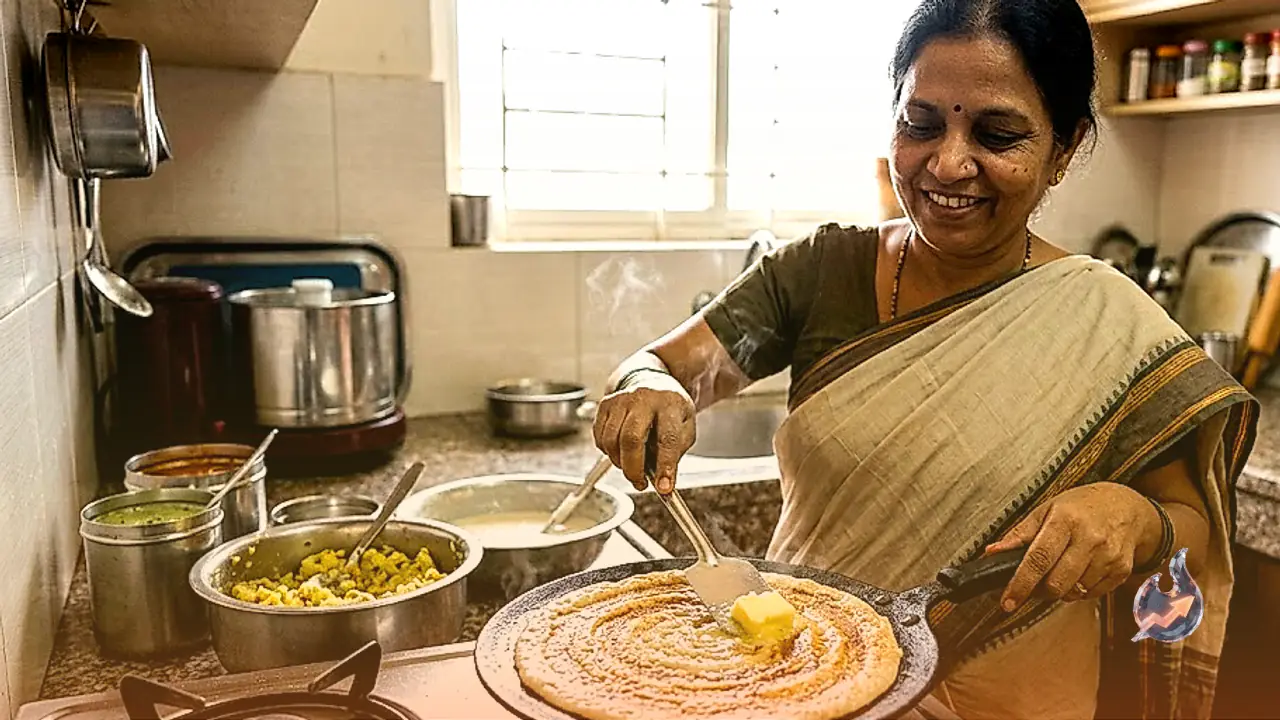

South Indian culinary traditions are incomplete without mentioning dosas, but if you want to step away from the ordinary and try a distinct flavor, Karnataka's famous Benne Dosa is worth exploring. The word "benne" translates to butter in Kannada, which is why this specialty is widely known as butter dosa. This culinary creation boasts a golden and crispy exterior while maintaining an exceptionally soft and spongy texture on the inside. Its defining traits lie in its unique batter composition and the generous use of butter or ghee during the cooking process.
Originating from the city of Davanagere in Karnataka, Benne Dosa has been gaining immense popularity across the country. It is traditionally served alongside coconut chutney, tomato chutney, chili-garlic chutney, and an extra dollop of butter. Achieving the right fermentation and using the proper griddle are considered the ultimate secrets behind its signature taste. If you wish to recreate a restaurant-quality Benne Dosa in your own kitchen, following the correct preparation steps will yield the best results.
What Makes Benne Dosa Special
While a standard dosa batter typically relies on regular rice, urad dal, and fenugreek seeds, Benne Dosa calls for a different blend. Its ingredients include idli rice, urad dal, fenugreek seeds, poha, and chana dal. The inclusion of poha gives the dosa its characteristic spongy texture, whereas the chana dal assists in imparting an attractive golden hue when cooked.
To begin the preparation, thoroughly wash the idli rice, urad dal, fenugreek seeds, poha, and chana dal. Soak all these ingredients in water for 6 to 8 hours or leave them submerged overnight. Afterward, grind them together with a small amount of water to achieve the desired consistency. The batter should neither be overly thin nor excessively thick. Once ground, mix in salt and let the batter ferment for 6 to 8 hours. Warmer weather conditions accelerate the fermentation process naturally.
Tips for Making the Perfect Benne Dosa
Once the fermentation is complete, check the consistency of the batter. If necessary, add a little water to achieve a smooth, pourable flow. Always use a cast iron griddle for cooking this dosa. When the griddle is hot, sprinkle a little water on it and wipe it clean with a cloth. Avoid applying cooking oil to the surface.
Ladle a portion of the batter onto the griddle and spread it slightly thick and circular. Pour a generous quantity of ghee or butter over and around the edges. Cook the dosa on high heat until the base turns golden brown and crispy. There is no need to flip it over. Once ready, fold the dosa and serve it piping hot.
Any leftover batter can be stored in the refrigerator and used throughout the week. However, it is important to take the batter out of the fridge at least 30 minutes before you plan to make dosas, allowing it to return to room temperature.