






















A cornerstone of South Indian culinary tradition, sambar has earned a celebrated spot on dining tables everywhere. Whether paired with soft idlis, crisp dosas, crispy medu vadas, or a mound of steamed rice, its distinct harmony of tangy tamarind and robust spices elevates any meal. Beyond its mouthwatering profile, this dish serves as a nutritious powerhouse, seamlessly combining protein-packed lentils with wholesome vegetables. Recreating the thick texture and deep aroma of restaurant sambar at home is entirely achievable when you follow the right sequence of cooking and seasoning.
Prepping the Lentils and Tamarind Base
The texture of authentic sambar relies heavily on how well the lentil base is prepared. Begin by rinsing toor dal thoroughly under clean water, then let it soak for roughly 20 to 30 minutes. Soaking softens the pulses and guarantees even tenderness. Transfer the soaked dal into a pressure cooker along with turmeric and approximately 3 cups of water. Seal the lid and allow it to cook over medium heat for 4 to 5 whistles. Once the pressure releases naturally, open the cooker and mash the cooked lentils thoroughly until they reach a completely smooth consistency. Meanwhile, place tamarind in lukewarm water for 15 minutes to soften, then squeeze and extract its thick extract for that signature sour undertone.
Simmering the Vegetables and Infusing Spices
To give the dish substance and vibrant color, take a deep cooking pot and combine chopped drumsticks, carrots, eggplant, onions, and tomatoes with a modest amount of water. Cook these vegetables on medium flame for around 10 minutes until they become tender but retain their shape. As soon as the vegetables reach the right softness, stir in sambar powder, red chili powder, and salt. Blend the spices thoroughly with the simmering vegetables, giving them a few minutes to absorb the deep earthy seasoning before adding the liquids.
Blending the Broth and Developing Deep Flavors
Once the vegetable and spice base is ready, pour the smoothly mashed toor dal and the strained tamarind water directly into the pot. Adjust the consistency with extra water if the stew appears overly dense. Bring the entire pot to a gentle boil and let it simmer over medium heat for 10 to 15 minutes. This slow cooking phase is vital, as it allows the sourness of the tamarind, the heat of the chili, the sweetness of the vegetables, and the creaminess of the lentils to meld into a rich, cohesive gravy.
The Final Tempering and Essential Culinary Tips
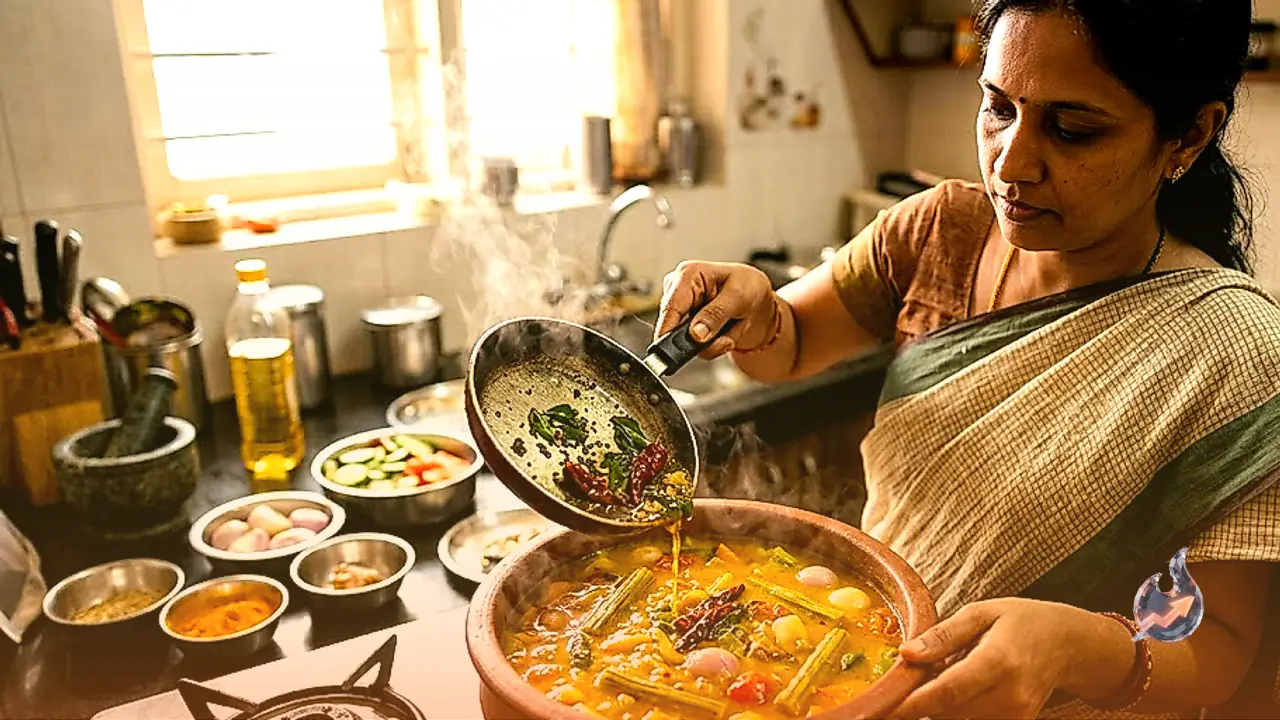
The final touch that defines authentic sambar is its aromatic tadka. Heat a small amount of cooking oil or pure ghee in a small pan. Add mustard seeds and wait for them to crackle and pop. Immediately follow with fresh curry leaves, whole dried red chilies, and a pinch of asafoetida, sauteing them for just a few seconds until fragrant. Pour this sizzling spice blend directly over the hot sambar and cover the pot immediately with a lid, trapping the flavorful steam inside so the dish absorbs the essence completely.
To guarantee the best results every time, keep a few golden rules in mind. Always balance the tamarind proportion carefully, as an excess of sourness can overwhelm the delicate balance of spices. Using freshly ground sambar powder delivers a markedly fresher aroma compared to older packets. Incorporating vegetables like drumsticks and pumpkin enhances the natural depth of the broth. Finally, ensure the tempering is applied at the very end of cooking, locking in that invigorating fragrance right up to the moment it is served.