


















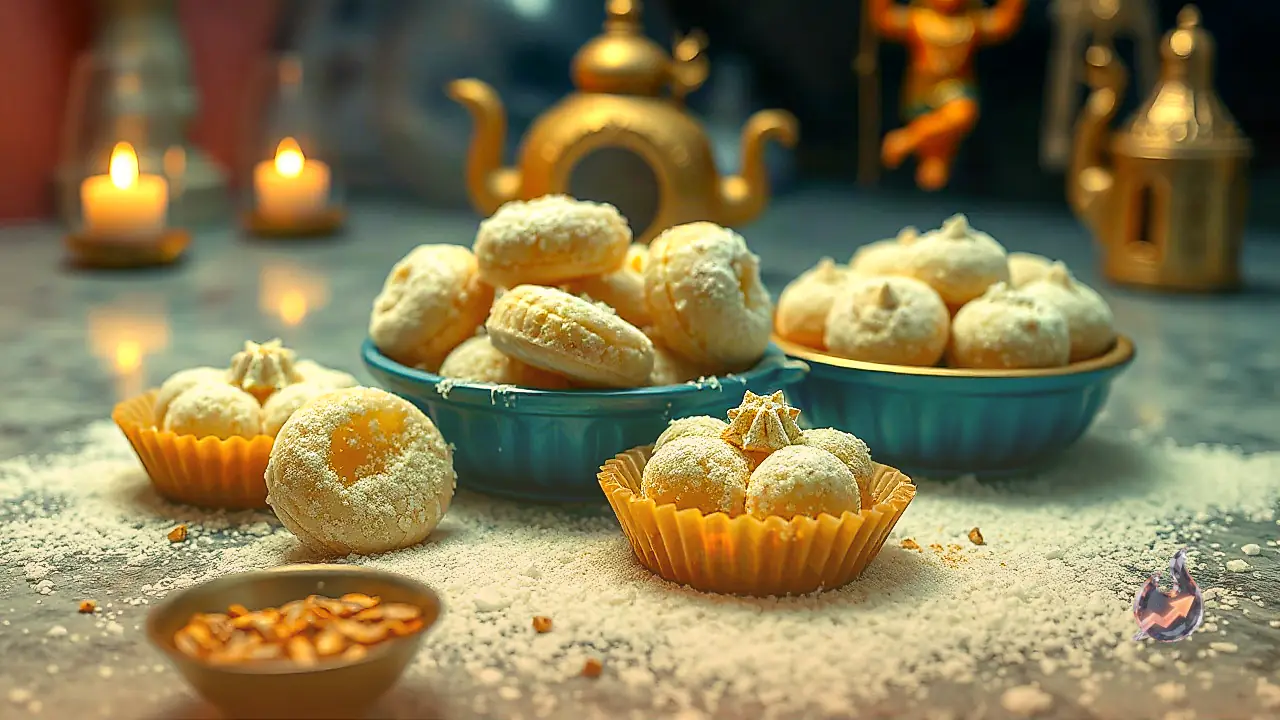

On the auspicious festival of Krishna Janmashtami, temples and households prepare an array of special delicacies to offer as bhog to Lord Shri Krishna. While markets are flooded with a variety of sweets during the festive season, concerns over adulteration prompt many devotees to prepare pure offerings at home. Among the iconic sweets associated with Lord Kanha, Mathura Peda holds a premier position. Renowned worldwide for its rich caramelized aroma, deep golden hue, and distinct flavor, this sweet traditionally demands hours of meticulous preparation. The classic recipe requires continuous stirring and reduction of mawa over a flame. However, using a smart technique with milk powder, authentic halwai style Mathura Peda can be prepared at home in just 15 minutes.
Required Ingredients and Exact Quantities
To achieve the traditional taste and melt-in-the-mouth texture, precise measurement of all ingredients is essential. Gather the following items before starting this 15-minute secret recipe
- Milk Powder: 2 cups (serves as the quick mawa base)
- Milk: As required (lukewarm milk to dissolve the mixture)
- Desi Ghee: 4 tablespoons (for rich roasting of the mawa)
- Tagar or Bura Sugar: 1 cup (provides traditional granular sweetness)
- Green Cardamom Powder: 1 teaspoon (freshly ground for aromatic fragrance)
- Nutmeg Powder: 1 pinch (adds the signature Mathura flavor)
- Saffron Milk: 2 tablespoons (saffron strands pre-soaked in warm milk)
Step-by-Step Method to Prepare Instant Mawa
Begin the preparation by placing a heavy-bottom pan over low heat to prevent the ingredients from scorching. Melt 4 tablespoons of desi ghee in the pan, then pour in the lukewarm milk and whisk until combined. While maintaining a low flame, gradually add 2 cups of milk powder in small portions. Continuous whisking is critical during this stage to ensure no lumps are formed. Within just 2 to 3 minutes, the milk powder absorbs the liquid, transforming into a thick, smooth, and creamy mawa base.
Roasting Technique for the Signature Golden Color
The defining attribute of authentic Mathura Peda is its deep caramelized color and roasted flavor. Roast the prepared mawa over medium-low heat while stirring continuously. As the mixture roasts, its shade turns progressively darker. Continue stirring until the mawa achieves a rich dark golden brown color. If the mixture appears slightly dry or coarse during roasting, splash 1 to 2 tablespoons of ghee or milk into the pan. This retains the necessary moisture and ensures even browning throughout the batch.
Infusing Aromatics and Mixing the Sweetener
Once the mawa emits a rich aroma and reaches the desired dark shade, add 2 tablespoons of saffron milk, 1 teaspoon of green cardamom powder, and 1 pinch of nutmeg powder. Stir thoroughly to distribute the spices evenly, then immediately turn off the heat. Transfer the hot mixture onto a wide plate to let it cool down to a lukewarm temperature. A vital rule for this step is that the mixture must neither be completely cold nor piping hot; it should be warm enough to handle comfortably. Fold 1 cup of tagar or bura sugar into the lukewarm mawa. Adding sugar to boiling hot mawa will cause it to melt into a runny syrup, ruining the consistency.
Shaping the Pedas for Offering
After incorporating the tagar evenly into the mawa mixture, proceed to shape the pedas. Grease both palms with a tiny amount of desi ghee to prevent sticking. Take small portions of the mixture and gently press them into rustic round or slightly oval shapes. Authentic Mathura Pedas are traditionally known for their unrefined, handcrafted appearance rather than perfect geometric symmetry. In just a quarter of an hour, pure homemade Mathura Pedas infused with saffron, cardamom, and ghee are ready to be offered as bhog to Lord Shri Krishna on Janmashtami.