








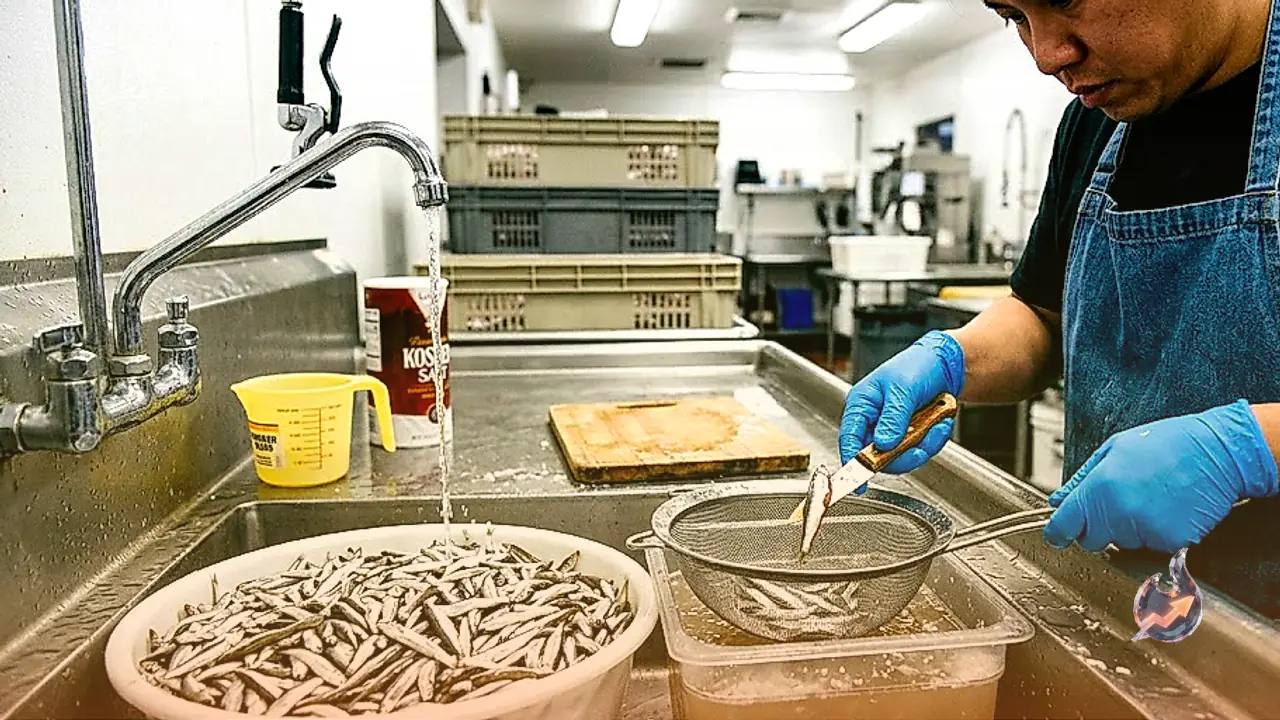















Tiny kachki fish taste wonderful once cooked, but getting them ready for the pan is often seen as a chore many home cooks would rather skip. Separating each fish's head, scraping out the insides and removing the scales eats up a lot of time, and the fishy smell tends to stick to the hands long after the job is done. That is exactly why plenty of people who love the taste still avoid cooking kachki fish. A simple set of steps, though, can turn this whole process into a quick, far less messy job.
Start with a thorough rinse
The cleaning process should begin by washing the kachki fish two to three times with clean water in a large vessel. This step washes away the dirt and murky water clinging to the fish. Once rinsed, the fish should be placed in a strainer to drain off the extra water, so that hands do not keep getting wet and the fish does not slip during the rest of the cleaning.
Use tools instead of bare hands
It helps to clean the fish inside a deep bowl or a large container rather than directly in the sink. If there is a large quantity of fish, cleaning it in small batches rather than all at once makes the whole task quicker and more manageable. Instead of touching the fish with bare hands, using kitchen gloves, tongs or small kitchen tools keeps the dirt and smell from transferring straight onto the skin.
Removing the head and insides
With small fish like kachki, taking out the head and internal parts is usually necessary. This can be done by applying gentle pressure near the head to separate it, and then washing the belly area with clean water. Doing this step with tongs cuts down on direct hand contact with the fish, which means less mess sticks to the hands and less smell lingers afterward.
Do not skip the salt water soak
After cleaning, the fish should be soaked for a few minutes in a large vessel filled with water and a little salt. It should then be rinsed thoroughly again with clean water to remove any remaining impurities on the surface. It is worth remembering that salt alone does not fully disinfect the fish, so cooking it properly afterward, such as baking, remains essential.
Keeping the fishy smell off your hands
It is common for a fishy smell to linger on the hands even after cleaning is done. The easiest way around this is to wear disposable or reusable food-safe gloves right from the start of the process, before touching the fish at all. Reusable gloves should be washed properly after use, while disposable ones should simply be thrown away once the job is finished.
Cleaning up the kitchen afterward
Once the raw fish has been cleaned, the knife, chopping board, sink and any other utensils used should be washed thoroughly with warm water and soap. Raw fish should always be kept separate from other food items to avoid contamination. Washing hands thoroughly with soap once the entire cleaning process is over is just as important as cleaning the fish itself.