





















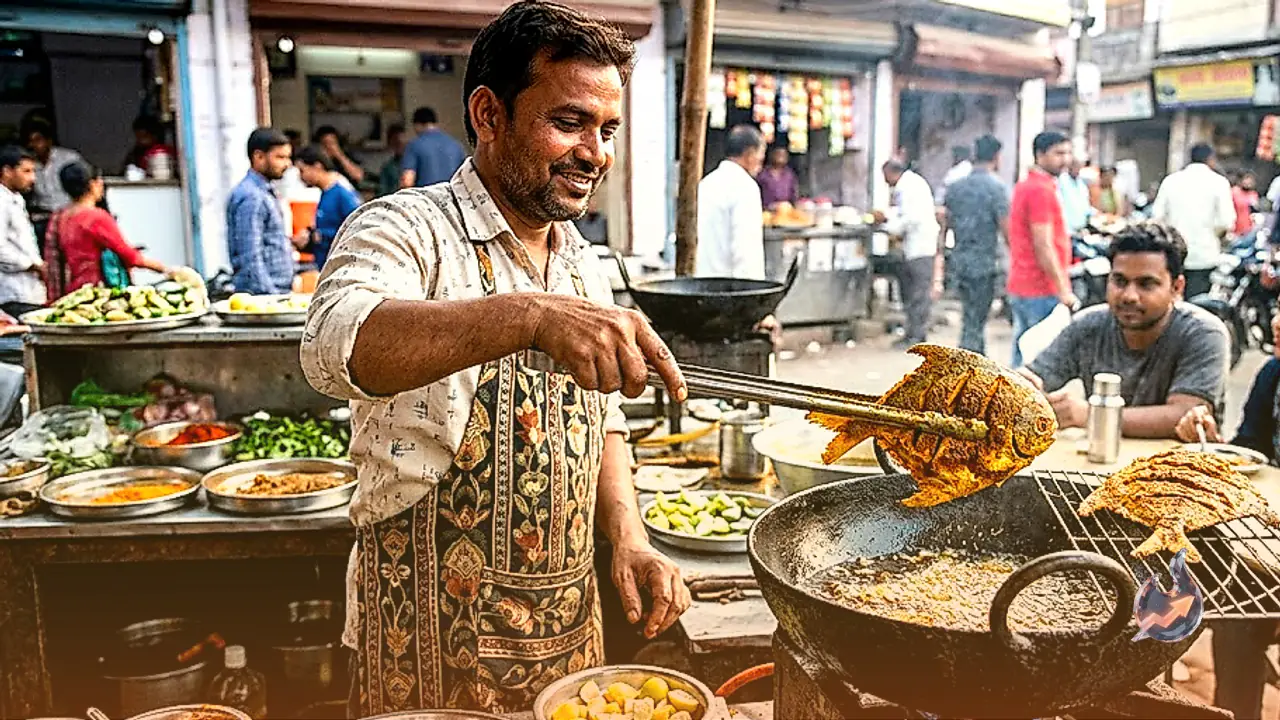

While serving chopped fish pieces is standard practice, deep frying a large whole fish so that the interior stays juicy while the exterior turns thoroughly crispy requires specialized technique. In the Ansar Nagar lane of Muhammadabad Gohna in Mau district, Naseem has built a dedicated local following around this culinary method. His approach to preparing whole fish ensures that the flesh absorbs intense spice while retaining structural firmness in hot oil, a technique that home cooks can replicate to elevate their own seafood preparations.
From Overseas Kitchens to the Lanes of Mau
Naseem brings years of culinary experience to his small enterprise. In earlier years, he worked in Saudi Arabia frying fish, where he honed his timing and preparation methods. After leaving his overseas work and returning to India, he set up his counter in the Ansar Nagar neighborhood of Muhammadabad Gohna in Mau district. By blending his Gulf kitchen background with localized spice profiles, he introduced a method of frying that remains distinct in the district. The flavor profile and texture draw patrons not only from across Mau but also from neighboring districts, including Varanasi, who travel specifically for this preparation.
Sourcing Live Stock and Step-by-Step Cleaning
The shop focuses exclusively on two fish varieties, Pomfret and Pyasi, both kept as fresh as possible. Naseem brings the fish directly from local ponds and keeps them on-site at his shop, processing them only after a customer places an order. When working with Pomfret, thorough sanitation is the initial priority. The fish is washed carefully, and a slit is made straight through the center to extract all internal organs and unwanted waste. Once cleaned of impurities, the body is washed under running water to ensure no dirt or odors linger on the surface.
Marination and the Freezing Window
The flavor building begins immediately after washing. Naseem applies a standard fish spice blend complemented by his proprietary handmade spice paste. This mixture incorporates blended garlic, onions, chilies, and whole spices pounded into a thick coat. The paste is rubbed thoroughly over the entire fish, pushing into the inner cavity so that the seasonings make direct contact with the meat. The coated fish is then placed inside a freezer for 2 to 3 hours. This prolonged chilling window allows the fish muscle fibers to completely absorb the savory and spicy liquid. After the marination is fully absorbed, the fish is brought out to room temperature and kept in a vessel, ready to be weighed and dropped into the oil per order.
A Flour Coating Trick and Deep Frying
A common issue when cooking marinated whole fish is that the spices separate and disperse into the hot oil upon contact. To prevent this, Naseem applies a practical kitchen solution. After the fish absorbs the spices, a light dusting of dry flour is smoothed across the outer surface. This subtle barrier seals the marinade in place, keeping it from breaking away when exposed to boiling oil. The fish is then dropped into a hot kadhai filled with oil and fried for approximately 10 to 15 minutes. This extended cooking time guarantees that the inner flesh cooks through entirely while the outside attains a deep, crispy crunch.
Pomfret Versus Pyasi Variations and Pricing
Each variety is handled differently depending on its bone and meat structure. Pomfret is fried strictly as a single, whole piece with a firm texture, creating an impressive presentation. Pyasi, on the other hand, is chopped into bite-sized pieces before being dropped into the oil. The shop focuses strictly on frying fish without selling other dishes. In terms of price, fried Pomfret is sold at 350 rupees per kilogram, while fried Pyasi costs 300 rupees per kilogram. Each portion is weighed out raw before being dipped in the batter and submerged in oil.
Operating Hours and Advance Bookings
Because slow frying a whole fish to optimal crispness takes significant time, queues often form outside the shop. Service begins at approximately 2:00 PM and runs until 8:00 PM every evening. Due to the high footfall and the 10 to 15 minute wait per batch, regular patrons from surrounding towns often place their orders ahead of time to avoid standing in long lines. Home cooks looking to prepare whole fish can adopt the same sequence of gutting, heavy garlic and chili marination, light flour dusting, and patience in hot oil to recreate identical results.