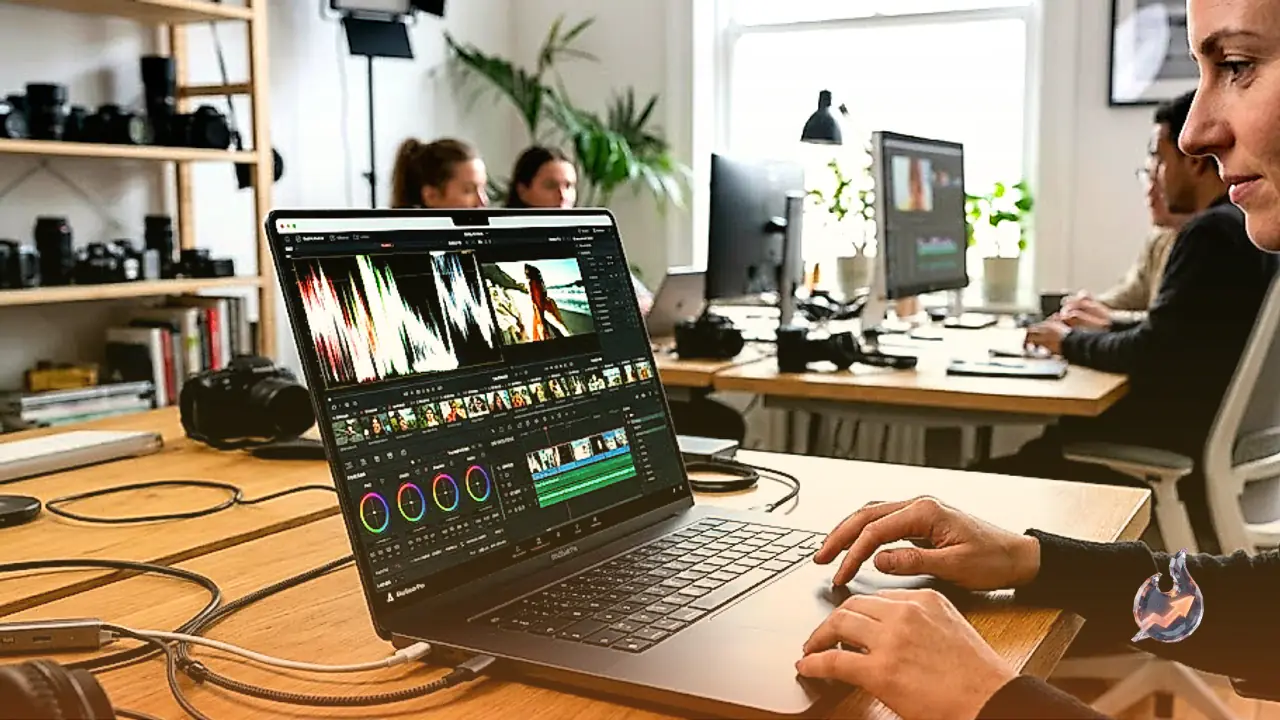

























The Apple MacBook Air 13 M5 2026 enters the ultraportable market as the direct successor to the Apple MacBook Air 13 M4 2025. Retaining the iconic lightweight, fanless aluminum chassis, this updated machine brings several meaningful internal upgrades designed to boost daily productivity. At its core is Apple's new M5 System on Chip (SoC), accompanied by a faster base storage configuration that now starts at 512GB SSD. On the wireless front, the laptop adds modern Wi-Fi 7 and Bluetooth 6 standards. Configurations allow users to scale storage up to 4TB and unified memory up to 32GB, providing ample headroom for multitasking and local file management.
Design, Display, and Port Selection
Apple has kept the physical connectivity identical to its predecessor. Physical ports include a dedicated MagSafe 3 charging port, two USB-C Thunderbolt 4 ports, and a standard 3.5 mm headphone jack. A notable display capability is its native support for running up to two external displays simultaneously alongside its built-in Liquid Retina display. Build quality remains top-tier with a rigid aluminum construction that feels durable yet easy to carry. The physical interface includes a tactile keyboard that offers a comfortable typing experience, paired with a large haptic touchpad featuring precise tracking and fluid gesture controls. For video calls, the integrated 1080p webcam delivers sharp detail and balanced exposure levels.
Daily Productivity and Media Playback Performance
For general productivity tasks, the MacBook Air 13 M5 proves to be an outstanding performer. The strong CPU execution and memory handling of the M5 SoC effortlessly handle web browsing, word processing, complex spreadsheet calculations, slide decks, software development, and light content creation. In web browsing endurance tests, the battery lasts over 13 hours on a single charge. The completely fanless design operates in total silence while keeping thermal levels manageable during routine tasks. Media consumption is equally impressive, yielding over 13 hours of continuous video playback. The high pixel density screen produces vibrant colors and crisp details. The primary display limitation is black level depth, where blacks appear dark gray when viewing dark content in dim environments. Audio is delivered through clean, natural-sounding internal speakers.
Gaming Constraints and Heavy Workstation Limits
Gaming remains a weak spot for this ultraportable machine. The standard M5 configuration with an 8-core GPU handles casual or CPU-bound titles well, but struggles significantly with modern, graphically demanding AAA releases. Limited ray-tracing capabilities prevent smooth frame rates in demanding scenarios. Opting for the 10-core GPU provides a modest performance bump, but still falls short for heavy modern gaming. Furthermore, the 60Hz display panel lacks variable refresh rate support, leading to visible motion ghosting and screen tearing during fast gameplay. For heavy workstation tasks like complex 3D modeling, high-end animation, or intensive multi-layer video rendering, the integrated GPU cannot match laptops with discrete graphics processors. Under sustained heavy computational loads, the fanless chassis eventually experiences thermal throttling, reducing peak performance over extended periods.