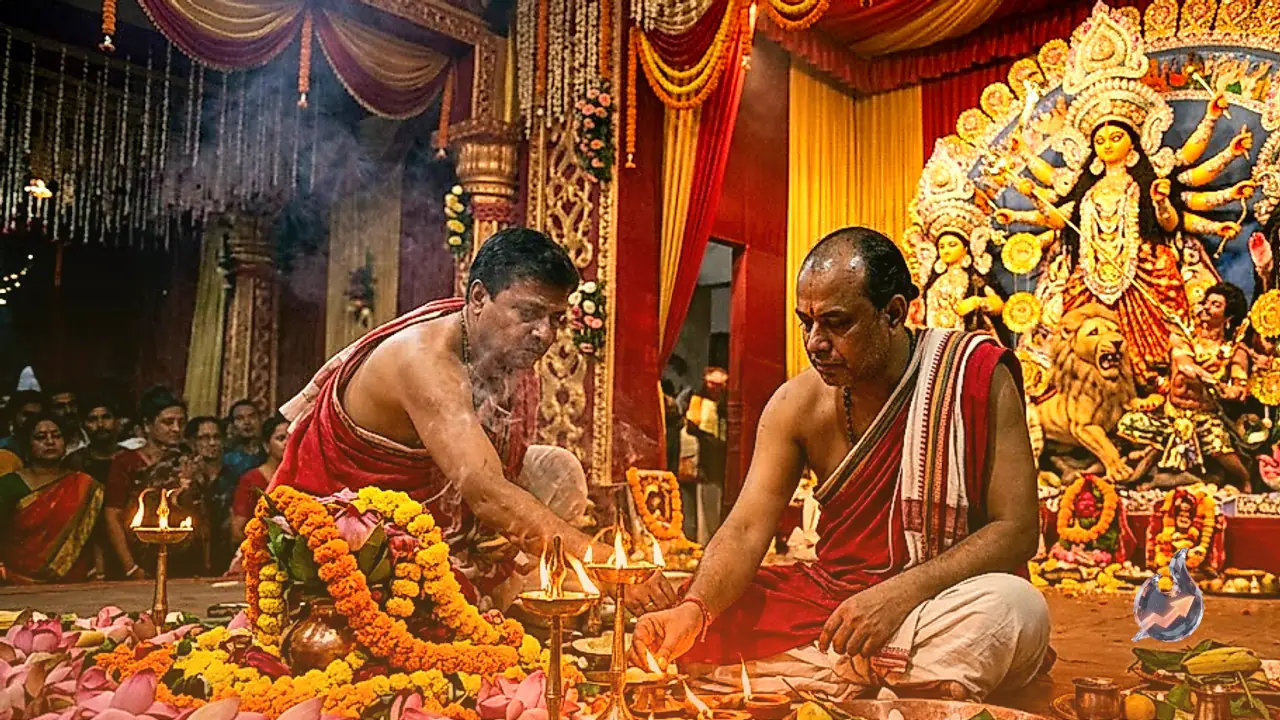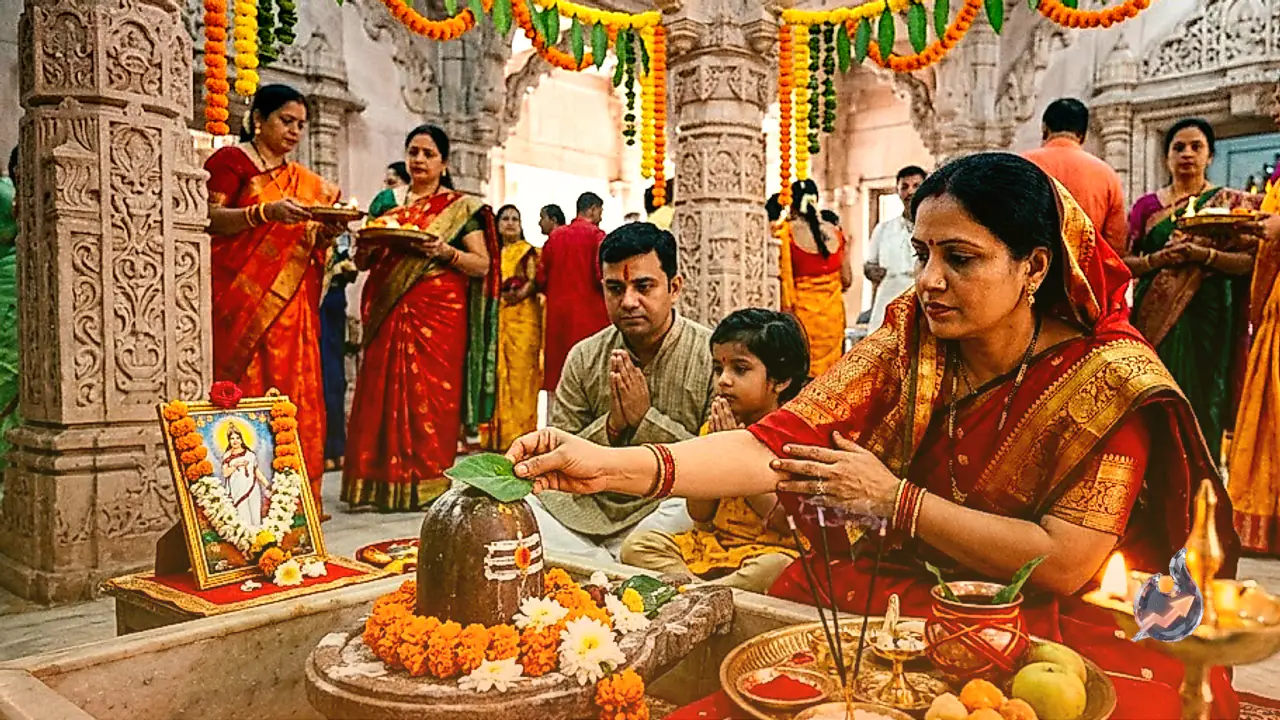























Within Indian spiritual philosophy, the Shakta tradition holds a deeply revered status, venerating the ultimate reality as the supreme maternal force. Classical scriptures recount that following the tragic self-immolation of Goddess Sati at the sacrificial fire organized by her father King Daksha, a grief-stricken Lord Shiva wandered across the cosmos carrying her mortal remains in cosmic mourning. To avert universal destruction, Lord Vishnu dispatched his Sudarshana Chakra to sever the sacred body into numerous parts, which scattered across the Indian subcontinent. Foundational treatises like the Devi Purana, Shiva Charitra, and Tantrachudamani record that fifty-one or fifty-two primary Shaktipeeths emerged from this divine dispersion. West Bengal uniquely harbors the densest geographic clustering of these hallowed shrines, transforming the province across millennia into an unrivaled center for esoteric Tantric disciplines, inner awakening, and intense worship.
The Kapalini Shrine of Tamluk in East Midnapore
Situated in the historic town of Tamluk within the East Midnapore district, near the banks of the Rupnarayan River, stands the ancient shrine of Devi Kapalini. Sacred lore states that the left heel of Goddess Sati fell onto this sacred patch of earth. Within this sacred precinct, the Divine Mother is venerated as Bhimarupa, also widely addressed by local devotees as Varga Bhima, while Lord Shiva watches over the seat in his Sarvananda Bhairava manifestation. The name Kapalini literally signifies the deity who holds a skull or mystic bowl. Spiritual aspirants maintain that performing devotions here cleanses life of malignant forces and fear, blessing seekers with supreme courage, unyielding endurance, and spiritual protection.
The Sanctified Grounds of Ratnavali in Hooghly
The Ratnavali Shaktipeeth in the Hooghly district holds exceptional reverence among dedicated Shakta pilgrims. Traditional accounts trace the landing of Sati's right shoulder to this particular holy geographical spot. The Supreme Mother is worshipped here under the gentle epithets of Kumari or Anandamayi, representing the untouched youthfulness and unbounded bliss of cosmic consciousness. Lord Shiva is invoked here simply in his Bhairav manifestation. Both domestic householders and ascetic seekers frequent this serene shrine to seek inner tranquillity, mental equilibrium, and detachment from worldly anxieties.
The Ancient Seat of Kiriteshwari in Murshidabad
Located in the modest village of Kiritkona within Murshidabad district, the Kiriteshwari temple stands as one of the most energetically charged seats of worship. Sacred traditions maintain that Sati's ornate crown or royal diadem fell at this sanctified location, lending the site its historic name. The presiding deity is worshipped as Mother Vimala, while Lord Shiva is reverently connected to this seat as Sambhardha or Kal Bhairav. Practitioners of Tantra invoke the energy of this seat utilizing the potent seed mantra 'Om Hreem Vimalayai Namah'. Regular meditation upon this vibration is believed to dispel cognitive illusions and unveil higher spiritual wisdom.
Goddess Bhramari in the Dense Forests of Jalpaiguri
Nestled in the sub-Himalayan expanse of North Bengal, inside the Salbari village of Jalpaiguri district's Boda circle, rests the tranquil temple of Devi Bhramari. The sacred complex sits peacefully amidst dense forest cover near the flowing waters of the Teesta River. Legend records that Sati's left leg descended onto this terrain. The Goddess is worshipped as Bhramari, with Lord Shiva residing alongside her under the name of Ishwar. Bhramari represents a fascinating esoteric form of Kalika or Bhadrakali, famously envisioned as surrounded by swarms of black bumblebees. The pristine forest seclusion provides an ideal atmospheric shelter for hermits seeking silent contemplative union.
The Protective Energy of Bahula at Ketugram in Vardhaman
The historical region of Ketugram in Vardhaman district is widely celebrated for housing the Bahula Devi Shaktipeeth. Devotees believe that Sati's left arm parted from her form and landed upon this sacred ground. The Mother Goddess is adored under the name of Bahula, while Lord Shiva is invoked as Bhiruk Bhairav, widely celebrated as the granter of all worldly and spiritual accomplishments. Lore promises that faithful seekers who approach this threshold with sincerity find their worldly hindrances dissolved, receiving sustained abundance, familial stability, and deep mental calm.
Ujani's Mangal Chandrika and Mystical Practices
Also located in Vardhaman district, within the ancient village of Ujani, lies the sanctum of Mangal Chandrika. Scriptural records indicate that Sati's right wrist touched this fertile terrain during the cosmic descent. Here, the divine mother is venerated as Mangal Chandi, a powerful form of Durga, accompanied by Lord Shiva under the unique ascetic name of Kapilambar. Worshippers invoke Mangal Chandrika to ensure family welfare, ward off domestic tragedies, and invite sustained prosperity. Due to its concentrated spiritual vibrations, Ujani has remained an enduring center for complex esoteric rituals and nocturnal rites.
The Brow Chakra Seat at Vakreshwar in Birbhum
Birbhum district stands as the paramount geographical powerhouse of Shakta worship in West Bengal. Situated on the serene banks of the Papahar River, Vakreshwar is identified as the place where Sati's brow center, or the mystical seat of the mind, fell to earth. The Goddess is adored as Mahishasuramardini, while Lord Shiva is worshipped as Vakranath. Because the brow region correlates with the Agnya Chakra in yogic subtle anatomy, practitioners of Kundalini yoga consider Vakreshwar an exceptional vortex for opening inner intuition and activating latent energy channels.
The Mystical Throat Shrine of Nalhati
Perched upon a scenic knoll in Birbhum's Nalhati town, this sacred shrine marks the descent of Sati's vocal cords and throat tract. Mother Kalika is worshipped within the inner sanctum alongside Yogish Bhairav. Directly beneath the face of the deity inside the sanctum lies an opening symbolizing the cosmic throat. A fascinating phenomenon surrounds this cavity: regardless of how much holy water is poured into it, the passage neither overflows nor dries up, and pilgrims frequently report hearing a distinct swallowing sound as the water disappears into the subterranean rock.
Labhpur's Fullara Shrine and the Holy Rock Formation
Close to Labhpur in Birbhum district, the Fullara Devi shrine, also known in classical traditions as the Attahas Shaktipeeth, marks the location where Sati's lower lip fell. The feminine divine is revered here as Phullara, accompanied by Shiva as Vishwesh. Departing from standard iconographic conventions, this temple contains no sculpted metal or marble idol. Instead, the sanctum enshrines an unhewn natural rock formation measuring between fifteen to eighteen feet in length, venerated as the living physical embodiment of the Mother and covered with vermilion.
The Tortoise-Shaped Rock of Nandipur in Sainthia
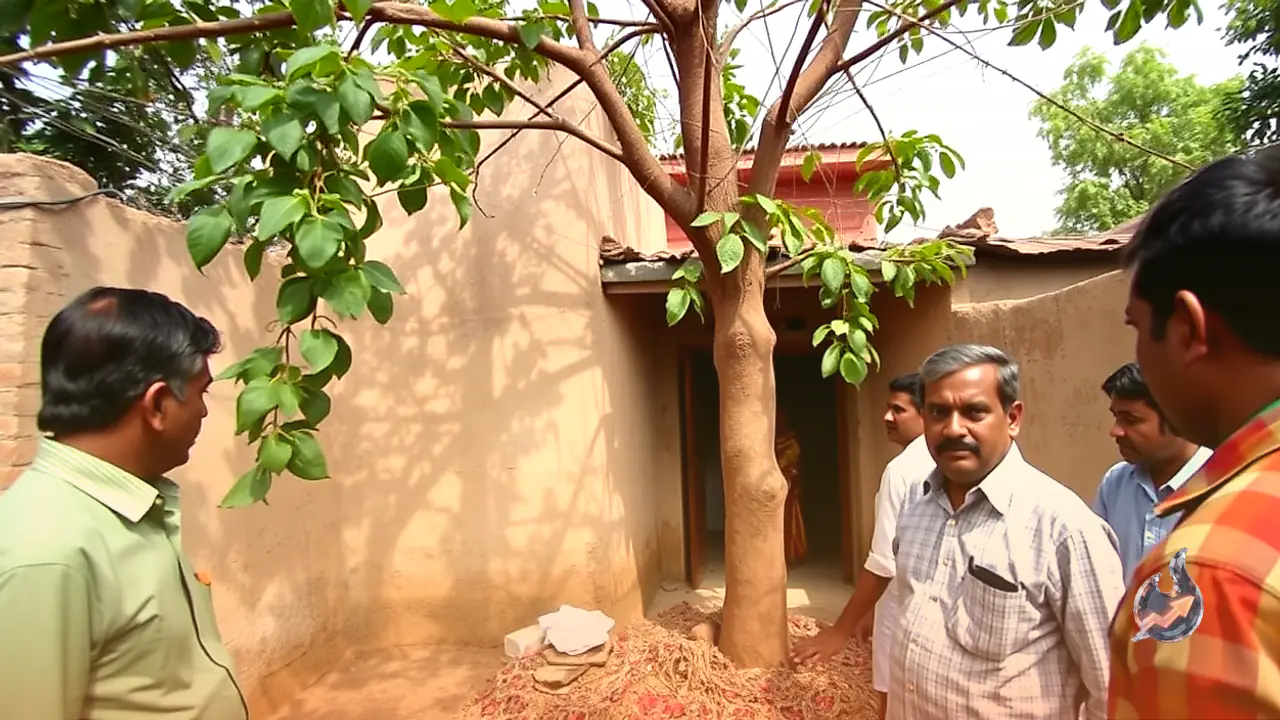
Located in the busy settlement of Sainthia in Birbhum, the Nandipur shrine commemorates the spot where Sati's ornate necklace descended. Here, Sati is worshipped as Nandini, while her masculine guardian is celebrated as Nandikeshwar Bhairav. Shielded by the vast canopy of a sacred banyan tree, the primary object of veneration is an ancient rock naturally resembling the shell of a tortoise. Coated in thick layers of sacred vermilion, the rock is crowned with a silver headpiece and decorated with three golden eyes, evoking the sacred stability of the cosmic tortoise.
Kshirgram's Yugadhya and the Waters of Kshirdighi
In the village of Kshirgram within Vardhaman district, the Yugadhya Shaktipeeth marks the hallowed place where the great toe of Sati's right foot landed. The deity is known as Yugadhya or Bhutadhatri, guarded by the Bhairav termed Kshir Kanthak. A distinctive tradition dictates that the original sacred murti does not stay inside the public temple hall throughout the ordinary calendar. Instead, the image remains submerged in the holy waters of an adjacent ancient reservoir named Kshirdighi, brought ashore only during grand annual festivals for public viewing.
The Global Magnetism of Kalighat in Kolkata
Situated beside the ancient course of the Adi Ganga in Kolkata, the Kalighat Temple stands as the most famous pilgrimage destination among all Bengal Shaktipeeths. Theological geography states that the toes of Sati's right foot dropped here. Worshipped as Mother Kalika alongside Nakuleshwar Bhairav, Kalighat continues to attract thousands of spiritual seekers, householders, and Tantric adepts every day, anchoring Bengal's enduring reputation as the premier homeland of the Goddess.