





















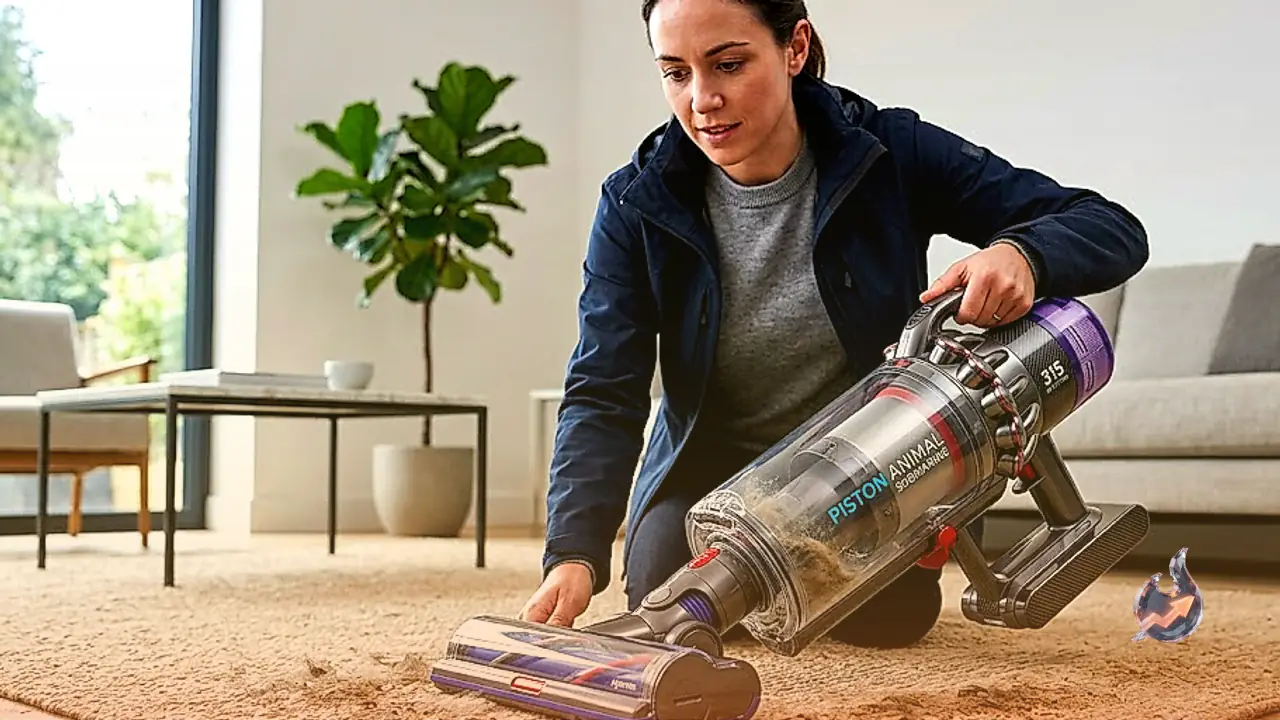

When examining the Dyson V16 Piston Animal Submarine review (2026) metrics, one immediately notices how well this cleaning appliance recognizes various flooring surfaces. As you transition from hard floors to soft rugs, a green dust light illuminates on hard surfaces while the suction power automatically increases on carpets. This automatic adjustment functioned smoothly during home testing across mixed flooring environments, though the All Floor Cones Sense head did not consistently outperform the older Motorbar head when tackling specific types of debris scattered along its path.
Integrated Accessories and Design Updates
Several convenient design refinements stand out among the highlighted features of the V16 model. Two built-in crevice tools come standard: one integrated directly at the end of the handheld motor unit, and another positioned at the termination point of the detachable wand. Although these built-in attachments are shorter and wider than the standalone crevice tool included in the package, their immediate accessibility allows users to address quick messes without hunting down extra accessories. Furthermore, a dust-compactor tool resides inside the dust bin to assist with expelling trapped debris, though stubborn fluffy particles still require manual pulling.
Suction Power and Initial Model Revisions
Undeniably powerful thanks to its 315 AW rating, the V16 Piston Animal nevertheless does not radically outclass the rest of the Dyson product ecosystem purely on suction metrics alone. Early-release testing units experienced minor clogging issues, though subsequent retests of the current production version revealed no repeat occurrences of that glitch. The V16 and its All Floor Cones Sense cleaner head generated robust suction on thick bedroom carpets, filling the bin with dust and hair across two small rooms and staircases despite routine weekly vacuuming.
Cleaner Heads and Ergonomic Release Mechanisms
While the included Fluffy Optic cleaner head delivers nice illumination, it remains largely optional because the All Floor Cones Sense head handles hard floors adequately on its own. Regardless of preferred attachments, the vacuum tube features a convenient built-in release mechanism that enables users to switch cleaning heads without bending over. When cleaning upper floors featuring carpeted bedrooms alongside hard-surfaced hallways and bathrooms, relying solely on the All Floor Cones Sense head provides ultimate convenience without sacrificing cleaning efficacy.
Before initiating wet mopping tasks, the Submarine head requires rolling back and forth for 10 to 20 seconds to achieve proper dampness, signaled by consistent water trails. Pre-vacuuming the area with the Fluffy Optic head is highly recommended because the wet head features a relatively small debris tray compared to dedicated wet cleaners. Fortunately, the debris tray is constructed entirely of plastic, avoiding the mold issues found in older mesh-based designs like the Dyson WashG1. Post-cleaning maintenance requires keeping the Submarine head flat, separating the trays, lifting away the solid debris component, and dumping the underlying gray water.
Market Positioning and Final Verdict
Shoppers seeking the ultimate Dyson vacuum will find this model scores exceptionally well in comparative testing, though opting for the Gen5Detect provides a slightly more refined experience while saving money. Neither Dyson flagship managed to outperform significantly cheaper Shark vacuums in direct side-by-side evaluations, making an outright splurge difficult to justify. However, the potent HEPA filtration makes it a strong contender for allergy sufferers seeking maximum particle capture, even if standalone robot vacuums remain a more appealing choice for automated floor washing.