






















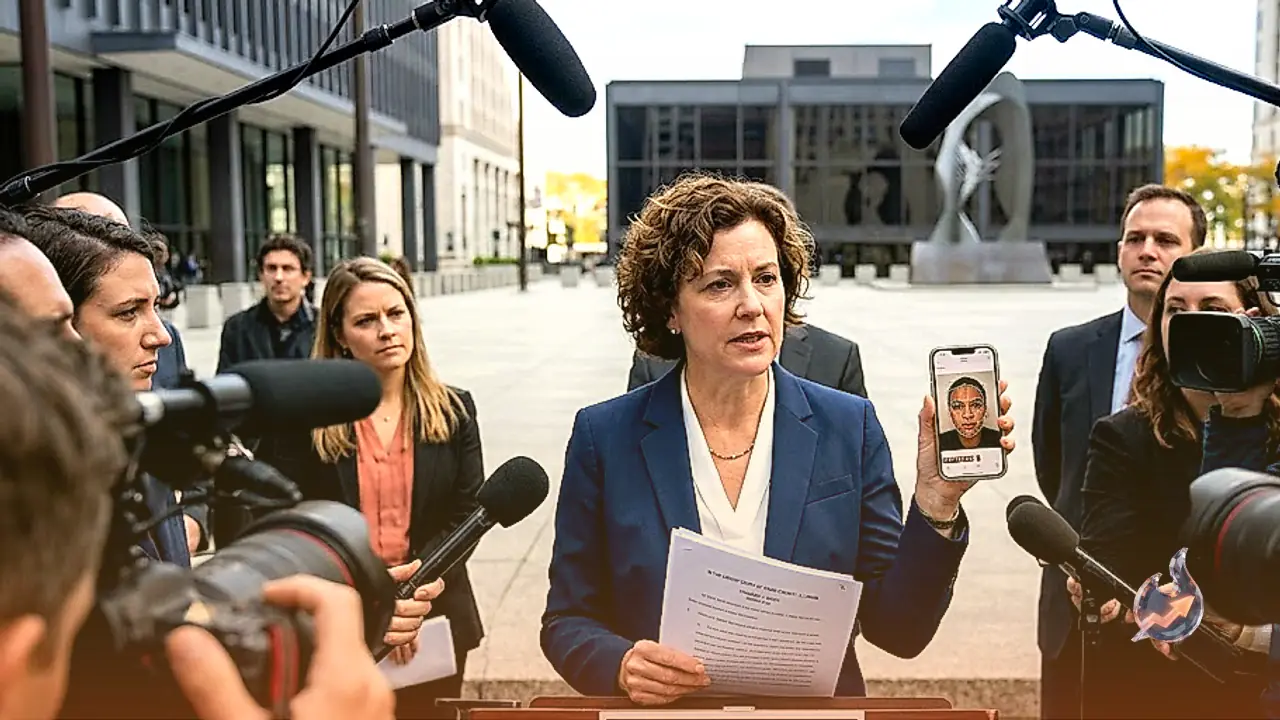

A massive legal challenge in Illinois could force Apple to pay billions of dollars to millions of device owners after a state court certified a class action lawsuit concerning facial recognition privacy. The legal action claims that Apple systematically harvested and stored facial biometric data without securing explicit written authorization from users. If the court ultimately awards the maximum statutory compensation demanded by the plaintiffs, individual victims could receive up to $5,000 each, putting Apple at risk of a staggering $32.5 billion total financial payout.
Background on Apple Legal History and Past Payouts
Class action lawsuits against major technology companies are not uncommon, but the scale of this litigation far surpasses historical precedents. Apple previously settled a high-profile class action regarding its controversial butterfly keyboard design for $50 million. In another significant legal settlement, the company agreed to pay $250 million over delay allegations involving artificial intelligence features that were promised for specific iPhone models but failed to ship on schedule. Notably, many of those delayed AI capabilities are finally rolling out to consumers this year. However, the legal exposure in the current Illinois lawsuit dwarfs those previous settlements, presenting an unprecedented financial threat centered on biometric privacy rights.
The Illinois Biometric Privacy Law and Core Allegations
The foundation of this multi-billion dollar legal dispute relies on the Illinois Biometric Information Privacy Act, a landmark privacy statute enacted back in 2008. The state law was specifically constructed to safeguard citizens from unauthorized collection and storage of sensitive biometric identifiers, explicitly regulating data derived from retina scans, iris scans, fingerprints, voiceprints, and faceprints. Under the strict provisions of the statute, commercial entities are permitted to collect and process biometric identifiers only after providing clear notice and obtaining informed written consent from every affected individual.
The lawsuit alleges that Apple breached these statutory protections through the automated operations of its built-in Photos application. The application automatically scans every face present within a user's local photo library to construct a unique faceprint for each individual identified. An advanced algorithm then analyzes these faceprints to single out the primary iPhone owner and organize photos accordingly. The suit claims that Apple generates and retains this biometric profile directly on consumer devices to categorize individuals into specialized People albums. The central legal violation, however, extends beyond local device processing to remote storage practices. Because Apple offers cross-device synchronization for photo libraries, plaintiffs contend that Apple transfers and stores user biometric faceprints on central servers, directly violating state statutory mandates regarding unauthorized biometric data storage.
Detailed Breakdown of the Three Lawsuit Subclasses
To define eligibility and structure claims, the certified lawsuit establishes three distinct legal classes of affected Illinois residents
- Local Device Class: This primary class encompasses any Illinois resident whose Apple hardware automatically placed a photo of them into a designated People album at any point between September 13, 2016 and the present day.
- iCloud Subclass: This secondary group includes Illinois citizens who had a People album tagged with their personal name or another identifying label while simultaneously maintaining an active iCloud account configured for photo storage between September 13, 2016 and today.
- iCloud Faceprint Subclass: This specialized group covers Illinois residents utilizing devices powered by iOS 17.6, iPadOS 17.6, or macOS Sonoma 14.6 or later operating systems, whose photos were sorted into a People album and who maintained a library containing 5,000 or more photos and videos in iCloud Photo storage between March 25, 2025 and the present day.
Apple Defense Arguments and On-Device Processing Claims
In response to the class action certification, Apple has actively sought to dismiss the entire case, asserting that its software design fully complies with all applicable privacy regulations. Apple argues that its privacy safeguards built into the Photos application are sufficiently robust to protect user identity. Specifically, the company contends that the raw mathematical biometric data generated by its algorithms cannot be utilized to reconstruct a physical face or uncover an individual's true identity. Furthermore, Apple emphasizes that its overall system architecture prevents company personnel from accessing private user photo collections.
Crucially, Apple maintains that all facial recognition analysis occurs locally on the individual hardware unit rather than on external servers. When users synchronize photo data across multiple personal devices, Apple states that only text labels and categorization tags are transferred. For example, if a user manually identifies a family member in the Photos app on an iPhone, that naming label syncs with a linked Mac computer. However, the Mac must still perform its own independent facial scan processing locally to locate that person in existing Mac photos, rather than importing raw facial recognition biometric data directly from the cloud or another device.
Six-Year Litigation Timeline and Recent Court Certification
This major legal battle is the culmination of an extended court struggle that was originally initiated in March of 2020. Over the past six years, the complaint underwent numerous legal challenges, procedural amendments, and evidentiary reviews. The case reached a critical turning point when an Illinois judge formally ruled that the plaintiffs satisfied all legal requirements necessary to proceed as a certified class action lawsuit, opening the door for millions of consumers to seek damages collectively.
Comparing Apple Litigation to Meta Historic $650 Million Settlement
Apple is not the first tech titan to face severe legal consequences under the 2008 Illinois biometric statute. Meta, previously known as Facebook, defended against a remarkably similar class action suit that began in 2015. In that case, plaintiffs alleged that Facebook deployed automatic facial tagging technology across user photos without obtaining proper prior consent. A major difference between the two cases involved data storage transparency: unlike Apple's current defense of local processing, Meta indisputably processed and retained user facial biometric data on its central corporate servers.
The Meta litigation concluded in 2021 with a historic $650 million settlement covering approximately 6.9 million eligible Facebook users in Illinois. Under the finalized settlement terms, the vast majority of qualified claimants received individual payments of $345, while three named lead plaintiffs received awards of $5,000 each. By comparison, the current Apple class action involves approximately 6.5 million impacted users in Illinois, but claims potential damages reaching the statutory maximum for every eligible individual.
Financial Implications and Apple Market Valuation Impact
While Meta paid $345 to most class members, the potential financial liability for Apple could be dramatically higher. If the court holds Apple liable for the maximum statutory penalty of $5,000 per victim across all 6.5 million impacted Illinois residents, the total payout would reach an unprecedented $32.5 billion. To put this sum into financial perspective, $32.5 billion represents approximately 0.7% of Apple's massive $4.5 trillion corporate market valuation. Although a fraction of one percent might appear small in percentage terms, a $32.5 billion payout represents an extraordinary penalty that far exceeds the routine regulatory fines or minor legal settlements typically incurred by tech industry giants.
At this stage of proceedings, individual compensation remains uncertain as Apple continues to pursue legal options to throw out the lawsuit. Nevertheless, the judge's certification of the class action represents a landmark moment in privacy law, demonstrating how state-level biometric statutes can expose multi-trillion dollar corporations to monumental financial liabilities.