





















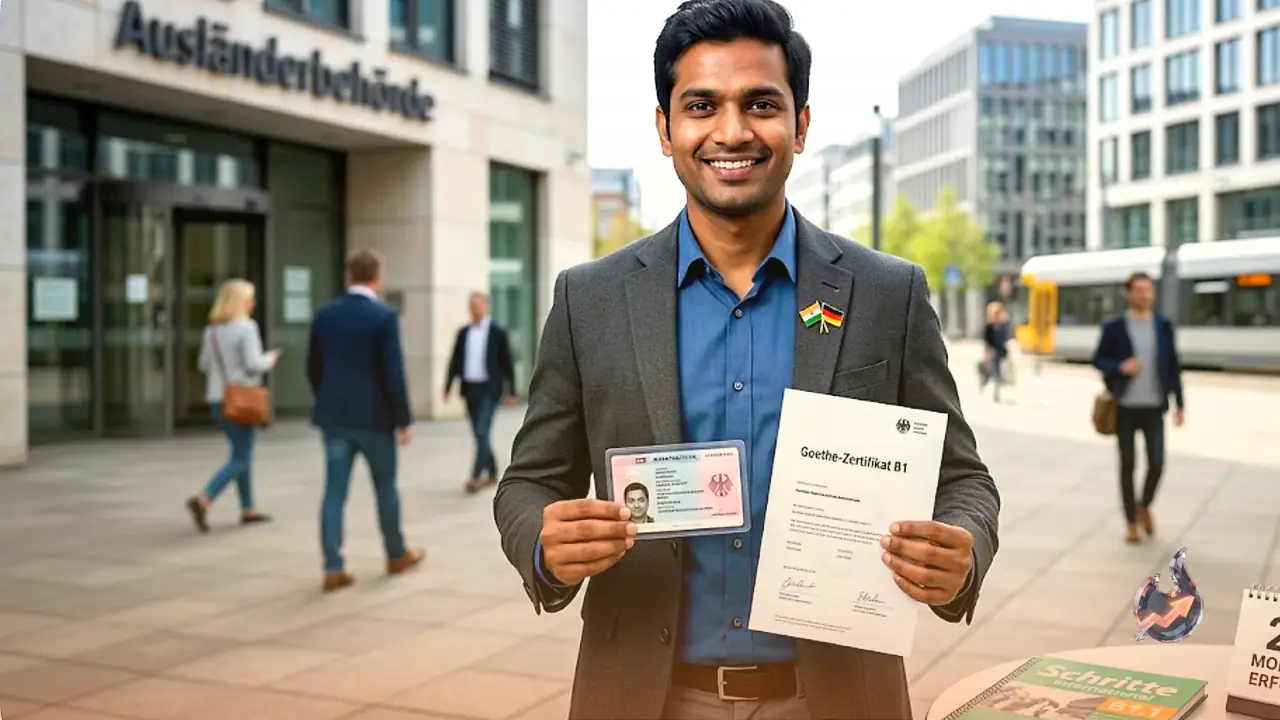

Germany has quietly turned into one of the fastest legal routes to long-term European residency for skilled Indian professionals, and the shortcut runs through the EU Blue Card. Workers who tick a specific set of boxes, mainly around language ability and pension contributions, can now convert their Blue Card into a full Settlement Permit in as little as 21 months, a timeline far shorter than what most European immigration systems typically demand.
German Language Level Sets Your Clock
The single biggest factor in how fast this process moves is your grip on the German language. Reach B1 level proficiency, and you unlock the accelerated 21 month window for the Settlement Permit. Stop at basic A1 level, and the same process stretches out to 33 months instead. For many Indian applicants, clearing this language bar turns out to be the toughest part of the entire journey, which is why immigration advisors stress starting German lessons early, well before the countdown on a Blue Card even begins, if the goal is to shave real time off the wait.
The Pension Contribution Rule Nobody Can Skip
Language alone will not get you the Settlement Permit, known officially as the Niederlassungserlaubnis. Financial stability, measured through contributions to Germany's national pension scheme, is treated as an equally core requirement. Applicants chasing the fastest route must show 21 months of pension contributions on record, no shortcuts around it. The logic behind the rule is straightforward: authorities want proof that a resident is an active, contributing part of the national social insurance system before handing over permanent status. Knowing this in advance lets professionals plan job changes and salary negotiations with the 21 month or 33 month clock in mind, rather than being caught off guard later.
Put side by side, the two paths look like this:
- Fast Track Path: B1 level German, 21 months of pension contributions, a skilled job held throughout.
- Standard Track Path: A1 level German, 33 months of pension contributions, a skilled job held throughout.
What Permanent Residency Actually Unlocks
Once granted, permanent residency changes daily life for an entire family, not just the primary applicant. Spouses of Blue Card holders gain the right to work in the German market without restrictions of their own. The status also functions as a safety net. If your employment situation suddenly shifts, whether through a layoff or a career change, your right to stay is no longer tied to that one job. It also removes the recurring stress of repeated visa renewal trips to the local foreigners office, a process many immigrants describe as one of the most draining parts of settling abroad. For Indian families, this combination of stability finally makes it realistic to build a permanent home inside the EU rather than living visa cycle to visa cycle.
Citizenship Is Getting Closer Too
Recent changes to German law have also shortened the distance between a Blue Card and a full German passport. Professionals holding a Blue Card can now apply for citizenship after five years. Show a high level of integration into German life, and that period can drop to just three years. Combined with the residency fast track, it gives Germany one of the clearest, most attractive roadmaps among global destinations competing for skilled talent, running from a first job offer all the way through to naturalisation.
For Indian professionals in technology and healthcare in particular, securing permanent status in Germany is increasingly a strategic career move rather than a distant dream. Prioritising German language skills early opens up the shortest path available, while steady pension contributions and genuine cultural integration together build a durable future in Europe. Understanding these specific requirements in advance is what makes the difference between a stressful, drawn out process and a smooth transition into permanent life abroad.