


















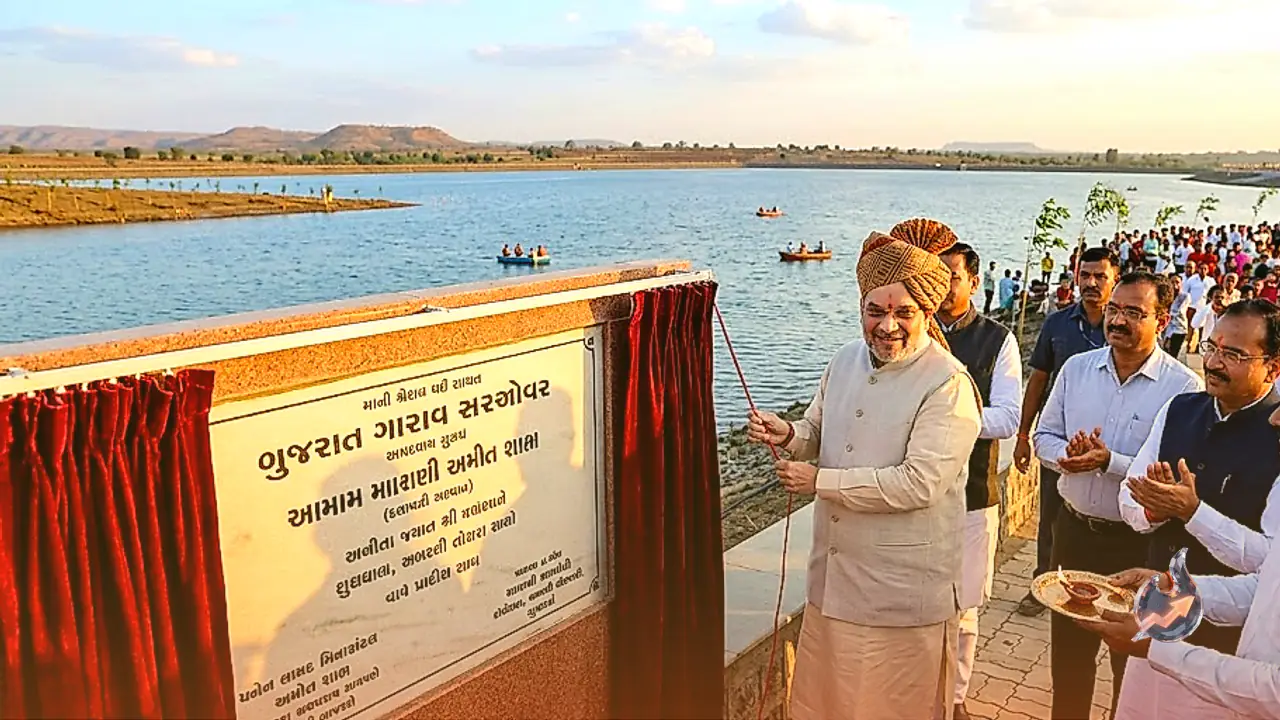

On the occasion of World Lake Day, a major water conservation project was officially dedicated to the public at Dudhala village in Gujarat's Amreli district. Union Home Minister Amit Shah inaugurated the 21-acre Gujarat Gaurav Sarovar, an artificial reservoir capable of storing 40 crore liters of water. Built through the joint initiative of the Hari Krishna Group and the Dholakia Foundation, the project marks a significant step forward for regional water security. Speaking at the ceremony, Amit Shah detailed the state's historical water struggles and the decades of administrative and community initiatives that transformed Gujarat's water landscape.
Addressing the gathering, Amit Shah noted that the new reservoir will play a vital role in recharging groundwater levels across Amreli and neighboring rural belts. He emphasized that private and community-driven water management models of this scale possess the power to alter the agricultural footprint of entire regions.
Narmada Project History and Decades of Waiting
Reflecting on the long journey of the Narmada Project, the Home Minister pointed out that its foundation stone was laid back in 1964 by then Prime Minister Jawaharlal Nehru. Sharing a personal connection, Amit Shah mentioned that he was born in the very same year, 1964. However, despite its early inauguration, the project remained bogged down by political and administrative hurdles for several decades.
Shah stressed that the project's sluice gates were finally opened only after Narendra Modi assumed office as the Prime Minister of India. Under PM Modi's leadership, the central government cleared long-pending regulatory and logistical bottlenecks, enabling Narmada waters to flow seamlessly into the drought-prone regions of Saurashtra and as far as Khavda in Kutch. This decisive action delivered permanent relief to vast areas of Gujarat that had suffered chronic water scarcity for generations.
Water Management Strategy Since 2001
Recalling the severe climate hardships of the past, Amit Shah referred to the devastating drought years of 1985, 1986, and 1987. During that period, acute water shortages forced the state administration to execute emergency relief operations on a massive scale. According to Shah, a structural paradigm shift took place when Narendra Modi took over as the Chief Minister of Gujarat in 2001.
As Chief Minister, Narendra Modi prioritized long-term rainwater harvesting and irrigation infrastructure. A landmark accomplishment occurred in 2003, when the state government executed the construction of 1.5 lakh check dams within a single calendar year. This massive campaign significantly enhanced agricultural water accessibility, stabilizing crop yields and strengthening local farming economies across the state.
From SAUNI Scheme to the Jal Shakti Ministry
Outlining the array of government interventions, Amit Shah highlighted the role of the SAUNI Scheme, which redirected surplus Narmada water into Saurashtra's reservoir network while interconnecting regional rivers. In North Gujarat, the Sujalam Sufalam Scheme proved instrumental in raising depleted water tables. Simultaneously, the state actively promoted micro-irrigation tools such as drip and sprinkler setups to curb agricultural water wastage.
On the national front, Shah highlighted the creation of the dedicated Jal Shakti Ministry by Prime Minister Narendra Modi shortly after coming to power at the Center. This institutional reform brought a unified structure to water governance across India. Alongside campaigns like 'Catch the Rain', the ministry has focused on resolving operational bottlenecks in aging dams and rapidly expanding national irrigation potential.
Dholakia Foundation Impact and Gagadia River Revival
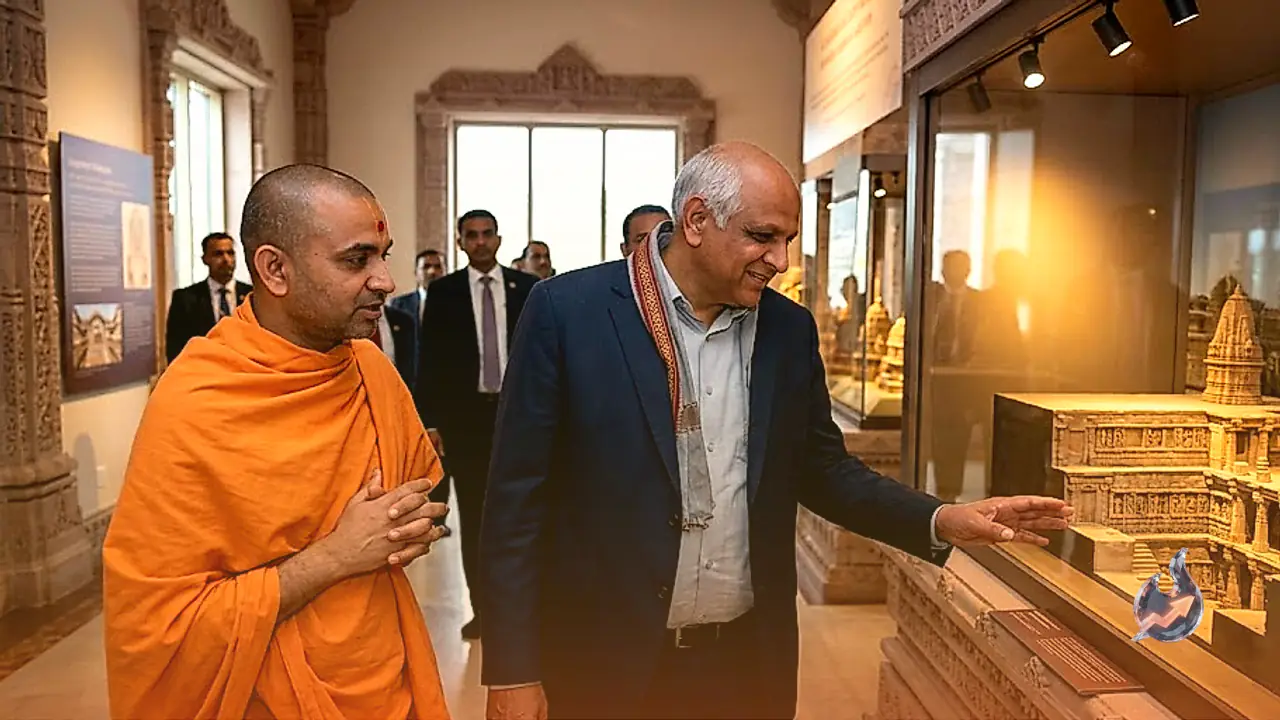
Amit Shah commended Savjibhai Dholakia, founder of the Hari Krishna Foundation and Dholakia Foundation, for conceiving and executing the Gujarat Gaurav Sarovar project. Savjibhai Dholakia had shared the initial blueprint with Shah two years prior. After two years of continuous construction, the lake now stands complete, measuring 360 meters in length, 260 meters in width, and 4 meters in depth.
Enumerating the broader community initiatives of the Dholakia Foundation in the Amreli belt, Shah shared that the foundation contributed to the ecological revival of the Gagadia river and constructed 208 new lakes in the region. These collective interventions have successfully recharged dried-up farm wells and raised the local water table. The Home Minister expressed confidence that such successful public-private models will encourage more resource-capable individuals to take active responsibility for water conservation nationwide.