























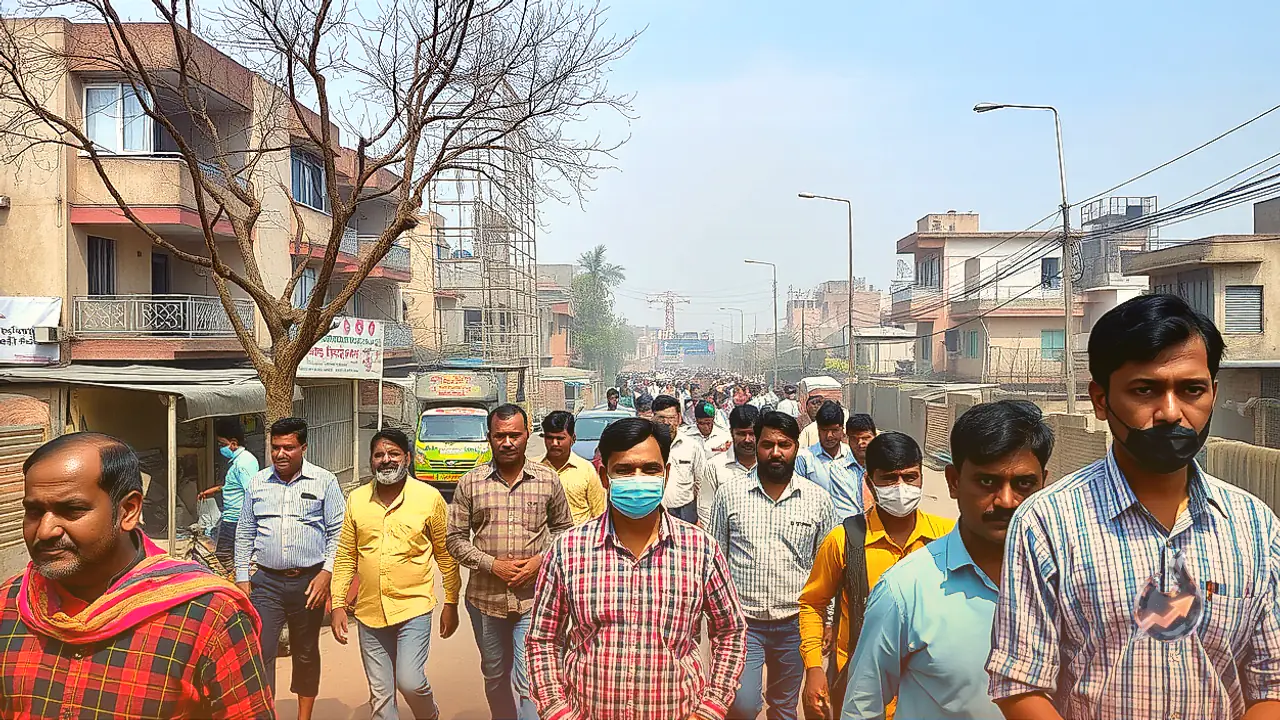

Atmospheric quality across northern plains has begun deteriorating well before the arrival of core winter months, with fresh environmental assessments pointing to Haryana as the primary regional pollution hotspot. While national capital Delhi recorded a relatively clean phase throughout September, five urban clusters from Haryana ranked among the ten most polluted locations nationwide, underscoring an early spike in toxic airborne particles.
Delhi Stays Within Norms While Surrounding Belts Suffer
In Delhi, the monthly mean concentration of PM 2.5 stood at 38 micrograms per cubic meter during September. This placed the capital well inside the safe ceiling of 60 micrograms per cubic meter prescribed by India's National Ambient Air Quality Standards. However, as the monsoon receded and wind patterns shifted, adjoining territories experienced a sharp divergence in atmospheric cleanliness, marked by mounting concentrations of fine particulates.
Panipat Leads Nation in Pollution as Five State Hubs Feature in Top Ten
Panipat registered as the most polluted city in the country for September, logging an average monthly PM 2.5 concentration of 78 micrograms per cubic meter. Over a 29-day monitoring span, the city exceeded national daily exposure limits on 20 separate days, with local readings frequently slipping into poor and very poor brackets. In total, Haryana contributed five entries to the country's ten most fouled areas, with Panipat joined by Jind, Yamunanagar, Gurugram, and Manesar.
Widespread Violations Across Multiple States
Beyond Haryana, Uttar Pradesh saw two localities, Khoda and Gorakhpur, feature within the ten most polluted centers. Urban stations in Punjab, Madhya Pradesh, and Assam also entered the top tier of the list. Continuous ambient air quality monitoring stations tracked 251 Indian cities over the month, revealing that 230 failed to satisfy the World Health Organization's safe daily benchmark of 15 micrograms per cubic meter.
Particulate Hazards and Upcoming Seasonal Pressures
Fine particulate matter known as PM 2.5 consists of microscopic solids and liquid droplets measuring 2.5 micrometers or smaller in diameter, capable of penetrating deep into human respiratory tracts. Every winter, atmospheric stagnation and stubble burning send dense haze across Delhi NCR and the wider northern plains. With baseline contamination already elevated at the close of monsoon, regional centers face substantial ecological stress heading into peak smog season.