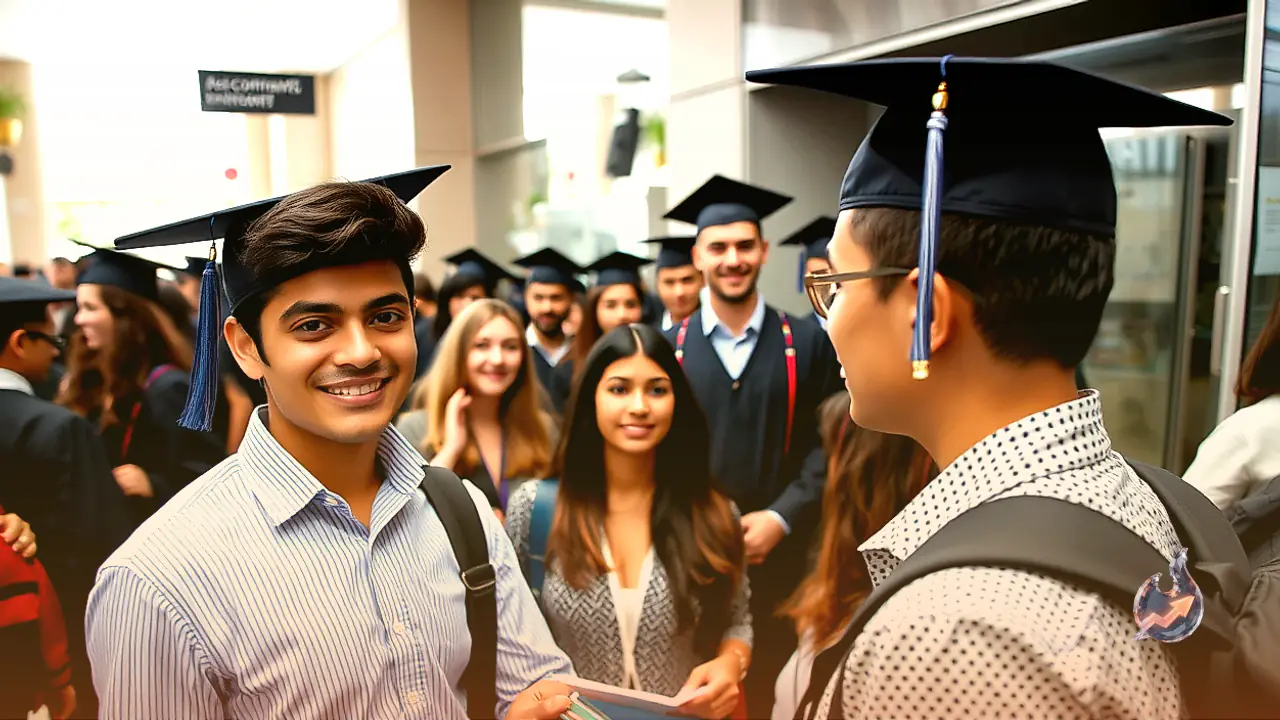

Undergraduate commerce students often seek career avenues that combine professional standing with long-term financial security. Within corporate governance, taxation, and auditing, chartered accountancy remains one of the most respected credentials in the country. Many prospective aspirants, however, face uncertainties regarding the ideal timeline to begin preparation, wondering whether to start during their undergraduate degree or wait until graduation is completed. Questions also frequently arise about the daily hours required for study, the necessity of expensive private coaching, institutional registration expenses, and how economically constrained students can successfully navigate the qualification process. A clear understanding of these parameters enables aspirants to chart an efficient roadmap toward this profession.
The Direct Entry Pathway and Registration Requirements
Dr. Shobhana Goyal, Associate Professor in the Department of Commerce at Aggarwal College, Ballabgarh, points out that the curriculum offers substantial career progression opportunities for commerce students. Two distinct entry routes exist for aspirants seeking to enter the profession. The initial route involves taking the foundation course directly after completing class 12, whereas the alternate route provides direct entry for students who hold a commerce graduation degree. Students reaching the final year of their undergraduate commerce programme can initiate their registration for the curriculum. An obligatory requirement under this scheme is the completion of eight months of theoretical study. Eligible students can complete their official enrollment directly through the ICAI portal.
Expanding Economic Scale and Professional Demand Projections
Pursuing this route following graduation presents substantial long-term advantages, notes Dr. Shobhana Goyal. At present, approximately 5.5 lakh chartered accountants are actively practicing across India. Should the national economy sustain its projected pace of growth, the country could require an estimated 50 lakh chartered accountants by the year 2050. This vast expansion across corporate compliance, financial reporting, advisory, and tax frameworks indicates that emerging opportunities for trained financial specialists will remain abundant in the coming decades.
Curriculum Structure and Mandatory Articleship Experience
Under the direct pathway, candidates must clear two sequential stages: the intermediate level and the final level. The intermediate stage is divided into two distinct groups consisting of a total of eight papers, while the subsequent final examination comprises six papers. Candidates advance to the final stage only after securing passing marks across both intermediate groups. Sustained academic discipline is essential, requiring students to dedicate eight to ten hours of focused daily study. Alongside theoretical preparation, students must complete two years of mandatory articleship, which constitutes hands-on practical training. Working directly alongside experienced professionals gives trainees real-world operational exposure that strengthens theoretical comprehension and prepares them for future professional assignments.
Achieving Success Through Affordable Self-Study
Contrary to the perception that heavy commercial coaching expenditures are indispensable, Dr. Shobhana Goyal emphasizes that private tuition is entirely optional. The programme is fundamentally oriented toward independent self-study, enabling focused learners to clear examinations through rigorous home preparation. Students may elect to take external coaching selectively only if they encounter difficulty in particular subjects. The institutional fee structure requires 18 thousand rupees for the intermediate stage and 22 thousand rupees for the final stage, with optional private coaching incurring separate expenses. With sustained effort, daily study discipline, and minimal initial financial outlay, candidates can unlock lucrative career trajectories yielding substantial earning potential.