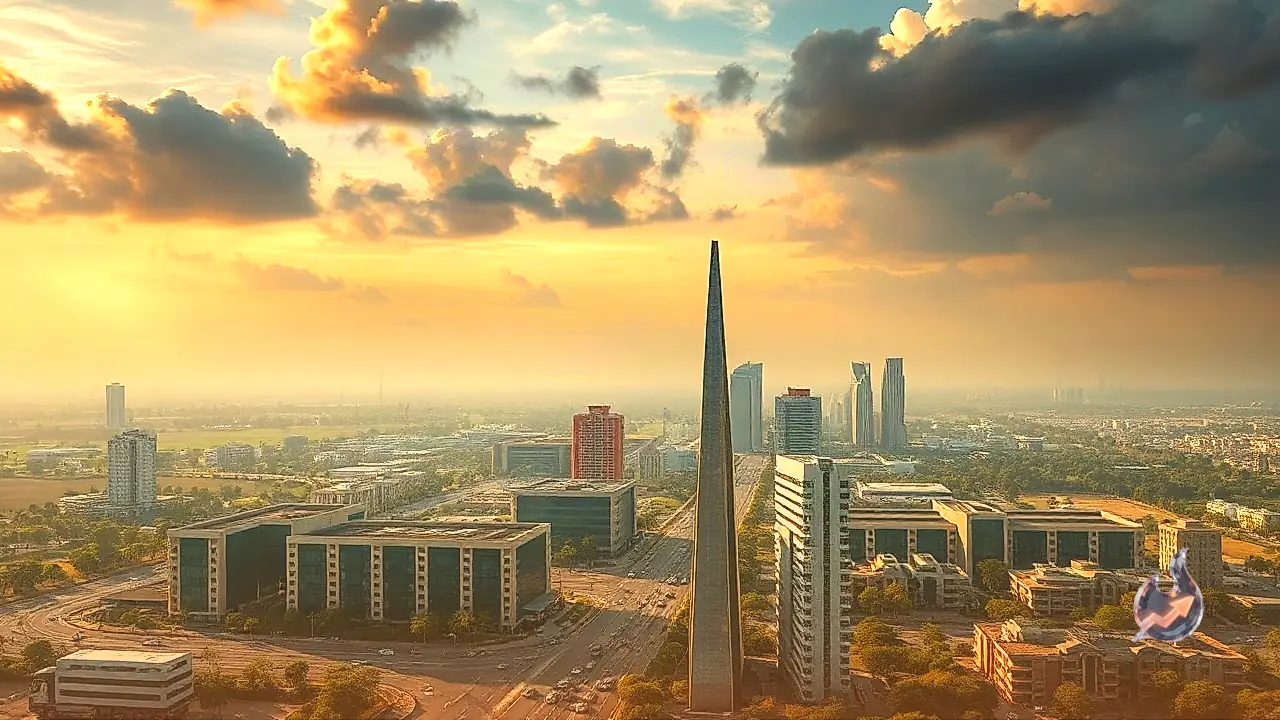















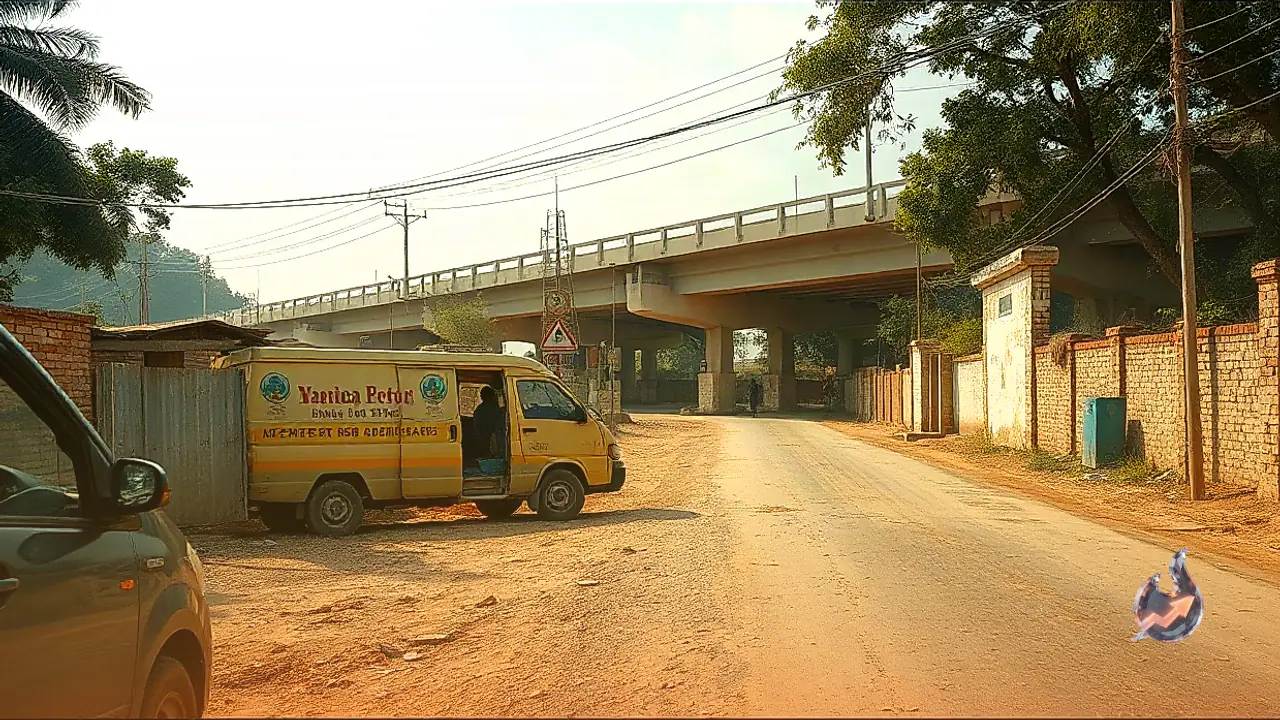

While official slogans promise modern infrastructure and smart urban transformations across Faridabad, the reality on the ground in Sotai village presents a stark contrast. Dozens of resident families in this area have been waiting for a paved road for 51 long years. Paradoxically, the completely unpaved track that residents are forced to use daily sits just 25 to 30 meters away from a massive flyover being constructed to provide connectivity for the upcoming Jewar Airport. Despite being right next to a multi-crore infrastructure development, this primary access path remains neglected and turns into an impassable muddy strip during every monsoon season.
Neglect in the Shadow of Mega Infrastructure
While primary arteries and city intersections across Faridabad are being modernized under civic upgrade initiatives, internal village connectivity in Sotai continues to languish. The descent ramp of the Jewar Airport connectivity flyover is located within a 100-meter radius of this unpaved route. This major transportation project has caused property and land values in the surrounding area to skyrocket, yet the basic living conditions for local families have seen zero progress. Rainy weather exacerbates the predicament, making it nearly impossible for children, elderly residents, and pedestrians to commute safely.
Historical Timeline From 1954 Consolidation to 2026
The origins of this infrastructure gap trace back several decades. Land consolidation in the area took place in 1954, but the access track was left unpaved even during that administrative process. The families currently residing along this route trace their roots back to Dayalpur village in Faridabad. Their ancestors purchased agricultural and residential land in Sotai village in 1965, and the families eventually moved to settle here permanently in 1975. A span of 51 years has elapsed between 1975 and 2026, yet the physical state of the road has remained entirely static.
Expressing deep disappointment over the situation, local resident Babloo Hooda remarked, "51 years have passed from 1975 to 2026, yet the condition of this road remains unchanged." He recalled the historic words of former Prime Minister Chaudhary Charan Singh, who emphasized that the pathway to the nation's progress passes through its rural heartlands. He also highlighted that a significant number of youth guarding the country's borders hail from rural villages, making the persistent administrative neglect of basic rural needs even more painful.
British Era Historical Parallels and Systematic Neglect
Residents point to historical precedents, citing how during the pre-independence era under British colonial rule, a village near Sohna was deliberately left with unpaved roads because its inhabitants actively participated in revolutionary freedom struggle activities. On official papers, that village remained categorized as having an unpaved approach road. Local residents question why their own access route has been left unpaved and forgotten by administrative authorities in post-independence India. Over the decades, multiple five-year plan cycles have begun and ended without bringing any tangible development to this path.
Voting Across Multiple Elections Yields No Infrastructure Relief
The families living in Sotai continue to fulfill all their civic obligations conscientiously. In 2022, Sotai village was formally merged into the Faridabad Municipal Corporation, bringing it under the jurisdiction of an elected ward councillor. Because these families hold ancestral roots in Dayalpur, they participate in the elections for the Dayalpur village sarpanch as well. Furthermore, they vote regularly in state assembly and parliamentary general elections. Despite the municipal corporation now being in its third electoral term, political representatives have offered only unfulfilled assurances rather than asphalt.
Residents Forced to Fund and Lay Bricks Themselves
Exasperated by public administration delays, local citizens have taken temporary maintenance into their own hands. Mukul Hooda, a 26-year-old resident born in Sotai village, shared that he has seen the road in this deteriorated state since his childhood. To prevent total isolation during rains, community members pooled their personal funds to purchase and lay bricks along the dirty track.
Reflecting on the ongoing struggles, Mukul Hooda stated, "I have been witnessing the dismal state of this road since my childhood." He explained that without their self-funded brick-laying efforts and immediate post-rain repairs, commuting on foot or by vehicle would be virtually impossible. Despite repeated representations to municipal officials, ward councillors, and political leaders, the 51-year-old struggle for a proper paved road remains unresolved.