


















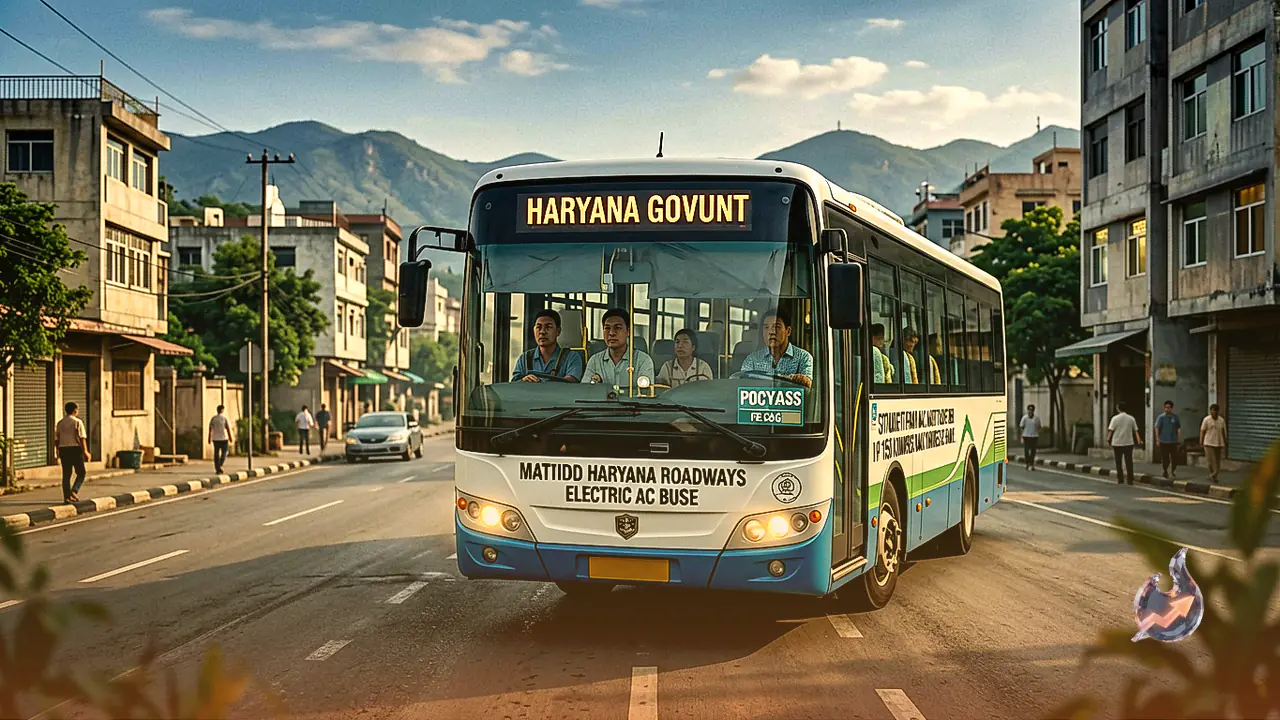

Students across Haryana who commute daily from rural areas and outlying towns to urban educational institutes have received major news regarding their daily travel. The state administration has officially mandated that student bus passes issued by Haryana Roadways are now valid aboard the fleet of electric air-conditioned (AC) buses. Under this upgraded transit policy, eligible students holding valid roadways passes can board electric AC buses without paying any additional fare. The authorized travel limit permits pass holders to cover up to 150 kilometers per day free of charge, offering substantial relief to young scholars commuting from countryside villages to city colleges and universities.
Financial Relief for Commuting Rural Students
In districts like Ambala, thousands of students travel every day from surrounding villages and townships to attend classes at degree colleges, polytechnics, and professional institutes located in urban centers. Covering long distances on a daily basis previously translated into significant out-of-pocket transportation expenses, placing a heavy recurring financial burden on rural families. The extension of pass validity to electric AC buses eliminates these daily transit costs for student commuters.
Transport department guidelines confirm that the 150-kilometer daily limit is structured to adequately cover the round-trip distance for virtually all commuting students in the region. Beyond students residing in Ambala proper, those traveling from adjacent districts and rural hinterlands stand to gain directly from this welfare initiative, making daily public transit far more accessible and economical for youth dependent on state transport.
Implementation Follows Chief Minister Announcement in Panipat
The policy shift originates from a public declaration made by Chief Minister Nayab Singh Saini during an event in Panipat on 28 May. The Chief Minister announced that student travel pass privileges would be extended to cover the state's growing fleet of electric AC buses. Following the executive directive, the Haryana Transport Department finalized administrative procedures and issued formal operational guidelines to integrate student passes across all running e-buses.
Previously, Haryana Roadways electric AC buses operated under strict non-concession rules, meaning no discounted or free travel passes were accepted on board. While student passes functioned normally on standard non-AC roadways buses, students wishing to board an electric bus were required to purchase full-price tickets. Commuters had long demanded parity between conventional buses and electric vehicles, pointing out that passing e-buses often went unutilized by pass holders who had to wait extended hours for regular buses. The latest departmental notification resolves this long-standing discrepancy.
Ambala Cantt Bus Stand Incharge Details Operational Rules
Providing details on the ground-level rollout, Bahadur Singh, Stand Incharge at Ambala Cantt Bus Stand, verified that the student pass facility on electric buses has been fully operationalized. He clarified that all valid student bus passes authorized by Haryana Roadways will be recognized on all electric AC routes without any extra fees charged to pass holders.
Stand Incharge Bahadur Singh emphasized that the policy provides students with far more than just financial savings; it elevates their daily commuting experience by granting access to modern, fully air-conditioned transit. The fleet of electric buses features fully automatic transmission and advanced climate control systems, delivering a smoother, quieter, and more comfortable ride compared to conventional diesel vehicles.
Key Intercity and Rural Routes Covered Under the Scheme
The operational network for electric buses in the Ambala division has been expanding steadily across high-density passenger corridors. Bus stand authorities highlighted that e-buses currently operate on several key routes, including services connecting Ambala City with Ambala Cantt, Naraingarh, Barara, Kalka, and Yamunanagar, alongside multiple rural feeder routes. These routes cater to a heavy volume of daily commuters, including students, office workers, and local residents.
The integration of student passes on these primary routes addresses a frequent transit bottleneck. Previously, during peak morning and evening hours, students holding valid passes were forced to skip arriving electric buses because their passes were invalid on those vehicles, causing overcrowding on standard non-AC buses. With the new rules in effect, students can board the first available electric AC bus, reducing waiting times and ensuring timely arrival at educational institutions.
Positive Response from Students and Families
The implementation has drawn widespread praise from the student community and educational institutions across Haryana. Commuters expressed gratitude that they no longer need to wait on hot platforms while electric buses pass by empty of pass-holders. Parents have similarly welcomed the relief, noting that saving on daily commuting fees helps offset other educational expenses such as textbooks, study supplies, and tuition fees.