























Animals have long possessed an extraordinary ability to detect impending natural disasters and environmental hazards well before humans notice them. Among all animals, dogs are particularly renowned for their exceptionally sharp sense of smell, which has made them indispensable assets in military and law enforcement operations for detecting explosives and contraband. Now, this remarkable natural capability is making groundbreaking strides in the field of medical science. Bengaluru based startup Dognosis has unveiled a novel research initiative demonstrating that trained dogs, when assisted by artificial intelligence, can accurately detect the presence of cancer in humans simply by sniffing breath samples.
Innovative Screening Process Using Breath Masks
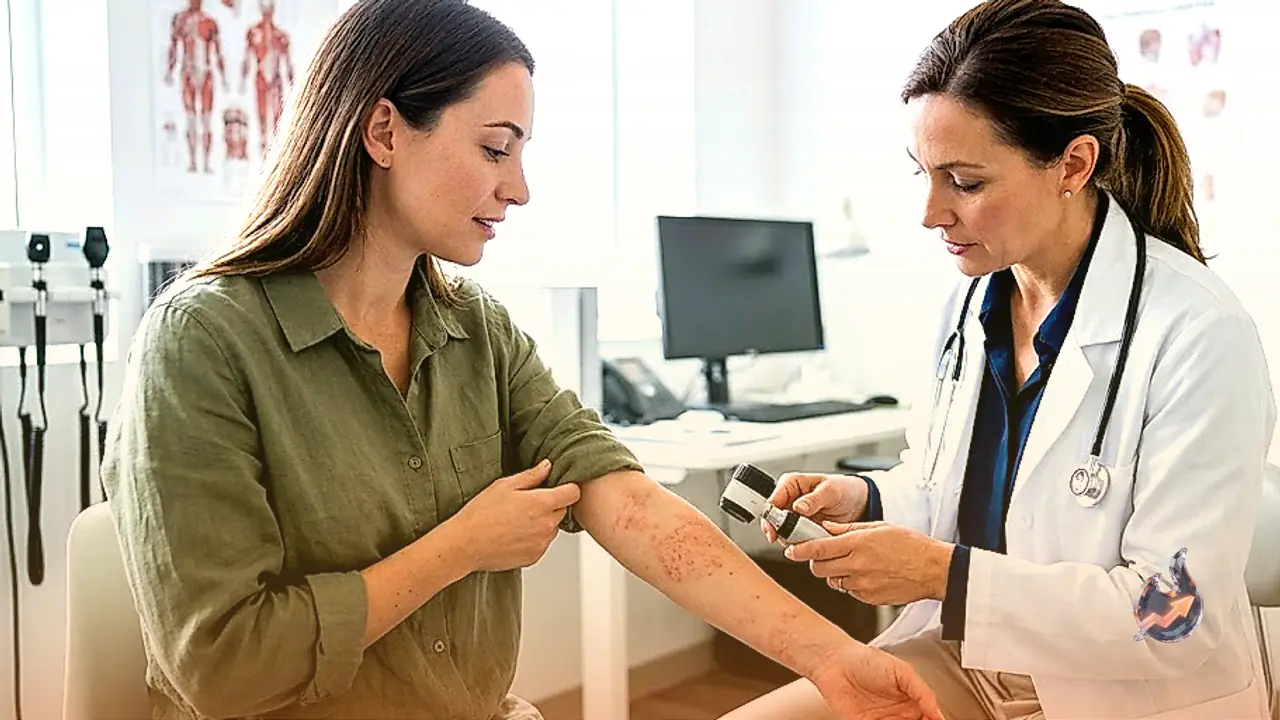
The diagnostic workflow engineered by Dognosis is designed to be entirely non-invasive, simple, and comfortable for patients. The process begins with the patient wearing a specialized cotton mask and breathing into it for approximately 10 minutes. During these 10 minutes of normal respiration, microscopic volatile organic compounds and chemical markers released by the body are trapped within the fabric of the mask. The mask sample is then safely sealed and transported to the laboratory for specialized testing.
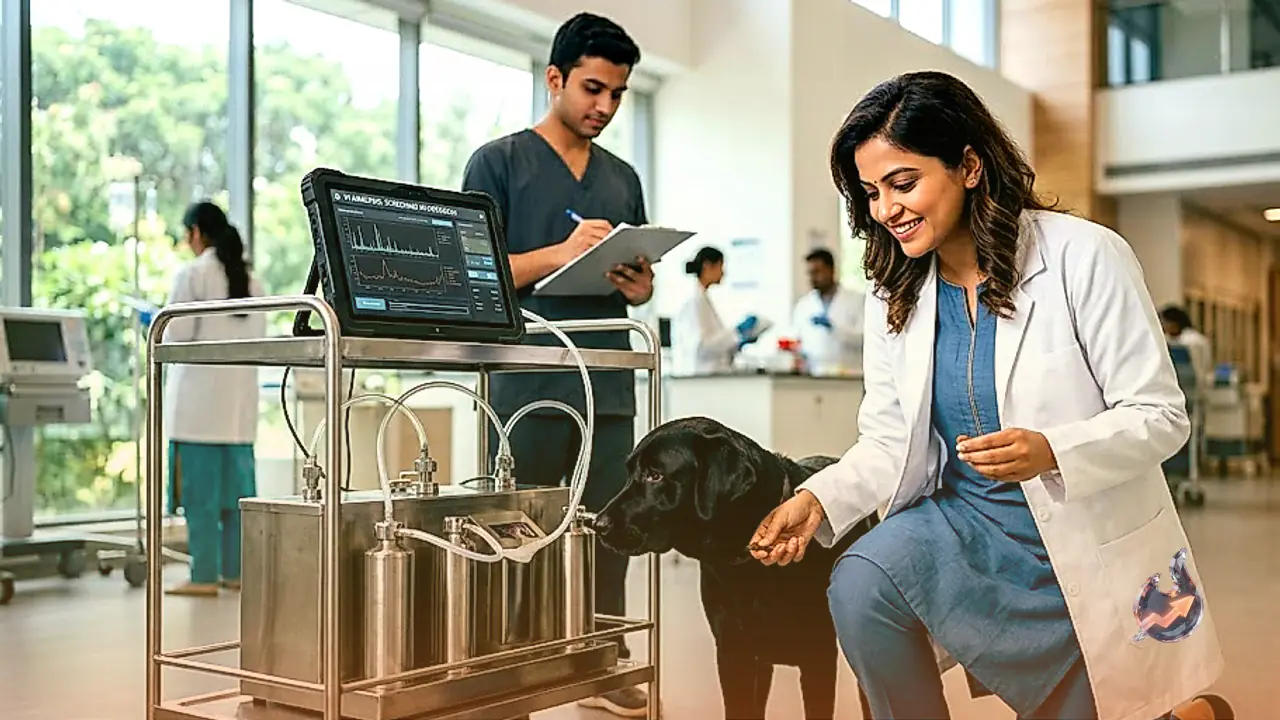
Inside the testing facility, the procedure resembles a scene from an advanced scientific research lab. Trained detection dogs sniff the submitted mask samples under controlled conditions. As the dogs interact with each sample, specialized sensors record their physical movements, respiration rates, and subtle behavioral reactions. These sensor data streams are then processed and analyzed using Artificial Intelligence (AI) algorithms. If a dog exhibits specific behavioral markers in response to a cancerous sample, the AI system evaluates the sensor inputs to confirm the finding. This combination of a 10 minute breathing sample and automated AI analysis yields rapid screening results.
Clinical Trials in Karnataka and 90 Percent Accuracy
This biological screening technology has advanced beyond theoretical concepts into rigorous clinical evaluation. According to data provided by Dognosis, comprehensive trials were conducted across 6 major hospitals in Karnataka, involving a total cohort of over 1,500 individuals. The collected breath samples were subjected to canine and AI evaluation to assess diagnostic performance.
The statistical findings of the trial demonstrated that the integrated canine AI detection platform achieved an accuracy rate exceeding 90 percent in identifying 7 distinct types of cancer. In clinical medicine, demonstrating over 90 percent diagnostic precision across a broad participant base is regarded as a significant benchmark. These empirical results suggest that combining canine olfactory sensitivity with machine learning algorithms holds considerable promise as a non-invasive primary screening tool.
Decoding Chemical Biomarkers Behind Canine Scent Detection
The scientific foundation of this research rests on the biological changes that occur when malignant cells develop in the human body. Pathological processes associated with cancer lead to the secretion of unique volatile chemical compounds into the bloodstream, breath, sweat, and urine. Because these chemical signatures exist in miniscule concentrations, they remain entirely undetectable to the human olfactory system.
In contrast, the canine olfactory apparatus contains hundreds of millions of sensory receptors, making it exponentially more sensitive than human scent perception. Numerous scientific studies have confirmed that trained dogs can differentiate subtle odor variations present in human breath, perspiration, and urine. The overarching objective of the researchers in Bengaluru goes beyond utilizing dogs directly; they aim to identify the exact chemical profiles that trigger the dogs' reactions. By mapping these specific volatile organic biomarkers, scientists hope to pave the way for electronic noses and mechanical sensors capable of replicating canine sensitivity in clinical settings.
Challenges in Large Scale Screening and Future Outlook
While the preliminary findings from the Karnataka study are highly encouraging, medical experts emphasize that further clinical validation is essential before this method can be integrated into routine diagnostic practice. Transitioning a promising technology from early-stage trial success to standardized healthcare implementation presents distinct challenges.
Healthcare specialists point out that deploying animals within mainstream hospital screening pipelines presents operational hurdles. Maintaining standardized training protocols, ensuring animal welfare, and guaranteeing uniform diagnostic accuracy across continuous operations require substantial resources. Consequently, experts note that canine detection will not immediately replace conventional oncological diagnostics or tissue biopsies. Nevertheless, this innovative fusion of biology and technology offers a compelling avenue for early cancer detection, potentially serving as a valuable supportive tool in patient care.