























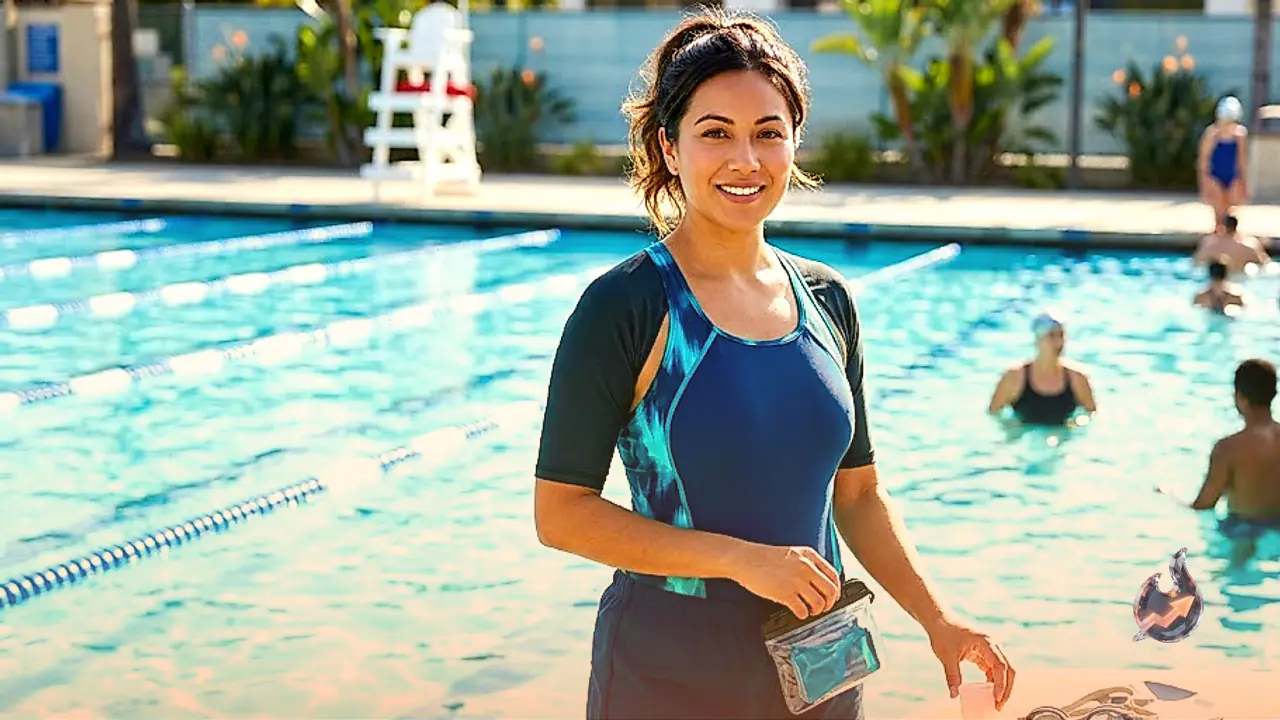

Many women experience confusion and hesitation when deciding whether to swim during their menstrual cycle. A widespread belief suggests that stepping into a swimming pool causes menstrual bleeding to stop entirely. This persistent myth frequently prompts women to avoid aquatic fitness and swimming sessions altogether during their periods. However, medical specialists explain that this temporary reduction in visible blood flow is strictly governed by physical fluid mechanics rather than an abrupt pause in the body's natural cycle.
The Physics of Hydrostatic Pressure and Menstrual Flow
When an individual enters a body of water, liquid surrounds the body and exerts physical pressure against it from all directions. In physics and medicine, this force is referred to as hydrostatic pressure. This external pressure directly opposes the pull of gravity that normally draws menstrual blood downward and out of the body. As a result of this upward counter-force, the outward movement of blood from the vaginal opening slows down substantially or momentarily comes to a halt while submerged.
It is important to understand that this physical effect does not signal a stoppage of uterine shedding or the internal menstrual cycle. The biological process continues uninterrupted within the body. The moment a person exits the swimming pool and steps onto dry ground, normal gravitational pull resumes its standard effect on the body, causing menstrual flow to continue just as before.
Choosing Appropriate Hygiene Products for Water Activities
Maintaining proper hygiene while swimming on your period depends heavily on selecting the correct protection. A common mistake is attempting to swim while wearing standard sanitary pads. Pads are designed with highly absorbent materials that immediately soak up pool water upon contact. Consequently, they become heavy, saturated, and completely incapable of retaining menstrual blood, creating a high risk of leakage.
Healthcare professionals strongly recommend internal protection options such as tampons or menstrual cups for water activities. Because these products remain positioned inside the vaginal canal, they collect or absorb menstrual fluids before they can exit into the surrounding water. Selecting between tampons and cups should be based on personal comfort, past usage experience, and advice from a healthcare provider.
Health Benefits and Key Safety Guidelines
Engaging in light swimming during menstruation actually offers multiple health benefits. Gentle aquatic exercise stimulates the central nervous system to release endorphins, which act as natural pain relievers and mood enhancers. This surge in endorphins can effectively ease uterine muscle cramping, relieve lower back tightness, and alleviate period-related mood swings.
Nevertheless, personal health boundaries must always be respected. If an individual is suffering from abnormally heavy bleeding, severe menstrual cramps, lightheadedness, or underlying medical conditions, swimming should be postponed. Consulting a doctor before swimming is always advisable when experiencing unusual discomfort or heavy flow.