























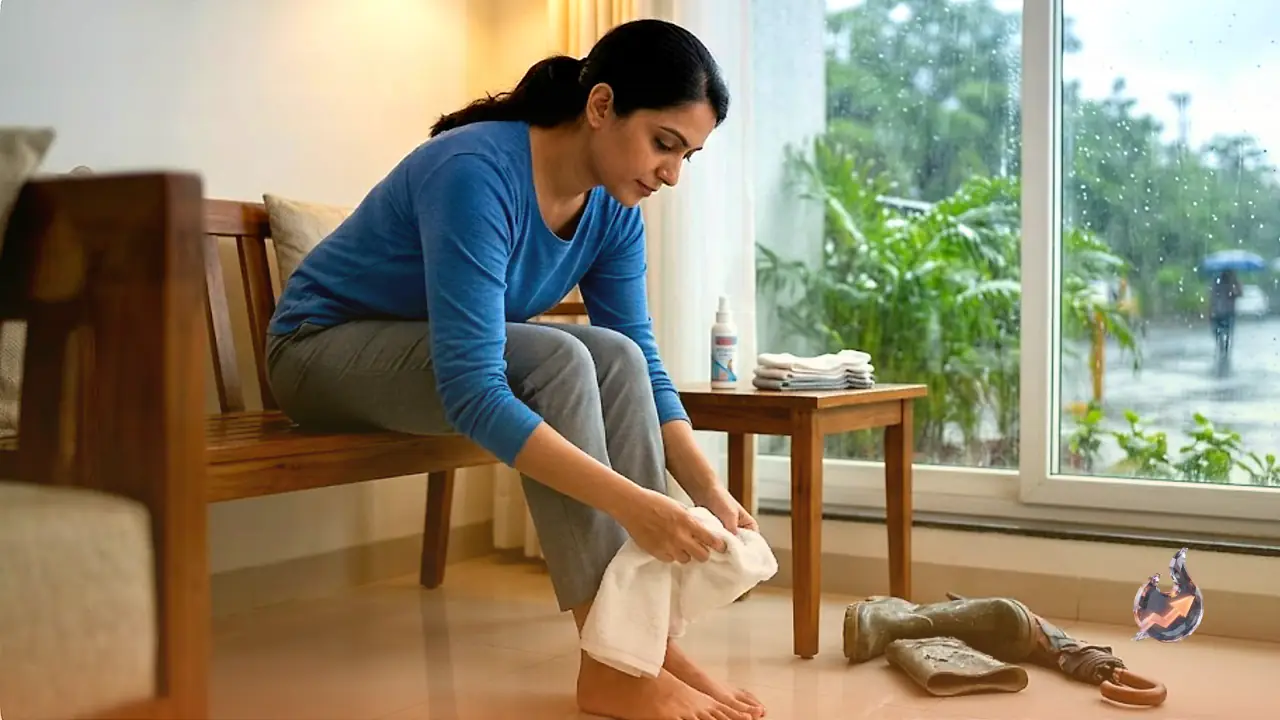

The rainy season may bring cooler weather and lush greenery, but it also brings a sharp rise in the risk of fungal infections on the feet. The problem hits hardest for people whose feet stay wet or damp for long stretches of time, and it can quickly turn into itching, redness, burning, bad odour and peeling skin. The encouraging part is that a few simple habits can go a long way in keeping this problem away.
Why fungus spreads so easily during the rains
Fungus needs a warm, moist environment to grow, and the monsoon creates exactly those conditions. Shoes and socks often stay wet for hours during the rainy season, allowing moisture to build up around the feet. If foot hygiene is not maintained properly during this period, the risk of a fungal infection rises further. The problem is especially common among people who sweat heavily or who wear closed shoes for long hours at a stretch.
Keep your feet clean and completely dry
After coming home soaked from the rain, the first thing to do is wash the feet thoroughly with clean water and then dry them completely. Special attention should go to the spaces between the toes, since moisture tends to linger there the longest, making it the most likely spot for a fungal infection to take hold.
Change sweaty or rain-soaked socks and shoes right away
If socks or shoes get wet for any reason, they should not be kept on for long. Switch to clean, dry socks instead of wet ones, and let shoes dry out completely before wearing them again, so that no moisture is left trapped inside.
Choose footwear wisely
Shoes or sandals that allow air to pass through easily are a better choice, since they reduce the build-up of sweat and moisture around the feet. Wearing very tight or fully closed shoes for long periods should be avoided, as they trap air and moisture inside instead of letting them escape.
Small hygiene habits make a big difference
Keep toenails trimmed and clean at all times. Also avoid sharing shoes or socks with anyone else, since doing so raises the risk of a fungal infection spreading from one person to another.
Don't ignore the early warning signs
If there is persistent itching, red rashes, peeling skin or any kind of odour on the feet, it should not be brushed aside as a minor issue. Consulting a doctor in time can stop the infection from worsening, while ignoring it can allow the problem to turn far more serious.
A few other small precautions also help considerably. Avoid standing in rainwater for longer than necessary. After returning home, always wash and dry the feet thoroughly. If an anti-fungal powder or cream is needed, use it only on a doctor's advice rather than starting it on one's own.
Why foot care matters even more for people with diabetes
People living with diabetes need to pay extra attention to foot care, since their risk of infection can be higher than that of others. This makes a little extra caution during the monsoon especially important for them, so that a small amount of dampness or a moment of neglect does not turn into a much bigger problem.