























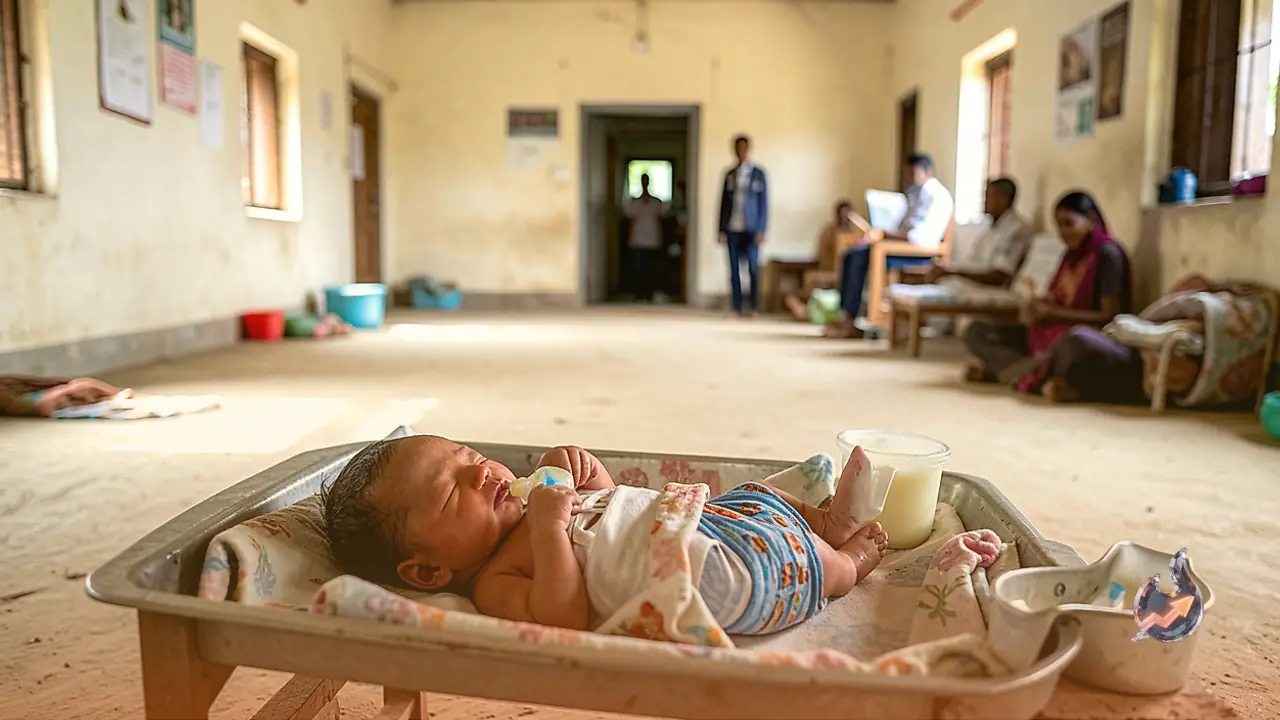

Raising newborns and small infants requires utmost vigilance from parents, as minor oversights can sometimes lead to serious health complications. Particular caution is necessary while feeding a baby. Forcing a feed or using an incorrect posture can cause milk to enter the infant's windpipe, creating a critical medical emergency. A senior pediatrician based in Bahraich has detailed the correct techniques and essential safety measures for feeding babies.
The Dangers of Force-Feeding and Lying Down
Dr. Shashir Agarwal, a senior pediatrician at Mahesh Children's Polyclinic in Bahraich, explained that parents often attempt to feed babies while they are crying or sleeping. Doing so can prove dangerous. In such instances, milk can bypass the food pipe, enter the respiratory tract, and reach the lungs. This can severely obstruct the infant's breathing and trigger a medical crisis.
Proper Posture and Feeding Techniques
According to the doctor, if an infant is crying, caregivers should first soothe the child rather than attempting a forced feed. Similarly, feeding a baby while they are lying completely flat or fast asleep should be avoided. Proper support for the head and body is vital during feeding. Hold the infant in your lap with their head elevated to significantly reduce the risk of milk entering the windpipe.
Burping and Post-Feeding Care
Dr. Shashir Agarwal advised that after a feed, infants should be held upright in the lap for a brief period. Gently patting the baby's back can help them burp. Specifically, children up to 6 to 7 months old should not be laid down immediately after a meal. Parents sometimes panic when a baby spits up milk, making proper post-feeding handling essential.
When feeding, caregivers must monitor the baby's posture, crying patterns, and breathing. If any distress is observed, wasting time on home remedies should be avoided in favor of consulting a qualified medical professional.
Avoiding Unqualified Practitioners
If an infant's health deteriorates, parents must refrain from self-medication or visiting quacks. In case of health issues, one should immediately contact the nearest Community Health Center (CHC) or a qualified physician. If adequate treatment is unavailable locally, the child should be taken to a larger hospital without delay. Panicking and traveling long distances should be avoided in favor of seeking immediate help from the nearest capable doctor.