






















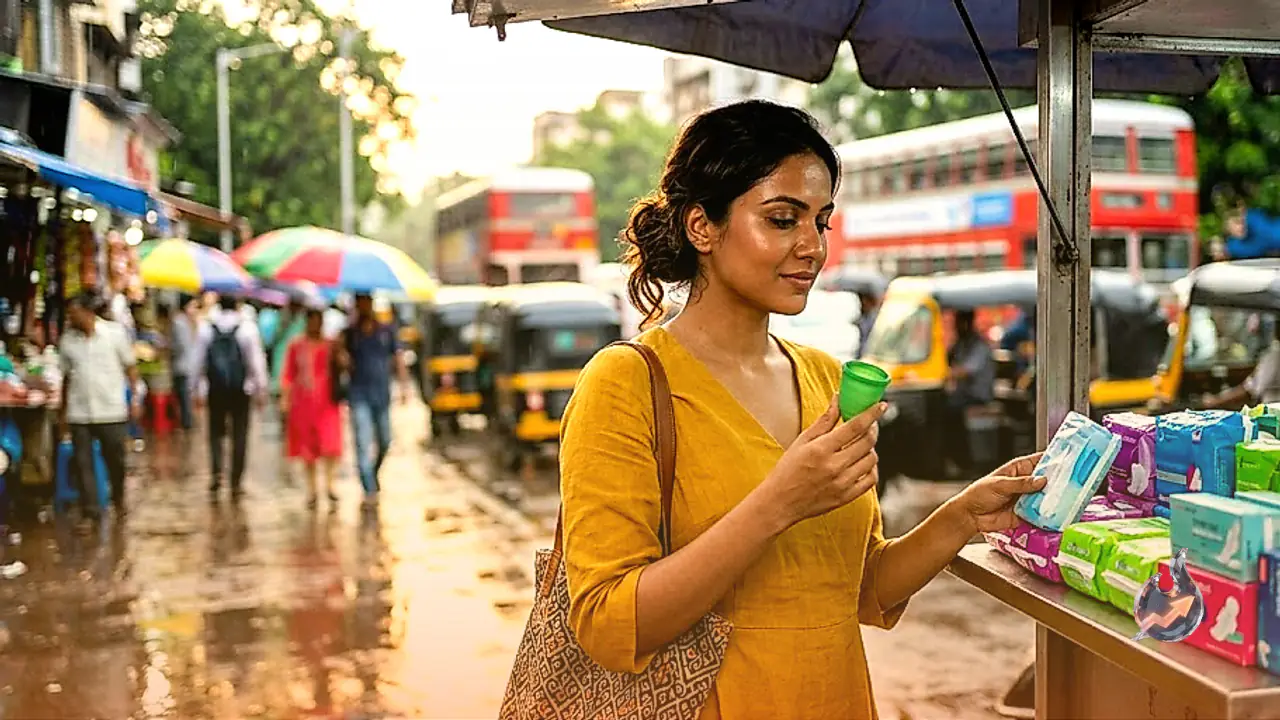

Monsoon rain might feel refreshing, but for many people who menstruate it brings a fresh set of problems, because deciding between sanitary pads, tampons and menstrual cups suddenly gets a little more complicated during the rainy months. Humidity, sweat and long hours spent in damp clothing can all add to the discomfort during periods in this season, making an already sensitive time of the month feel even more taxing. There is no single right answer for everyone, since the best choice really comes down to your daily routine, how heavy your flow is, and how comfortable you personally are with a given product. Understanding what each option genuinely offers, and where each one falls short, can help make periods considerably easier to manage through the rains.
Why Periods Feel Harder to Manage in the Rain
During the monsoon, moisture in the air stays elevated for long stretches at a time, which means skin can feel damp for hours and sweating increases well beyond what it would be in drier weather. If a period product is not changed on time in this kind of climate, the chances of rashes, itching and general discomfort rise noticeably. That is why, during the monsoon, picking the right product is only half the job done, keeping it clean and swapping it out on a strict schedule matters just as much as the choice of product itself.
Sanitary Pads Remain the Easiest Option, With a Few Precautions
Sanitary pads are still the most widely used period product around, and they tend to be the simplest and most convenient choice for anyone who has never tried tampons or a menstrual cup before. But in the rainy season, wearing a single pad for too long can trap extra moisture against the skin, which raises the risk of irritation or rashes developing. Anyone with a heavier flow, or who spends long hours away from home during the day, is advised to change a pad every 4 to 6 hours to keep moisture and bacteria from building up over time.
Tampons Can Offer More Comfort for an Active Routine
For people who spend most of their day at the office, in college or out travelling, tampons can often feel more comfortable than pads during the monsoon months. Since a tampon is used internally rather than externally, outside humidity has far less effect on overall comfort, and the worry about visible stains on clothing is also considerably reduced. That said, one precaution matters a great deal here, a tampon needs to be changed within 4 to 8 hours without exception. Leaving the same tampon in place for longer than that window raises the risk of infection, so it should always be used strictly according to the instructions printed on the product.
Menstrual Cups Provide Longer-Lasting Protection
For anyone who has already learned how to use a menstrual cup correctly, the monsoon season can actually turn out to be quite convenient in practice. A cup that is inserted the right way can offer protection for much longer stretches of time, cutting down significantly on how often it needs to be changed through the day. First-time users, however, may need some practice and extra time before they feel comfortable inserting and removing it smoothly. It is also essential to clean the cup thoroughly after every single use, and to sterilise it once the period ends completely, so that there is no lingering risk of infection.
So What Is Actually the Best Choice This Monsoon?
There is no single correct answer to this question, and that is the whole point. Sanitary pads remain the right pick for anyone who simply wants a familiar, dependable option they already know how to use. Tampons may feel like a better fit for a more active lifestyle that involves long hours away from a washroom. And for those who are already comfortable using a menstrual cup, it can prove both convenient and genuinely long-lasting even during the heaviest of rains. What matters most, regardless of which product is eventually chosen, is changing it on time and maintaining consistent personal hygiene throughout the cycle. Anyone who notices persistent itching, odour, sharp pain or unusual discharge should consult a doctor without delay rather than waiting it out.
Ultimately, the secret to comfortable periods during the monsoon does not lie in any one particular product at all, it lies in using whichever product is chosen correctly and pairing it with good hygiene habits. Choose the option that best suits your needs, your flow and your day-to-day comfort, and never skip changing it on time no matter how convenient it might seem in the moment.