






















Monsoon season brings a fresh wave of insect borne illnesses every year, and this time young children are bearing the brunt of it. A tiny insect called the sand fly, smaller even than a mosquito, is behind a string of infections among children across several districts of Gujarat, and doctors are warning that if the bite goes unnoticed, the resulting infection can turn serious.
Sand flies are typically found in damp spots, bushes, animal enclosures, cracks in soil and unclean areas. The insect stays hidden through the day and becomes far more active in the evening and at night, which is why most bite cases tend to surface after dark.
Cases of children affected by sand fly bites have recently been reported from Gujarat's Gandhinagar, Sabarkantha, Kheda, Aravalli and Panchmahal districts. What stands out is that the infection is spreading faster among children under 15 years of age, a trend that has left parents worried.
What exactly is a sand fly
According to Dr Neha Garg, consultant neonatologist at Yatharth Hospital, Agra, a sand fly bite is not limited to itching or irritation, it can also trigger a serious illness called leishmaniasis, commonly known as kala-azar. The disease is caused by a parasite named Leishmania that enters the body through the bite of an infected sand fly. Interestingly, the insect first feeds on the blood of an infected person or animal, and only when it later bites another person does the infection actually get transmitted. Dr Neha Garg clarifies that the disease does not spread through ordinary contact, handshakes, sitting together or sharing food, meaning a bite is the only route through which it moves from one person to another.
From early itching to fever and weakness, here are the symptoms
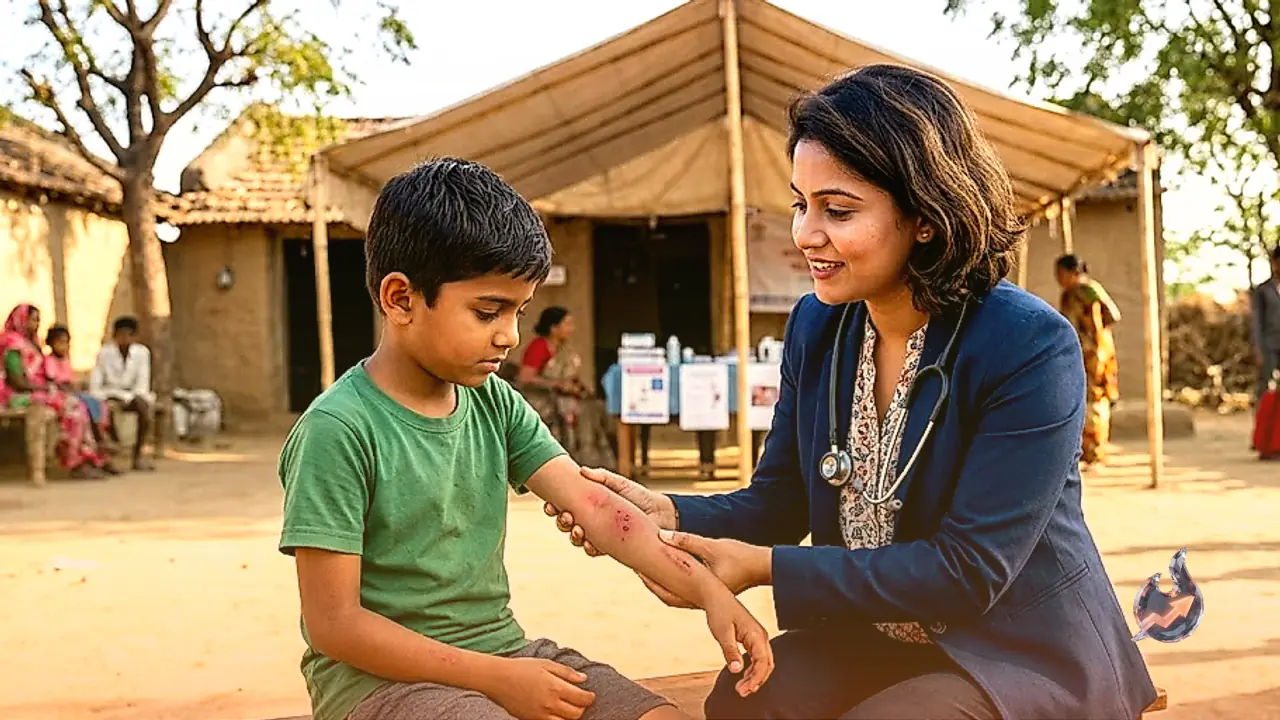
After a sand fly bite, the skin initially develops red rashes along with itching, a burning sensation or mild swelling. In most cases it stops there, but if the infection spreads deeper, the picture changes considerably. Patients can then run a fever for several days at a stretch, feel extreme weakness, lose weight rapidly and experience a drop in appetite. Anemia can also set in, along with an enlargement of the spleen and liver. Dr Neha Garg notes that some patients develop wounds or ulcers on the skin that refuse to heal for a long time, and this is the sign that should be taken most seriously since it can easily be mistaken for a minor wound and ignored.
How to protect against it, according to the doctor
Dr Neha Garg says the most important step is to keep the home and its surroundings consistently clean. Garbage should not be allowed to pile up and moisture should not be allowed to collect anywhere nearby, since that is the main condition that lets sand flies breed. Wearing full sleeved clothing at night, using insecticide treated mosquito nets and applying insect repellent creams or sprays also go a long way in preventing bites. Dr Neha Garg has clearly stated that anyone experiencing prolonged fever, skin wounds or any unusual symptom should get examined by a doctor without delay. She adds that timely identification along with proper treatment can keep the disease under control to a large extent, so there should be no carelessness, especially in households with young children.