



















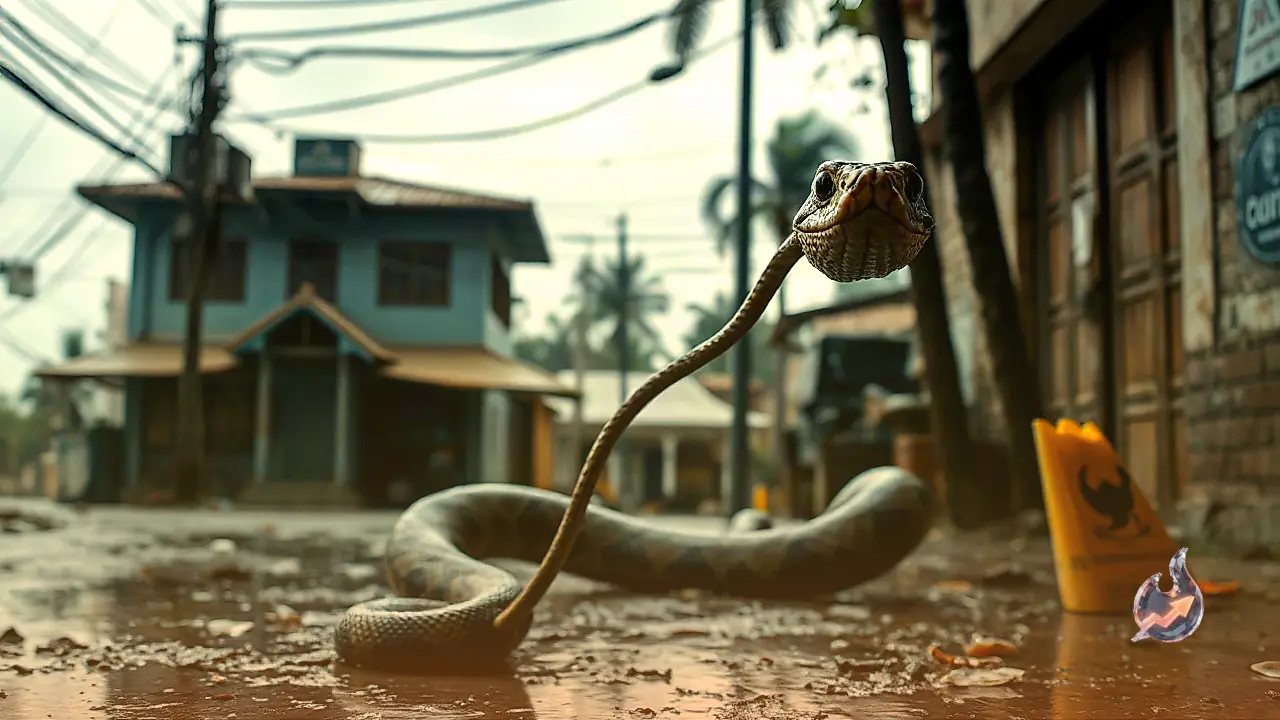

Snakebite incidents register a sharp increase during the rainy season across various regions. West Bengal records the highest number of snakebite cases, while Karnataka accounts for the maximum number of fatalities due to snakebites. In India, the common krait is responsible for the highest number of deaths. Often referred to as a silent killer, this snake remains most active during the night. In search of food after dark, it can make its way into residential homes and accidentally bite people while they are asleep. The warmth of the human body and the scent of sweat tend to attract this reptile. The venom directly affects the nervous system, leading to drowsiness, drooping eyelids, and breathing difficulties. Typically, snake venom begins to spread throughout the body within thirty minutes to two hours.
Understanding Venomous Species and Their Effects
India is home to over three hundred species of snakes, but four among them are the most venomous: the Indian cobra, the common krait, Russell's viper, and the saw-scaled viper. The Indian cobra preys on rats and other snakes and can appear in any color. The common krait features yellow and black bands and its bite is often imperceptible. Russell's viper inhabits rocky and forested areas, usually hissing loudly before striking and causing intense pain. The saw-scaled viper is much smaller and also makes a warning sound. Antivenom in India is manufactured using the venom of these big four snakes. The neurotoxic effects of these bites require immediate medical attention to prevent respiratory failure and other severe complications.
The Danger of Superstition and Real Experiences
Renowned snake rescuer Muraliwale Housla emphasizes that anyone bitten by a snake should be rushed straight to a hospital without wasting time on rituals or faith healing. Superstition remains the leading cause of death following snakebites, as people waste precious time seeking herbal remedies or exorcisms instead of proper medical treatment. Reaching a hospital quickly ensures that treatment begins early and recovery speeds up. Muraliwale Housla, whose real name is Murlidhar Yadav and who hails from Jaunpur, shared his personal ordeal of being bitten by a cobra during a rescue operation. Although he was confident in his handling skills, the snake bit his hand, plunging him into intense pain and making him realize the gravity of the situation. It took thirty-eight minutes to reach the hospital, and his condition began deteriorating rapidly after thirty minutes, but timely medical intervention saved his life.
Debunking Myths and Proper First Aid
Muraliwale Housla noted that only eight snake species in India are venomous, with four or five being the most common. Myths such as snakes capturing a photographic image in their eyes before dying, the existence of wish-granting serpents, or snakes responding to snake charmer flutes are entirely untrue and only exist in movies. Snakes are more frequently encountered in areas prone to waterlogging and floods. The cobra is known by various regional names such as naja naja, naag, pitar, palti, and gehuan. The king cobra, which can grow up to eighteen feet long and feeds exclusively on other snakes, is found in states like Kerala, Karnataka, and Uttarakhand. If bitten, a victim must be taken directly to a district hospital. The wound should be cleaned properly, a bandage applied loosely, the bitten limb kept motionless, and the victim strictly prevented from falling asleep.
Preventive Measures Around the Home
While snakes can approach homes at any time, several preventive measures can minimize the risk. Homeowners should ensure that water does not stagnate around the property and that surrounding grass, bushes, brick piles, or stacks of wood are cleared. Gaps beneath doors, window cracks, and wall crevices must be properly sealed. Installing wire mesh on windows and applying door sweeps or rubber seals can block entry points. Additionally, commercial snake repellent powders and sprays, which are easily available online, can be used around the perimeter. It is important to note that snakes are not naturally repelled by the scent of ordinary household plants or items, making physical barriers and proper sanitation the most effective defenses.