
















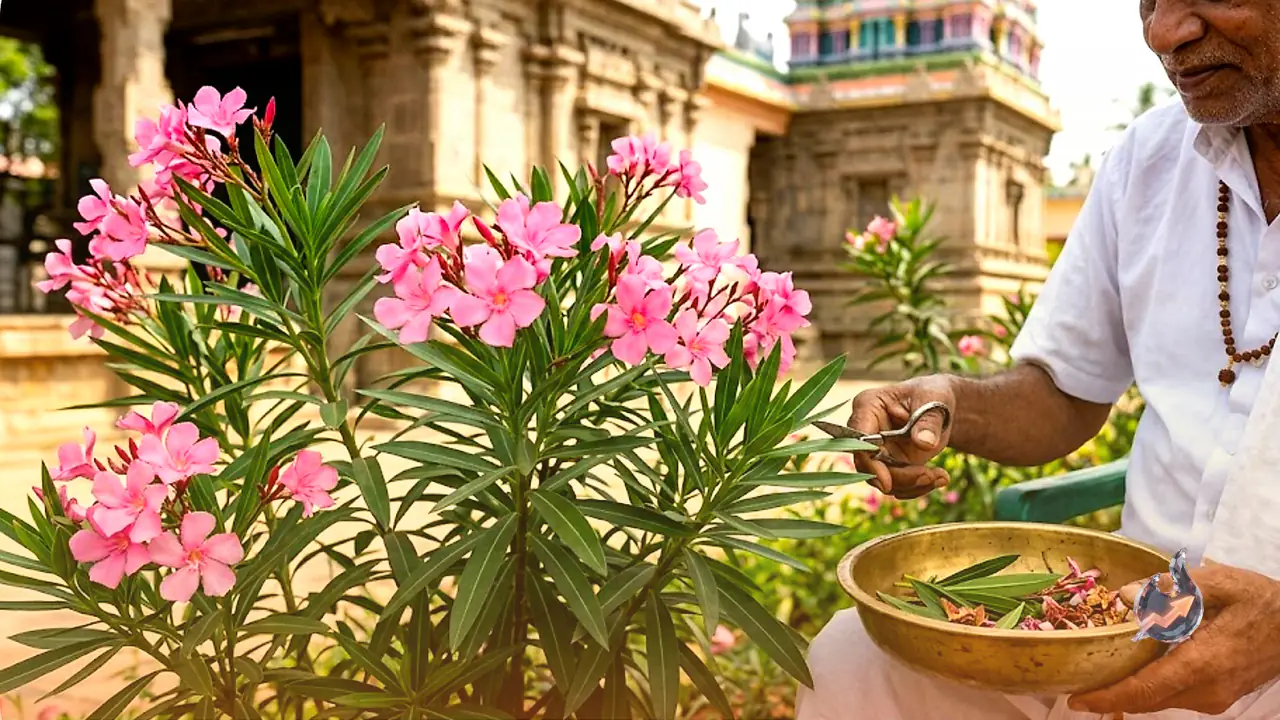

Loaded with white, pink, red and yellow blooms, the oleander plant is a familiar sight in home courtyards, gardens, parks and near temples. Its beauty draws the eye effortlessly, which is why it ranks high among ornamental plants. Yet most people have no idea that this plant is far more than a decorative one. In Ayurveda it holds the status of a notable medicinal plant, where its flowers, leaves, roots and other parts have been used in traditional treatment for centuries.
According to Gonda based Ayurveda expert Vaidya Vishnu Dutt Prajapati, oleander contains several properties that make it important from an Ayurvedic point of view. But he issues a strong warning as well. The plant is poisonous, so it should never be used without proper knowledge and the advice of someone qualified. The benefits come only when it is taken in the right quantity and the right way.
Traditional Use in Skin Problems
Vaidya Vishnu Dutt Prajapati explains that the leaves and flowers of oleander have long been used for certain skin troubles. In rural areas people grind its leaves into a paste and apply it to the skin. It is believed to bring relief in itching, boils and some other skin conditions. However, every person's skin behaves differently, so consulting an expert before any such use is essential.
The Properties Hidden in the Flowers
Ayurveda does not consider the oleander flowers any less useful. They go into several traditional medicinal preparations. According to Prajapati, the flowers contain elements that can benefit the body in various ways. But here too the dose and method matter most, because the wrong use can prove harmful to health.
Helping Wounds Heal
Oleander has also been used to heal wounds since old times. In some Ayurvedic treatments, medicines made from its leaves and bark are applied to old wounds and skin problems. This use, however, should only be carried out under the supervision of a trained expert, never on one's own.
Relief in Swelling and Pain
Ayurveda regards oleander as useful in problems linked to swelling and pain as well. Some traditional treatment methods say that its external application can ease joint pain and inflammation. Many vaidyas advise applying a paste made from its leaves to the affected area, but the quantity and method are watched very carefully.
Warts and a Warning About the Milky Sap
In traditional medicine oleander has also been used for warts on the skin and certain other external disorders. In some places its milky sap is applied, but this sap is poisonous and can damage the skin if used incorrectly. That is exactly why it is considered unwise to even touch it without expert advice.
Prajapati repeats that oleander flowers form part of many Ayurvedic preparations. According to some traditional beliefs these flowers carry properties that can be beneficial for certain bodily problems. But their use is always kept to a controlled quantity and under the watch of someone qualified.