























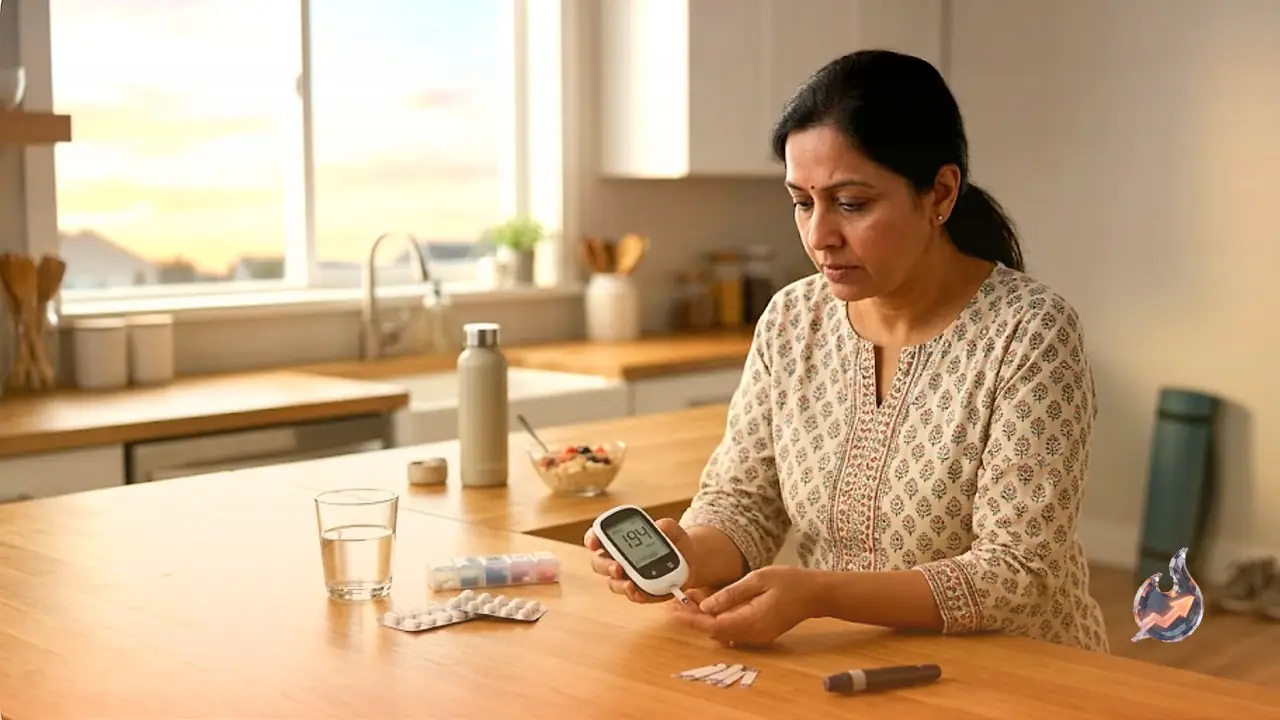

Many people managing diabetes find themselves baffled when their morning fasting blood sugar reading is high, even after a light dinner or no food at all past a certain hour. The problem is not their diet or their medication. A natural, predictable hormonal process called the Dawn Phenomenon is behind it. Certified nutritionist and dietitian Shweta Panchal recently shared a post on social media explaining why blood sugar rises in the early morning hours on an empty stomach, and what everyday changes can actually help bring it under control.
What the Dawn Phenomenon Is and Why It Hits Diabetics Harder
Between 2 AM and 8 AM, the body goes through a consistent hormonal shift. During this window, levels of cortisol and growth hormones surge, sending a signal to the liver to release its stored glucose into the bloodstream. This process happens in every person, whether or not they have diabetes. In people without the condition, insulin swiftly handles the extra glucose without any noticeable effect. In diabetics, however, the body's ability to regulate that sudden glucose release is impaired, so the glucose accumulates in the blood. The result is a high fasting reading in the morning even without eating anything overnight. Most people have no idea this hormonal mechanism exists and end up blaming their food choices or their treatment plan instead.
5 Practical Ways to Reduce Morning Blood Sugar
According to Shweta Panchal, a high morning blood sugar number does not automatically mean the medication dose needs to go up. Specific lifestyle habits can significantly reduce how much the Dawn Phenomenon affects the fasting reading.
- Eat dinner by 7 PM: Having a late or heavy dinner disrupts glucose secretion throughout the night. Finishing dinner by 7 PM gives the body sufficient time to process food before the Dawn Phenomenon window begins, leading to a more stable overnight glucose level.
- Drink water as the very first thing in the morning: Starting the day with water is strongly recommended. Those who habitually reach for tea or coffee immediately after waking should make a conscious switch.
- Have a protein-rich breakfast within 30 minutes of waking: Eating a meal high in protein in the first half hour after rising helps the body stabilize blood glucose levels quickly and effectively.
- Walk for at least 10 minutes: A short morning walk causes muscle contractions that draw glucose out of the bloodstream without requiring any insulin. It is one of the simplest and most effective natural ways to bring morning numbers down.
- Never skip breakfast: For diabetics, skipping breakfast is counterproductive. Going without the morning meal pushes cortisol levels even higher, which makes the blood sugar spike worse rather than better.
Understanding the Body Before Reaching for More Medication
Shweta Panchal emphasizes that managing elevated morning blood sugar does not always mean increasing the medication dose. Understanding what the body is actually signaling is the first and most important step. Eating dinner on time, taking a brief morning walk, and choosing a protein-forward breakfast are simple changes that can meaningfully reduce how much the Dawn Phenomenon affects day-to-day blood sugar readings, and that understanding, she argues, is the real solution.