




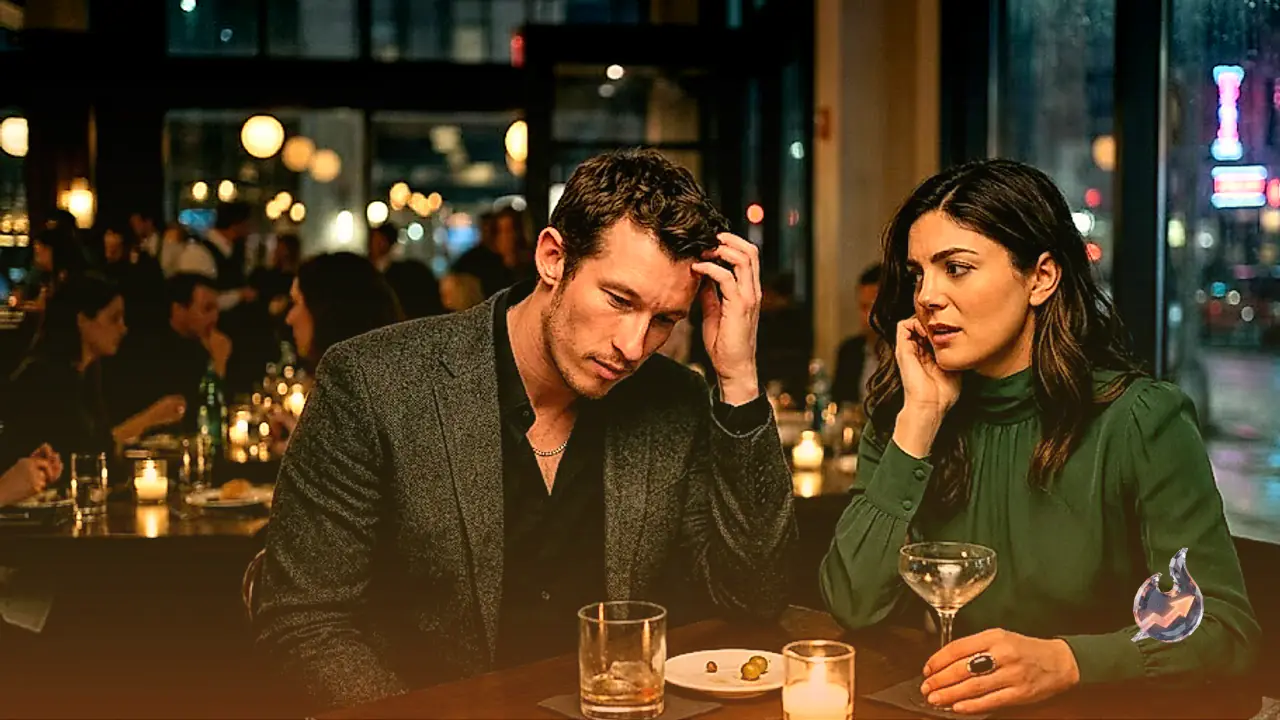

















The core proposition behind One Night Only essentially mirrors the central premise of The Purge, except reimagined through the lens of one-night stands. Much like the original Purge film dissolved into a standard home-invasion thriller, this feature fails to capitalized on its high-concept foundation. Director Will Gluck, well known for romcom hits such as Friends With Benefits and Anyone But You, transports classic genre tropes into a peculiar quasi-dystopia. The story could just as easily have played out across a traditional holiday like Valentine's Day or Halloween without significantly altering the narrative sequence. Nevertheless, the presence of such a bizarre and half-baked central idea offers a morbidly fascinating starting point.
A Dystopian Setup Clashing With Classic Genre Tropes
In this fictional setting, unmarried individuals face a strict ban on sexual intimacy for 364 days out of the year. The narrative kicks off as the countdown approaches a state-sanctioned night of open indulgence. Newly single New Yorker Owen, played by Callum Turner, sets out to find a consensual partner for the evening. Through a series of contrived coincidences, he repeatedly crosses paths with Allie, portrayed by Monica Barbaro, who is seeking a genuine romantic connection. Allie's imaginative daydreams represent virtually the only moments where the writing finds a genuine sense of humour or spice. While Turner and Barbaro display clear physical chemistry, their characters initially lack any meaningful emotional spark, steering the plot down an all-too-predictable path.
Weak Character Dynamics and Unfocused World-Building
Gluck's awkward attempt to overlay a traditional romantic comedy structure onto a high concept suitable for a political thriller forces the characters into unnatural behaviors. The overarching environment focuses on state control and the loss of individual choice. However, the film's own slapdash execution echoes that rigid conservatism, resulting in an experience that feels remarkably lacking in warmth and fun. Because the progression relies almost entirely on random happenstance, Owen and Allie are denied true agency. This leaves the dynamic feeling passive and flat when it ought to be filled with dynamic tension.
Failed Satire and a Weak Narrative Resolution
Had this dystopian premise functioned purely as subtle background flavor, viewers might easily have accepted it. Instead, nearly every dialogue scene devolves into heavy exposition meant to rationalize a world that never quite makes logical sense. Brightly lit street corner billboards feature amusing themed advertisements, but that creative attention might have been better spent developing the leads. In fact, roughly an hour passes before Owen and Allie engage in a meaningful, sustained conversation. Their banter flows decently as they navigate the chaotic night together, yet frequently stumbles on weak punchlines. Despite the leads' best attempts to ignite onscreen chemistry, the narrative struggles to decide whether it wants to be a satirical critique of authoritarian control or social prudishness. Ultimately, One Night Only surrenders to the very restrictions it attempts to critique, failing to provide the lively entertainment promised by its high-concept ticking clock.