



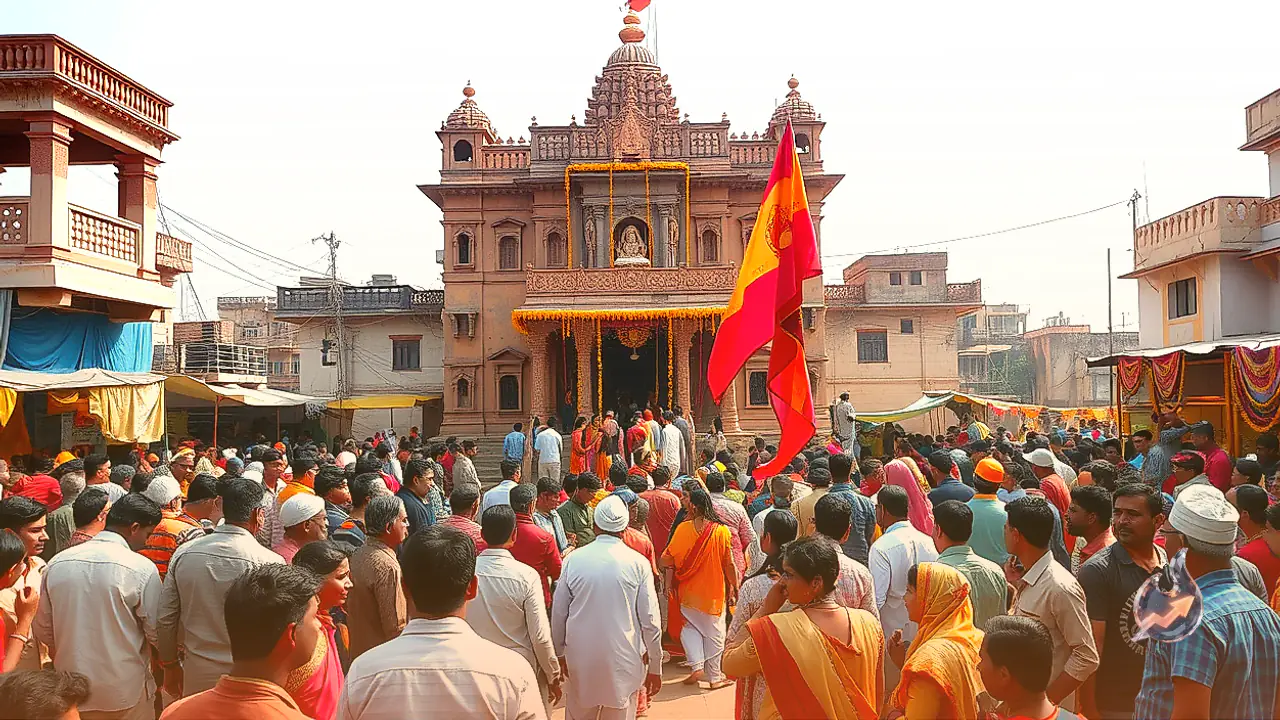














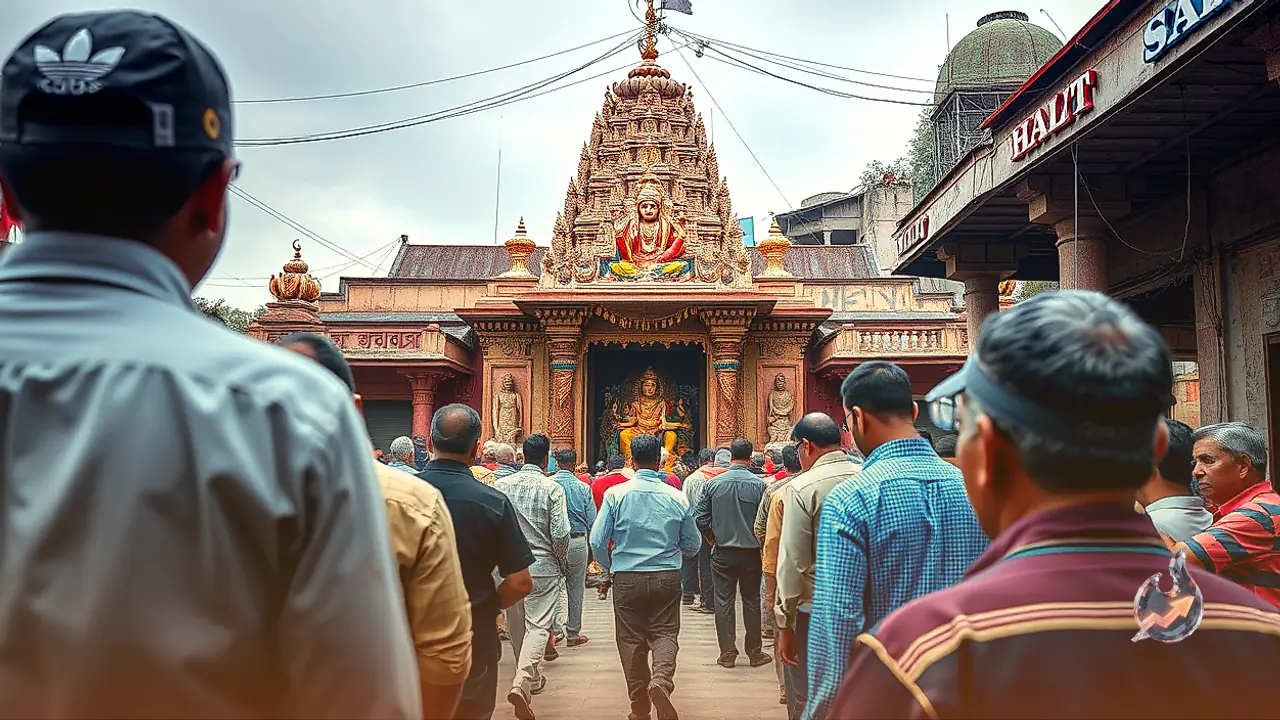

Deoghar has long been revered across India as a sanctified territory defined by deep-rooted spiritual traditions and age-old shrines. Among its distinguished places of worship stands the ancient Durga temple located in Rohini Estate, which trace its continuous devotional customs back to the Mughal era. During Navratri celebrations, regional interest around this sacred site surges significantly. The temple stands apart from standard places of worship due to its centuries-old historical episodes, an unconventional physical arrangement of deities, and an uncompromising convention of hosting major festivals without collecting public donations.
Foundation Predating 1700 CE And The Visit Of Ramakrishna Paramhansa
According to hereditary priest Jageshwar Pandey, the foundations of this sacred Durga temple were established prior to the year 1700 CE. Its spiritual sanctity has drawn seekers and holy figures across centuries, including the revered spiritual master Ramakrishna Paramhansa, who visited the shrine to offer prayers in 1868. The sanctuary has steadily retained its devotional significance, evolving into one of the central heritage landmarks for communities throughout the region.
Colonial Camp At Gauradih And The Decree Against Clay Idols
The most compelling chapter in the temple's documented past took place during the era of British colonial rule. At the time, British personnel maintained an active outpost in the neighbouring Gauradih area, situated merely 200 metres from the shrine. The temple had maintained an enduring ritual practice of installing and venerating clay idols of Goddess Durga. British officers expressed strong objections to the practice of worshipping clay forms and subsequently issued an official decree commanding the resident priest, Chakradhar Chakraborty, to cease the rituals immediately.
Tantric Adoration And The Startling Rearrangement Of Deities
Refusing to abandon the sacred observances despite colonial intimidation, priest Chakradhar Chakraborty resolved to continue the propitiation through rigorous Tantric methodologies behind closed doors. When the special devotional period concluded and the sanctum doors were unsealed before the waiting British officials, an extraordinary scene greeted the observers. The structural positions of the accompanying deities had visibly inverted. The idol of Lord Ganesha had shifted from the right side over to the left, while the statue of Lord Kartikeya had moved from the left side across to the right.
Officials Stunned As The Ban Was Lifted Permanently
Confronted with the sudden, inexplicable reconfiguration of the installed deities, several British officials present at the scene were left so thoroughly overwhelmed that accounts describe them losing consciousness and collapsing to the ground. Following this dramatic encounter, colonial authorities conceded to the divine power attributed to Goddess Durga. The restrictive directive was revoked without delay, granting full freedom to continue the traditional ceremonies uninterrupted. To this day, the temple exhibits this unique spatial arrangement, with Lord Ganesha situated on the right and Lord Kartikeya placed on the left, distinguishing it from conventional Durga shrines throughout the country.
Sustained Privately By The Estate Family Without Public Donations
While contemporary religious festivals commonly rely on widespread public subscription and fundraising drives, the Rohini Estate Durga temple operates on an entirely distinct principle. The shrine relies on zero external donations. All arrangements, religious offerings, and maintenance expenditures are borne exclusively by the descendants of the original estate family. Presently, Sanjeev Kumar Dev and Chiranjeev Kumar Dev oversee the temple's administration, upholding ancestral responsibilities and strictly adhering to traditional customary rites.
Pilgrims From Dozens Of Villages And Navami Traditions
The temple commands immense reverence across the district, welcoming devotees not only from Rohini village itself but from dozens of neighbouring settlements. Pilgrim footfall escalates substantially throughout the Navratri period, when worshippers gather in large numbers to seek blessings and place their personal petitions before the deity. Those whose prayers find fulfilment observe their customs by offering sacrifices on the day of Navami. This unyielding community devotion, combined with rigorous ritual continuity, keeps the historic shrine prominent among eastern India's sacred destinations.