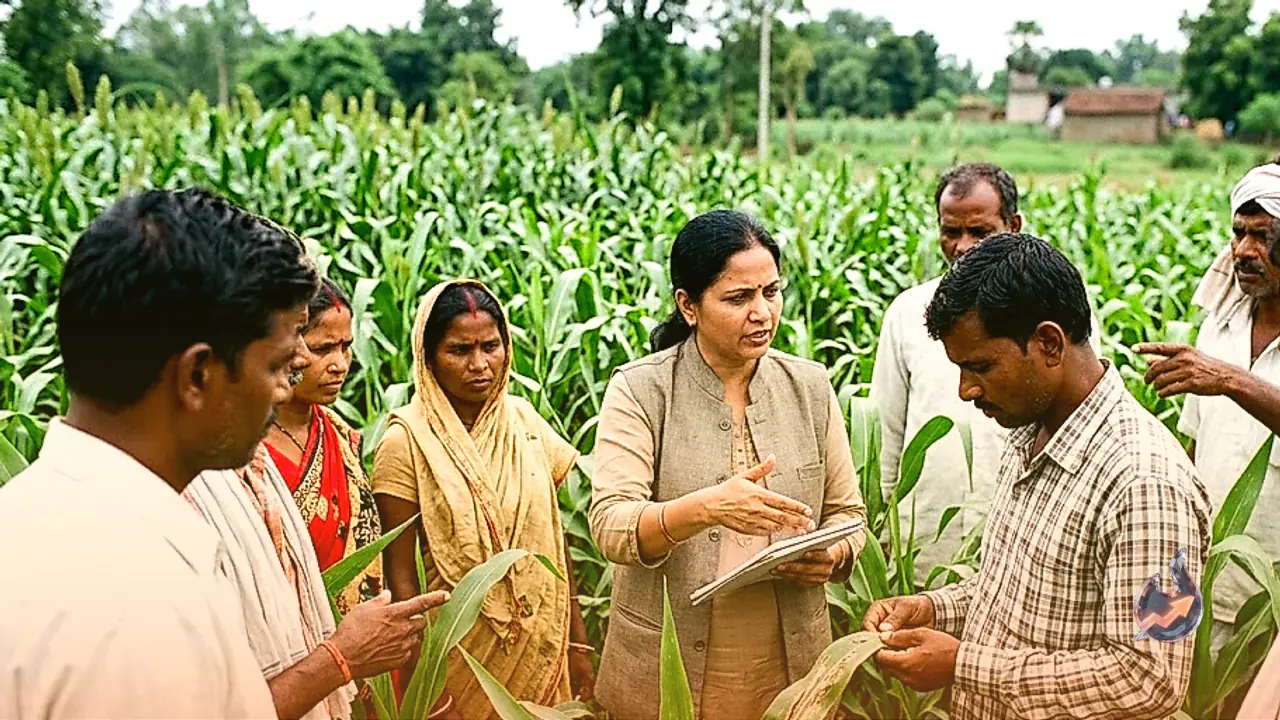






















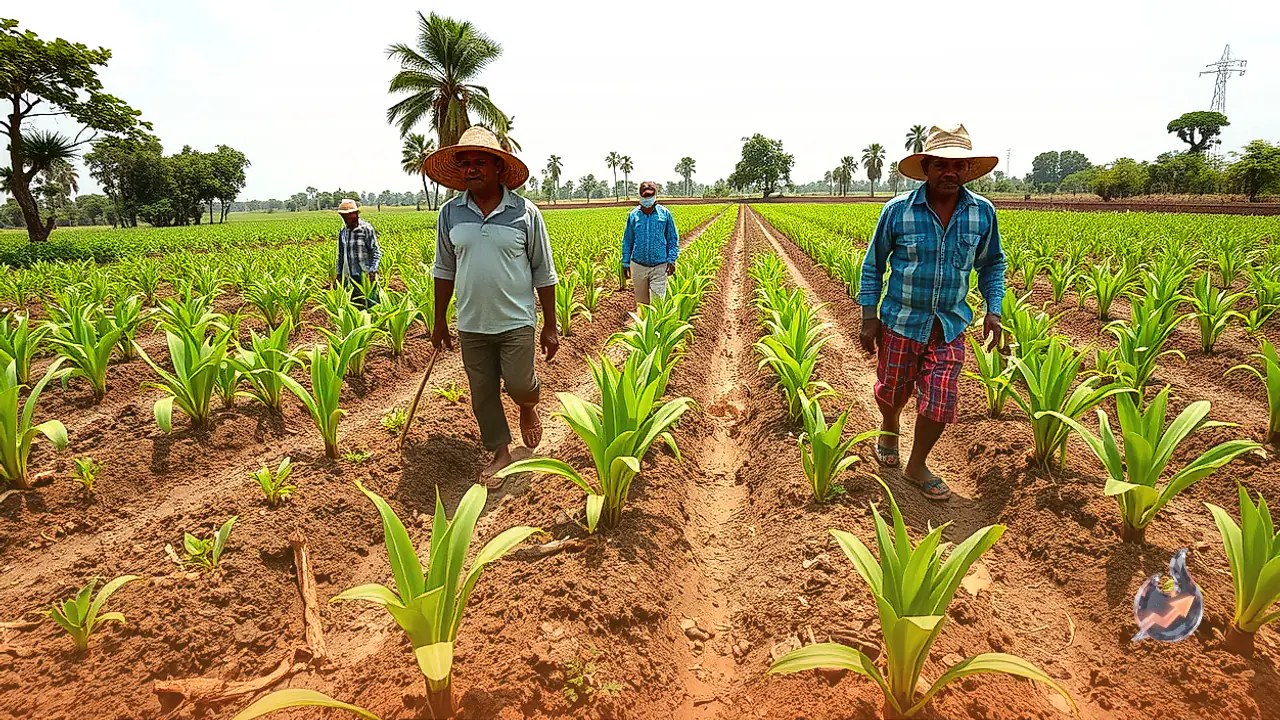

Farmers routinely cultivate staple crops such as paddy, wheat, potatoes, and an assortment of seasonal vegetables to secure their livelihoods. When climatic conditions remain supportive and harvest yields are robust, household expenses are comfortably covered. However, sudden weather disruptions or depressed market prices frequently prevent cultivators from achieving their projected earnings. Under such agricultural uncertainties, adopting a practical approach toward field management can unlock a parallel stream of revenue right within existing farmland. Cultivators generally leave field ridges completely vacant, even though this neglected land holds strong potential for secondary produce. According to agricultural expert Ambika from Deoghar, growers can systematically raise their overall earnings by cultivating moringa, widely known as drumstick or sahjan, right along these field borders. The primary merit of this agricultural practice is that farmers are not required to sacrifice or alter their regular cultivation of grains or vegetables. The principal crop continues to flourish undisturbed in the field interior while the perimeter boundaries nurture productive drumstick trees.
A Versatile Crop with Year-Round Market Value
Moringa represents an agricultural plant that enjoys consistent commercial demand across all twelve months of the year. Every part of this botanical asset holds practical value, with its foliage, blossoms, and hanging pods serving distinct culinary and nutritional purposes. In multiple regions, drumstick pods are locally referred to as suti and remain widely sought after for preparing daily vegetable dishes. Concurrently, the green leaves are incorporated into everyday dietary preparations due to their beneficial properties. This widespread culinary utility ensures that wholesale and retail markets maintain steady demand for different components of the plant. By transplanting drumstick saplings along unused border dikes, a cultivator establishes an auxiliary crop alongside the core agricultural production. Consequently, an uncultivated boundary that previously yielded nothing can be transitioned into a steady avenue for additional financial gain.
Essential Field Considerations and Pruning Guidelines
Prior to introducing drumstick saplings onto boundary dikes, cultivators must carefully evaluate their land structure and spatial orientation. Positioning each sapling requires precision so that the expanding branches do not physically obstruct regular field operations or tillage activities for the staple crop. Adequate sunlight must continue reaching the primary plants below, ensuring that their growth is not stunted by excessive overhead shade. Maintaining proper spacing between consecutive moringa trees, accompanied by systematic pruning of lateral branches, ensures that the boundary space functions efficiently without interfering with neighboring vegetation. Because soil characteristics, moisture levels, and sunlight exposure differ from one plot to another, consulting local agricultural officers regarding exact planting distances and maintenance protocols remains highly advisable before undertaking large-scale border planting.
Maximizing Margins Through Space Optimization
Efficient utilization of marginal land carries immense importance in modern agriculture, where operational costs continue to rise. Preparing fields for cultivation demands significant financial investment toward quality seeds, commercial fertilizers, irrigation power, and hired manual labor. In such circumstances, cultivating a resilient and commercial plant along previously barren border dikes allows farmers to extract maximum value from their landholding. The harvested produce can directly fulfill household dietary requirements or be transported to nearby markets to generate supplementary cash returns. The eventual magnitude of monetary gains naturally depends on variables such as the total volume of planted saplings, the quality of crop care, physical harvest yields, and prevailing market rates for drumsticks at the time of sale.