























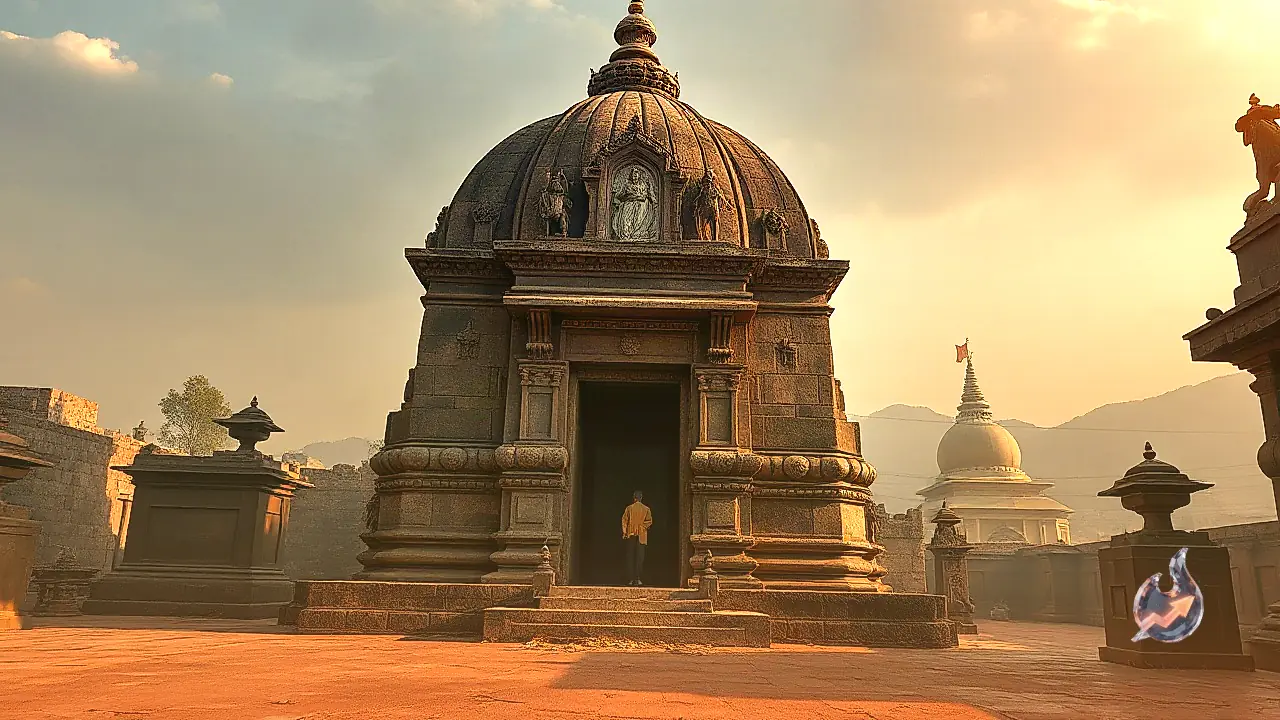

Situated in Deoghar, Jharkhand, the Baba Baidyanath Dham stands as one of India's prominent Jyotirlinga shrines. Beyond serving as a sacred pilgrimage destination for millions of devotees, the temple complex has long drawn widespread fascination due to its mysterious architectural heritage and ancient masonry. Alongside the central shrine dedicated to Lord Shiva, the expansive premises house shrines for Mata Shakti and multiple other deities. Yet, it is the unique and impenetrable design of the main sanctum sanctorum that continues to baffle casual observers and architectural specialists alike.
Mythological Origins Attributed to Lord Vishwakarma
According to age-old religious beliefs, Lord Shiva resides at this revered site in the sacred form of a Jyotirlinga, drawing worshippers from every corner of the country. Numerous oral traditions surround the historical construction of the temple sanctuary. Local lore maintains that five primary temples across the complex were originally crafted by Lord Vishwakarma, the divine architect. Among these sacred five are the main Baba Baidyanath temple, the Mata Shakti temple, and the Lakshmi Narayan temple, all regarded as masterworks of classical craftsmanship.
The Enigma of a Single Gateway and Interlocking Masonry
Promod Shringari, a prominent pilgrimage priest based in Deoghar, shared detailed observations regarding the layout of the holy structure. Within the inner sanctum rests the sacred Shiva Jyotirlinga, but the entire sanctum features only a single portal for both entry and exit. The structural layout depends on interlocking stones positioned with such exacting balance that executing any major modification or creating an opening elsewhere remains virtually impossible. Throughout history, multiple engineering teams have arrived at the pilgrimage town to study the complex arrangement of these stone slabs.
Engineers Summoned from London in 1962
A notable historical attempt to explore structural modifications took place several decades ago. According to Promod Shringari, in the year 1962, when Jharkhand formed an undivided part of Bihar, the then Chief Minister of Bihar, Pandit Vinodanand Jha, summoned a team of specialized engineers from London to inspect the sanctum. The foreign engineering delegation investigated the interior construction to determine whether a secondary doorway or emergency route could be safely carved out. Despite thorough examinations, the engineers were unable to find any feasible way to carve an alternate passage. Local knowledge held that tampering with the interlocking stone fabric could jeopardize the overall structural integrity of the ancient edifice, risking irreparable collapse.
Perpetually Moist Walls and Deep Subterranean Foundations
The interior of the sanctum sanctorum presents another peculiar phenomenon that captures visitor attention. The inner stone surfaces frequently appear moist, giving devotees the impression that the rocks are actively secreting water droplets or perspiration. This persistent moisture inside the core chamber remains an enduring source of wonder for pilgrims. Furthermore, the foundational depth of the structure presents its own mysteries. Promod Shringari noted that the temple base rests upon massive stone blocks measuring approximately seven feet in width, and the exact depth to which these foundational rocks descend into the earth remains largely unknown to the public.
A Timeless Confluence of Faith and Ancient Engineering
While many narratives surrounding the shrine stem from traditional legends and local cultural folklore, the magnificent civil heritage of Baba Baidyanath Dham continues to command immense admiration. Countless devotees journey to this holy abode each year, not only to offer reverence at the sanctum of Lord Shiva, but also to marvel at an architectural feat that has successfully withstood the test of centuries without yielding its structural secrets.