























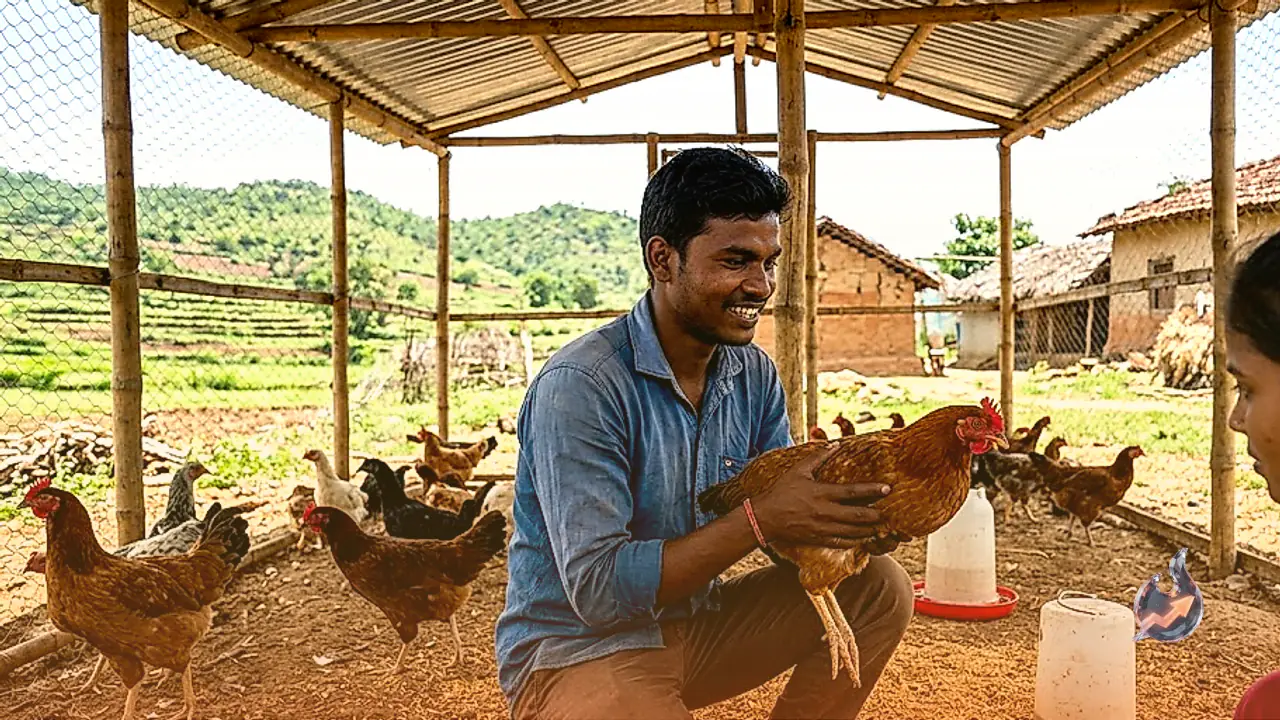

Many young people living in rural areas often look for employment opportunities close to their homes. If you are also planning to launch a venture with minimal investment, poultry farming can prove to be an excellent option. However, before stepping into this sector, it is crucial to understand which breeds to raise, as selecting the right breed ultimately determines your future earnings and prevents potential losses. Several types of poultry breeds are available in the market today. Often, young entrepreneurs start raising birds in large numbers without adequate knowledge, only to face difficulties later due to diseases, high mortality rates, and escalating expenses. Therefore, experts always recommend beginning with a small number of birds.
According to Dr. Poonam Soren, a veterinary doctor posted at the Deoghar Krishi Vigyan Kendra, rural youth wanting to enter poultry farming should initially focus on raising native breeds. Particularly in the rural and tribal pockets of Deoghar, backyard native chickens can be easily raised with very little expense. These birds generally possess strong disease resistance, which significantly lowers the risk of illness and mortality compared to commercial varieties. Another major advantage of native poultry farming is that the initial setup cost remains low. Leftover household food and locally available feed can easily be utilized for their nutrition. Furthermore, the market demand for native chicken meat and eggs remains consistently high, and in many places, these products fetch better prices than regular commercial poultry.
Dr. Poonam Soren also advises beginners against raising a large flock all at once. Starting with just 10 to 20 native chickens helps build a gradual understanding of bird care, feeding routines, shed cleanliness, and disease prevention. Once sufficient experience is gained, the flock size can be expanded according to individual capacity and resources. Meanwhile, youth interested in commercial-scale production can explore breeds like Sonali, Kadaknath, Grampriya, and Vanraja. Additionally, broiler farming serves as a viable option since the birds are ready for sale within a short period. According to available estimates, managing a batch of 1,000 broilers with proper care and favorable market rates can yield a profit ranging between 25,000 and 40,000 rupees.
Understanding profits and smart management
Ultimately, earnings from poultry farming depend heavily on breed selection, feed management, disease control, mortality rates, prevailing market prices, and overall operational methods. This is why starting small, learning the nuances of livestock management first, and scaling up gradually is the best approach. With accurate information and diligent care, poultry farming can become a reliable source of self-employment and sustainable income for rural youth.