



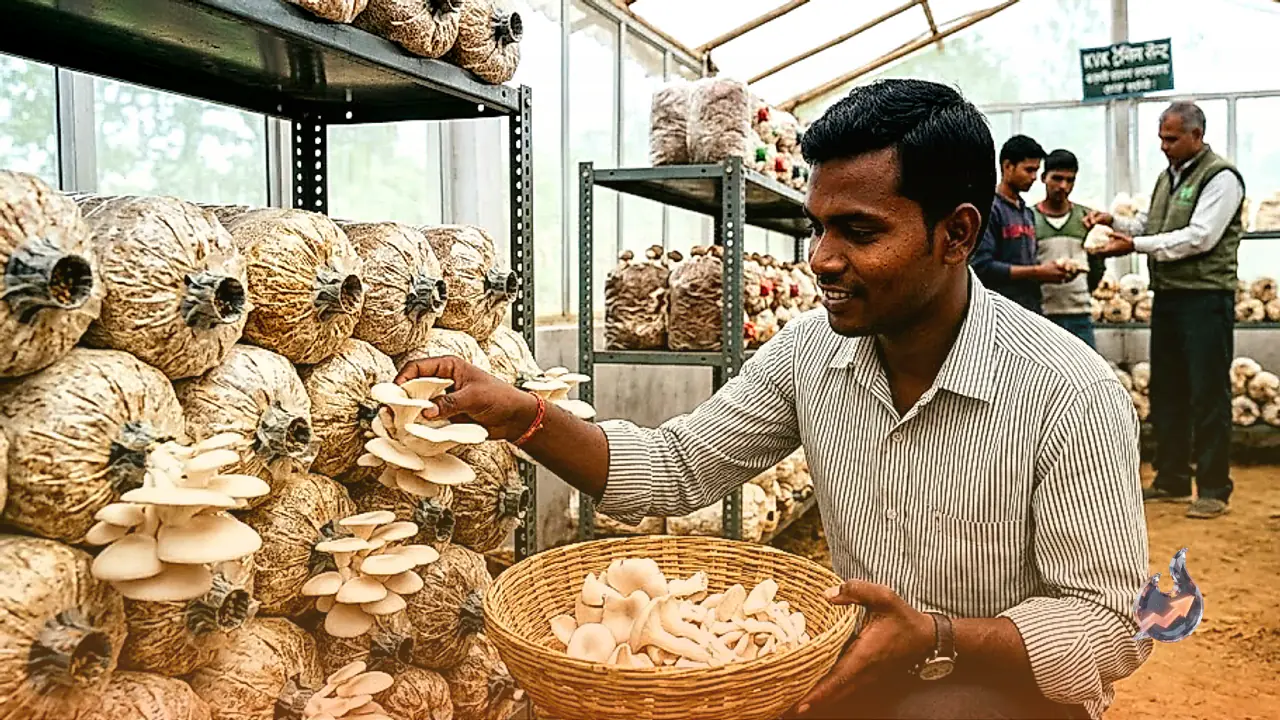

















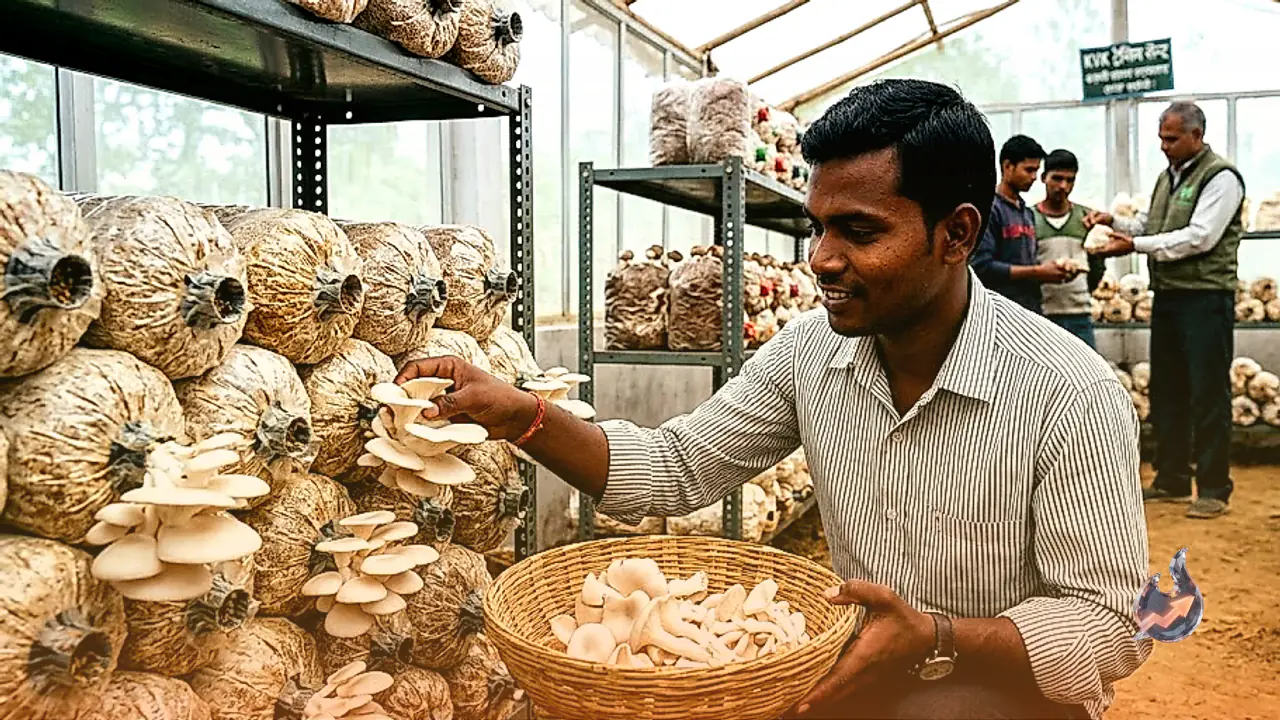

For many young individuals who aspire to start an independent venture from home, the fear of heavy capital investment and high initial setup costs often becomes a major roadblock. Facing financial constraints, they frequently feel compelled to pack their bags and migrate to other cities in search of livelihoods. However, the agricultural sector harbors several lucrative alternatives that can be launched with minimal space and remarkably tight budgets. Mushroom production stands out as one such promising option, offering a viable path to self-employment for both young men and women in rural and semi-urban settings.
The primary advantage of this agricultural enterprise is that it completely bypasses the need for vast tracts of land or traditional farming fields. Armed with proper technical knowledge, individuals can easily kickstart the process on a small scale right around their homes. As the year progresses toward its end and the winter season approaches, this specific period is widely regarded as the most favorable time to initiate mushroom cultivation. The climatic conditions during these cooler months provide an ideal environment for rapid and healthy fungal growth, maximizing potential yields.
Dr. Vivek Kashyap, an agricultural scientist at the Deoghar Krishi Vigyan Kendra, noted that preparations for mushroom production can officially begin as early as October. Button and oyster mushrooms represent the two major varieties best suited for cultivation throughout the winter months. Both types enjoy steady and robust demand in local markets, ensuring that farmers and young entrepreneurs can seamlessly sell their harvests locally and generate handsome revenues right from the start.
Unlike conventional crops that demand expansive acreage, mushroom farming thrives in compact spaces such as spare rooms, sheds, or backyard corners. When the entire production cycle is executed following precise scientific guidelines, it transforms into a highly scalable business venture requiring minimal financial backing. Growers do not need to worry about complex transportation logistics either, as nearby markets readily absorb fresh supplies due to consistent consumer demand.
The business model of mushroom cultivation does not necessarily have to stop at selling raw, fresh produce. In scenarios where market demand fluctuates or bumper harvests lead to a temporary surplus, growers can easily pivot toward creating value-added food items. Processed products like savory namkeen, crunchy biscuits, and spiced bhujia can be manufactured using mushrooms as the primary ingredient and marketed commercially to consumers.
Such value addition significantly extends the shelf life of the perishable produce while concurrently boosting its market valuation and profit margins. By integrating processing techniques directly with primary cultivation, young entrepreneurs can carve out an alternative, resilient career path that remains profitable even during sluggish market cycles. This diversification safeguards producers against sudden price crashes in fresh produce.
Nevertheless, mastering the technical nuances of the trade remains an absolute prerequisite before diving headfirst into commercial mushroom production. Without a thorough understanding of optimal temperature ranges, humidity levels, strict hygiene protocols, spawn quality, and precise harvesting methods, growers risk encountering heavy crop failures. To mitigate these risks and empower local aspirants, the Deoghar Krishi Vigyan Kendra has initiated comprehensive training programs focused entirely on mushroom farming.
The Krishi Vigyan Kendra conducts offline, completely free training sessions where participants receive hands-on instruction regarding every critical aspect of the production cycle. A standout feature of this educational initiative is its flexibility, as aspirants do not have to wait for specific seasonal calendars to enroll. Interested youth and local farmers can visit the Krishi Vigyan Kendra at any time throughout the year to take advantage of this skill development program.
For unemployed youth seeking a low-investment enterprise close to home, mushroom cultivation emerges as an exceptionally practical livelihood choice. Keeping the upcoming winter season in mind, preparations should ideally commence starting October to align with peak market demand. However, acquiring formal training beforehand remains essential to grasp the core techniques, ensuring that a venture launched on a modest budget transforms into a reliable and steady source of income for the future.