






















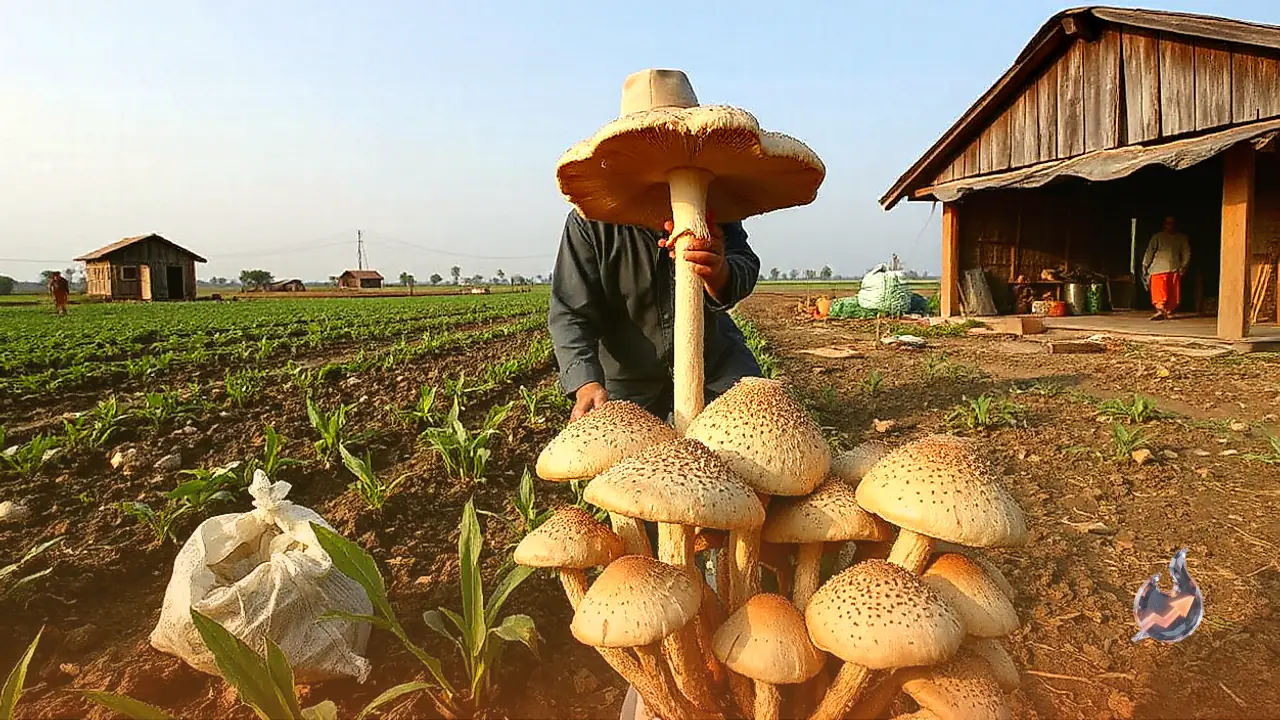

A lack of agricultural land is no longer an obstacle for individuals looking to venture into farming. A viable and highly rewarding cultivation model exists that completely eliminates the need for sprawling fields or heavy open acreage. Enthusiasts can easily set up production inside a single unused room at home, creating a steady and lucrative income stream right from their own living premises. This venture revolves around indoor mushroom cultivation, which aligns perfectly with seasonal climate conditions.
The window running from November through February is widely recognized as the premier period for cultivating mushrooms. During these specific winter months, ambient atmospheric temperatures naturally align with the crop's biological requirements, enabling cultivators to generate healthy yields with minimal environmental interventions. For anyone planning to enter mushroom farming for the very first time, mastering the essential prerequisites during this favorable phase is crucial to protecting their capital.
The Core Role of Spawn Bags in Determining Crop Success
Across the entire lifecycle of indoor mushroom farming, the cultivation bag serves as the foundational element. Novice growers frequently make the mistake of procuring mushroom bags from local markets without verifying their underlying quality. Beginners often assume that every sealed bag available commercially carries identical vigor, but that assumption is fundamentally flawed. Substandard bag material and compromised mycelium directly undermine final mushroom output.
When growers invest their money and hard work into inferior bags, the harvest falls dramatically short of initial projections. Consequently, rather than generating expected profits, the operation descends into an outright financial loss. Growers often struggle to diagnose the problem, mistakenly attributing the disappointing harvest to poor room management or watering schedules, whereas the root failure originated in the defective cultivation bags acquired at the outset.
How to Identify a Healthy, High-Yield Mushroom Bag
Mushroom bags are constructed using sponge and growing substrate. Ranjit Jha, a mushroom expert based in Deoghar, points out that growers must inspect bag appearance meticulously prior to purchase. A premium, high-vitality bag features a remarkably clean and pristine white sponge layer. It must be completely devoid of dullness, discoloration, or suspicious yellowish tinges.
Moisture regulation is another decisive factor when assessing bag health. An optimal bag should never appear excessively damp, watery, or sticky to the touch. A clean, balanced, and uniformly white substrate structure indicates healthy mycelial colonization with zero contamination. Bags meeting these precise physical standards provide the optimal biological foundation required for prolific mushroom development and generous harvesting cycles.
Warning Signs of Contamination and Poor Preparation
Growers should immediately decline any mushroom bag that looks visibly soiled, murky, or irregular. Pronounced yellow patches across the substrate, combined with a runny, slimy, or overly sticky internal texture, serve as immediate alarms. These physical defects indicate deep-seated bacterial contamination or degraded biological material that can no longer sustain healthy fruiting bodies.
Introducing compromised bags into a cultivation room almost guarantees crop failure, as competing pathogens overwhelm the fungus before harvesting can occur. Beginners must exercise extreme vigilance and avoid buying uninspected stock from unverified traders. Identifying these visual flaws at the counter is the most reliable way to shield an agricultural venture from catastrophic early losses.
Avoiding Cheap Bargains and Prioritizing Expert Guidance
A frequent misstep among new growers is prioritizing low price tags over verifiable quality. Chasing cut-rate prices usually results in bringing home defective, expired, or improperly incubated bags, turning an anticipated profit into total waste. Growers must strictly examine the three physical indicators before committing funds: surface cleanliness, uniform white coloration, and moderate moisture levels.
Whenever uncertainties arise during stock selection, consulting an experienced mushroom grower or a local agricultural specialist before concluding a deal is strongly recommended. For those looking to launch cultivation during the November to February window, pairing certified, infection-free bags with appropriate indoor temperatures and careful oversight creates the surest path toward consistent yields and substantial income.