






















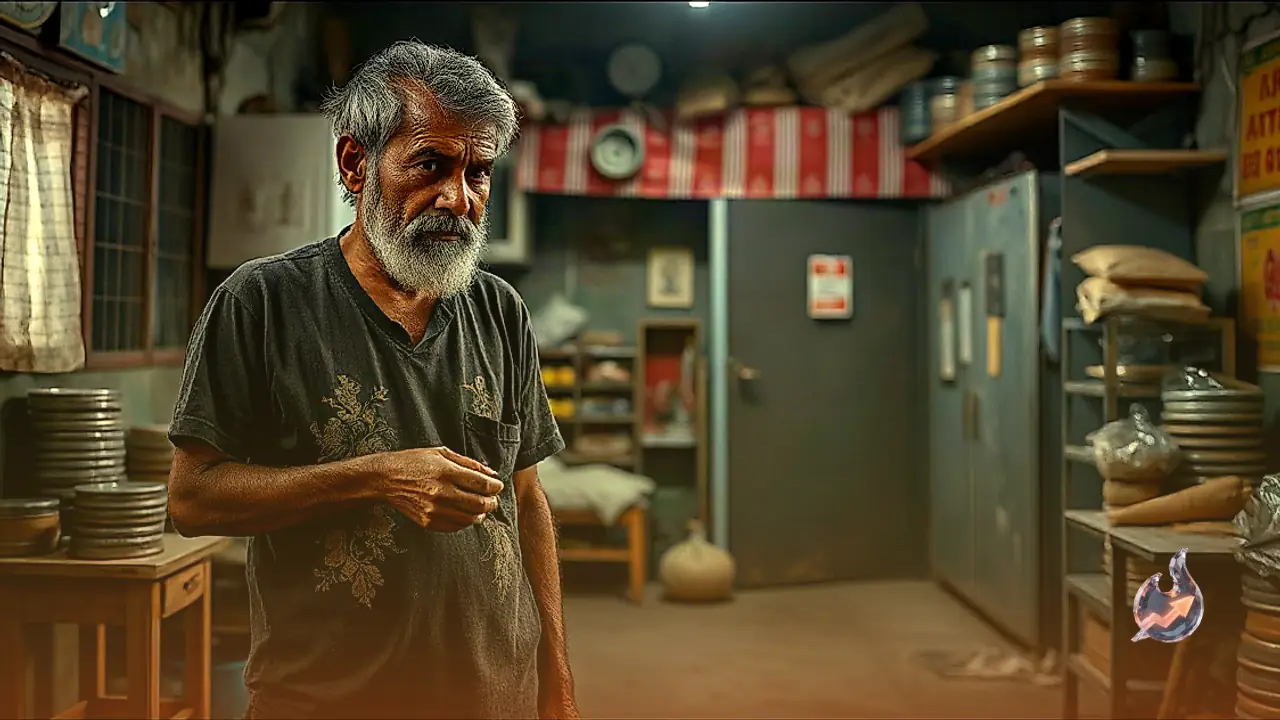

Arjun Mahto, a resident of Bishunpur Road in the town of Jhumri Telaiya, Jharkhand, has turned his household finances around by stepping into independent food manufacturing. For years, his primary source of livelihood was purchasing vegetables harvested from an ashram campus and selling them in the local retail market. Generating enough margin from daily vegetable trading to support an entire household, however, proved increasingly unsustainable. As living expenses mounted and returns remained constrained, he and his family members evaluated alternative trades that could offer reliable revenue throughout the year.
Factory Experience Sparks a Commercial Venture
The turning point for the family arrived when Arjun Mahto's son, Dilip Kumar, suggested entering the bakery trade. Dilip had gained hands-on expertise while working inside a commercial bakery factory in Dhanbad. During his employment there, he had learned the practical mechanics of formulating dough, operating ovens, maintaining quality control, and understanding wholesale distribution. Leveraging that factory background, Dilip proposed establishing a home-based production unit in Jhumri Telaiya. Convinced of its market potential, the family collectively agreed to invest their efforts into the new venture.
Equipping the Facility Through Bank Credit
Setting up an industrial bakery required specialized capital equipment that exceeded their immediate savings. To overcome this hurdle, the family secured a business loan through a commercial bank to procure necessary machinery. Their facility was outfitted with a large industrial furnace, a heavy-duty commercial mixer, a bread-slicing machine, and a variety of secondary tools. The automated machinery enabled the workshop to standardize mixing and baking while handling consistent batch volumes every morning.
Product Range and Distribution Across Koderma
With operational equipment in place, the enterprise diversified its production schedule across several bakery staples. Arjun Mahto noted that the unit now bakes toast, bread, papdi, traditional cookies, tea cookies, and savory cookies. Instead of restricting distribution to immediate neighborhood retail shops, the enterprise supplies its fresh baked goods across local town markets and extends its distribution reach into multiple rural areas throughout Koderma district.
Preserving Margins Through Collective Family Labor
To keep production overhead manageable, the family made a deliberate decision to operate without hiring external laborers. Every stage of the manufacturing and logistics cycle—from batch preparation and baking to packaging and dispatch—is managed entirely by family members. This cooperative arrangement eliminates recurring wage expenses while ensuring diligent oversight over product freshness and customer service.
The transition from perishable vegetable vending to packaged bakery goods has created a noticeable financial turnaround. The unit presently logs daily sales turnover ranging between 5,000 and 6,000 rupees. After accounting for all operational outlays and input costs, the enterprise delivers a net monthly income of roughly 40 to 50 thousand rupees, establishing long-term economic stability for the entire household.