






















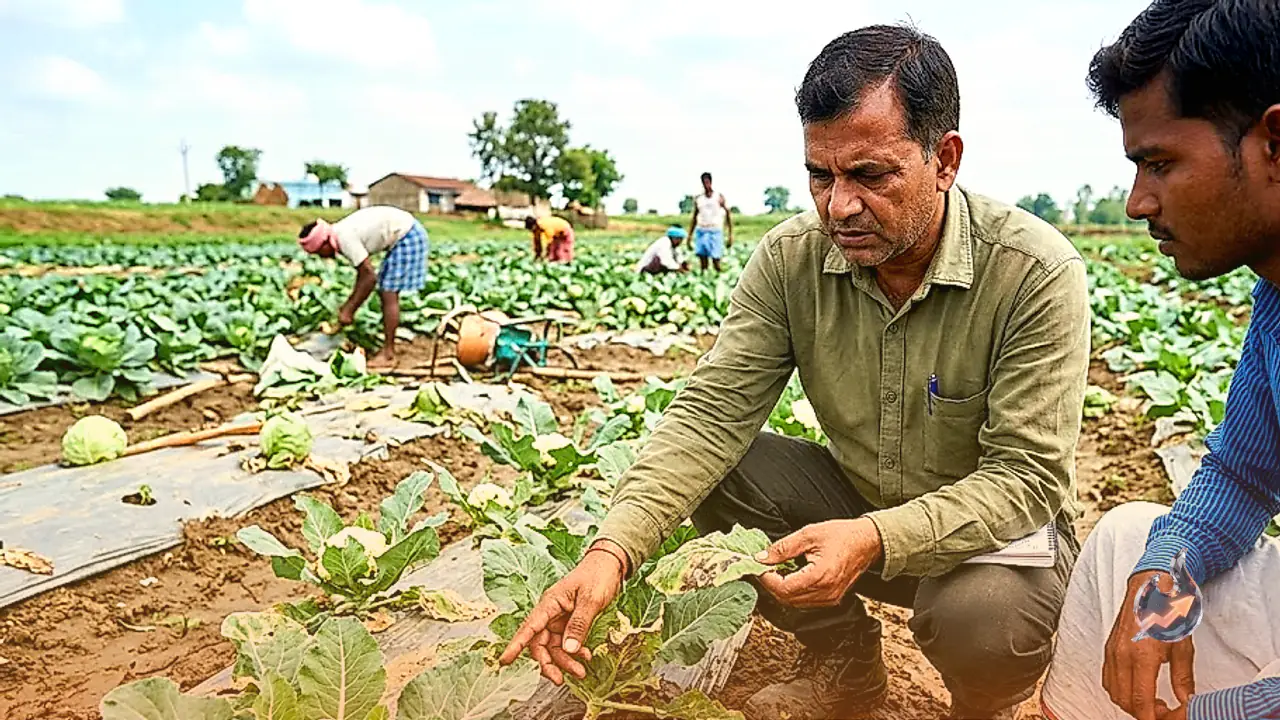

Farmers put immense hard work and dedication into cultivating cabbage and cauliflower, but a lack of proper care and nutritional deficiencies can trigger various crop diseases, resulting in significant financial losses. To address this, Bokaro agricultural expert Kuldeep Kumar has shared crucial insights on protecting cauliflower and cabbage crops from key destructive diseases.
Early-Season Challenges in Short-Duration Crops
Cauliflower is widely regarded by farmers as a lucrative option because it matures in a short span, but achieving a high yield requires growing healthy plants right from the start. Various diseases can strike during the nursery and early farming stages, ruining expensive seeds and young seedlings alike. Proper management from the very beginning is therefore vital to safeguard the investment.
Combating Damping Off in Plant Nurseries
One of the most common issues observed in cauliflower nurseries is damping off. In this condition, the stem of the seedling near the soil surface weakens and rots, causing the plant to wither and collapse onto the ground. If timely control measures are not taken, the entire nursery can be affected.
To prevent this, seeds must be properly treated with an appropriate fungicide before setting up the nursery. Additionally, ensuring proper drainage in the nursery beds is essential to minimize the risk of disease spreading among the young plants.
Identifying Black Rot and Leaf Spots
Black rot is another major disease affecting both cauliflower and cabbage. Its early signs can be identified by V-shaped yellow spots forming along the edges of the leaves. Over time, the affected areas darken and the overall growth of the plant gets hindered.
According to agricultural experts, when symptoms appear, growers can spray a solution prepared by mixing 2.5 to 3 grams of copper oxychloride and 1 gram of streptocycline per 10 liters of water. This can be repeated at intervals of 10 to 12 days as needed. However, any chemical application must strictly follow the label instructions and the guidance of local agricultural departments or experts.
Club Root and Abnormal Root Swellings
Club root is a soil-borne disease affecting cruciferous crops, triggered by a pathogen known as Plasmodiophora brassicae. In this condition, abnormal galls develop on the roots of the plant, causing them to lose their normal shape. Affected plants experience stunted growth and yellowing leaves. This problem becomes more severe in acidic soils, making soil testing mandatory.
For disease management, efforts are made to maintain a soil pH of around 7.2 or higher. Applying agricultural lime based on expert advice can help achieve this. Furthermore, continuous cultivation of cruciferous crops in infected fields should be avoided by practicing proper crop rotation.
Addressing Browning Caused by Boron Deficiency
Boron deficiency in cauliflower leads to a condition known as browning. This issue hampers head development, making the curd small, brownish, and hollow from the inside. This degrades the quality of the produce and makes it difficult for farmers to secure fair prices in the market.
To prevent this, confirming boron deficiency through soil testing is essential. According to agricultural experts, borax can be applied during the final ploughing while preparing the field, following expert recommendations. Determining the right quantity based on soil condition and crop requirements yields the best results.