






















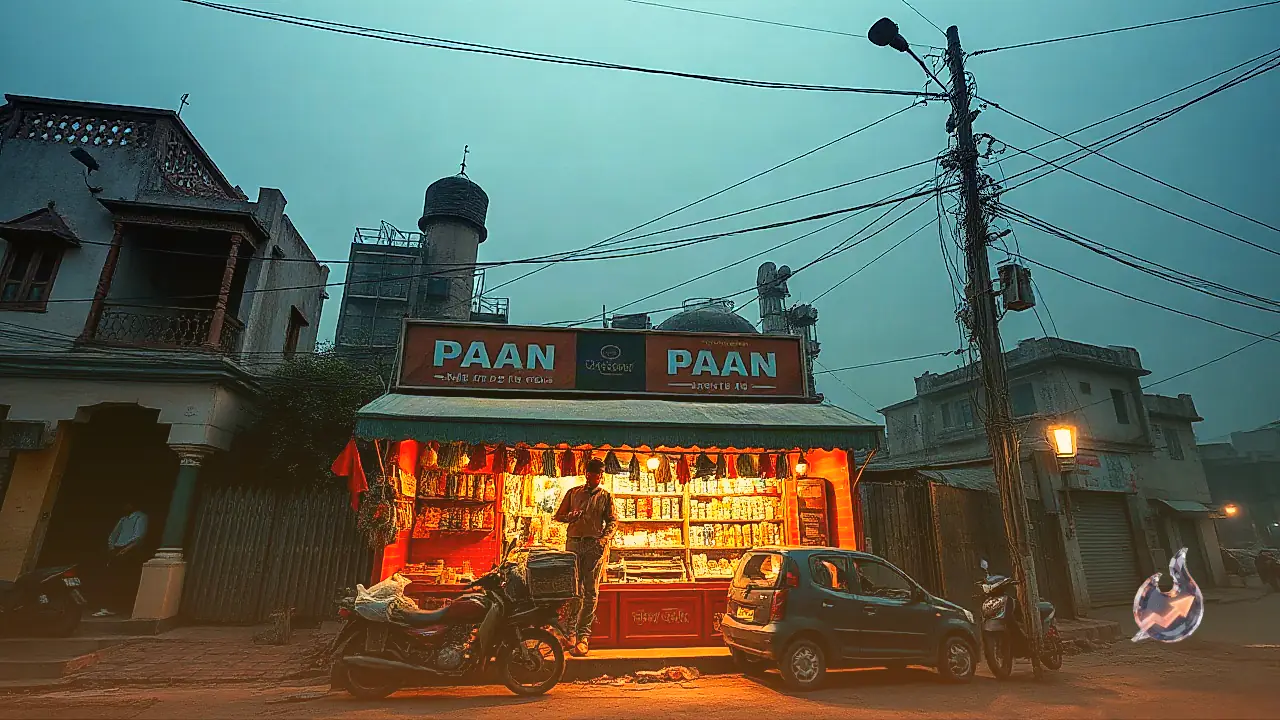

For individuals seeking self-employment opportunities with a very low initial capital, starting a small-scale business can often pave the way for sustainable financial growth. If you are planning to venture into entrepreneurship in either a rural or an urban setting, setting up a betel leaf or paan shop emerges as a highly practical and lucrative option. The enduring popularity of paan spans across various demographics and geographical locations, ensuring a steady stream of customers year-round. This enterprise can be initiated with a modest investment of just 20,000 rupees, requiring nothing more than a simple, well-positioned counter to get started.
The Crucial Role of Location Selection
According to Alam Ansari, an experienced entrepreneur who has successfully run a paan business for the last 13 years, selecting the right location is the single most critical factor for success. The viability of a paan counter is directly linked to the volume of foot traffic passing by the establishment. Highly frequented areas such as busy street intersections, prominent road bends, local market squares, or central roundabouts serve as ideal locations. In the initial phases of the business, there is absolutely no necessity to rent a large or expensive commercial space. Setting up a compact, clean counter in a high-density area is sufficient to attract a regular clientele.
Sourcing Ingredients and Raw Materials
Running a paan counter requires a continuous supply of fresh betel leaves, betel nuts (supari), catechu (kattha), slaked lime, various flavored syrups, gulkand, and other aromatic spices. When starting on a small scale, it is highly advisable to purchase these raw materials from local wholesale markets. Sourcing locally minimizes transportation expenses and allows the operator to maintain fresh daily inventory. However, as the business expands and sales volume increases, merchants can explore sourcing materials directly from major wholesale hubs like Varanasi and Kolkata. These prominent markets offer a vast selection of premium quality betel leaves and specialty ingredients at significantly lower wholesale prices, which directly enhances the profit margins.
Meeting Diverse Customer Preferences
Alam Ansari notes that sweet paan (meetha paan) enjoys the highest demand among customers of all age groups. It is favored by children, young adults, women, and the elderly alike, making it a universal product. Additionally, the demand for sweet paan peaks significantly during the wedding season, family gatherings, festivals, and other social celebrations. In contrast, in rural and semi-urban localities, there is a substantial market for traditional tobacco-infused paan (zarda paan). Customers also frequently request specialty preparations featuring chaman bahar and unique chutneys. By keeping a diverse menu that caters to these distinct preferences, a shop owner can ensure consistent daily sales.
Customer Relations and Hygiene Standards
Achieving long-term success in the food and beverage retail sector requires more than just serving a delicious product; customer relations and hygiene play an equally pivotal role. Alam Ansari emphasizes that greeting every customer with respect and maintaining a polite demeanor is essential for retention. Furthermore, the ingredients used must be of high quality and processed in a clean environment. Keeping the counter and its surrounding area immaculate is non-negotiable. When patrons witness high standards of cleanliness and the use of premium ingredients, their trust in the business increases. This trust helps in building a unique brand identity in the local market and establishing a loyal customer base.
Financial Analysis and Profit Calculations
The financial dynamics of a paan business are highly attractive, characterized by high profit margins and minimal overhead costs. According to business estimates, operators can maintain a gross profit margin of approximately 50 percent on their sales. The exact earnings will naturally depend on factors such as the shop's precise location, daily sales volume, and running costs. While a standard sweet or plain paan typically retails for 15 to 20 rupees, custom or premium variations prepared for special occasions can fetch 30 rupees or more.
To understand the income potential through a realistic scenario, if we assume an average selling price of 30 rupees per premium paan, a 50 percent gross margin yields 15 rupees of profit per unit. If an operator manages to sell an average of 70 paans daily, the total monthly sales would reach approximately 2,100 units. This level of daily business translates to a monthly gross profit of roughly 31,500 rupees. Even if the daily volume is lower or if the sales consist mostly of lower-priced standard varieties, a steady establishment can reliably generate a net monthly income of 20,000 to 25,000 rupees. This makes the paan shop an excellent low-risk venture for individuals aiming to secure a stable livelihood with minimal upfront capital.