




















Neeraj Left Delhi Job, Started A Unique Million-Rupee Tea Business From Uttarakhand MountainsJharkhand
17 Sept 2026, 8:13 am (1 day ago)· 1

Neeraj Left Delhi Job, Started A Unique Million-Rupee Tea Business From Uttarakhand Mountains

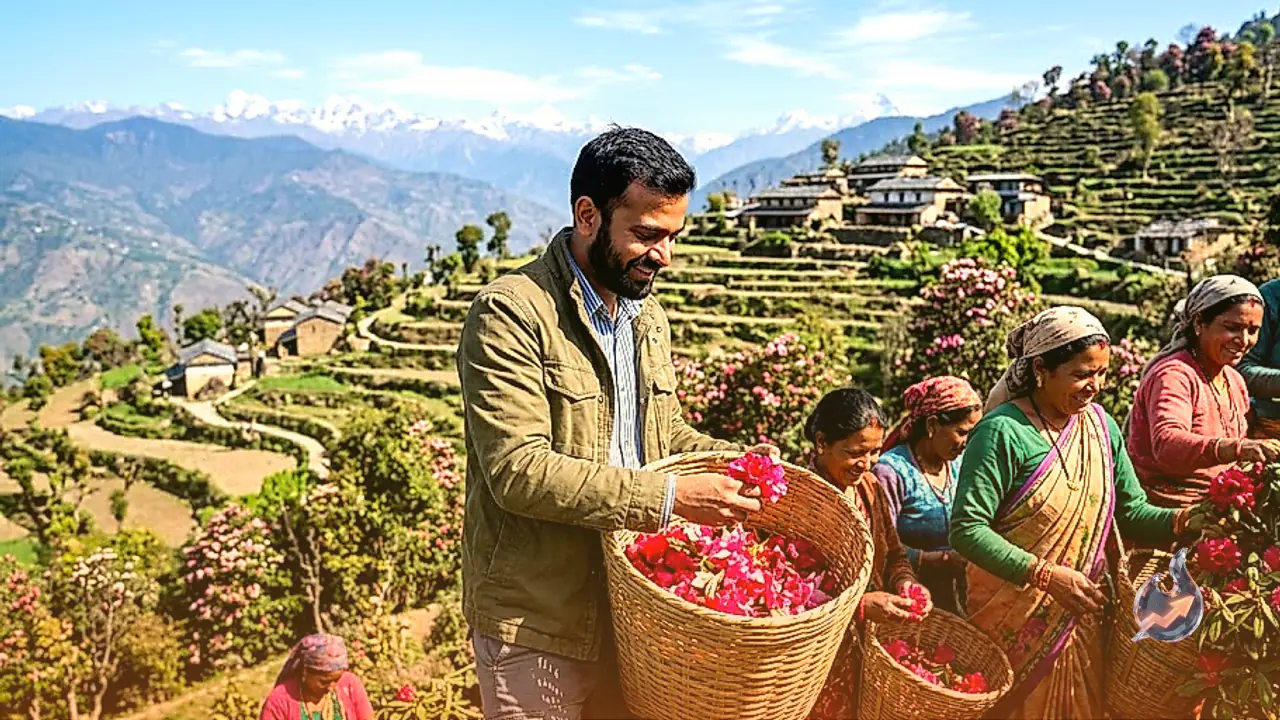
MBA-graduate Neeraj, based in Ranchi, returned to his ancestral village in Uttarakhand to launch a unique pink herbal tea business made from rhododendron flowers. Today, his venture generates crores in turnover and empowers hundreds of rural women.

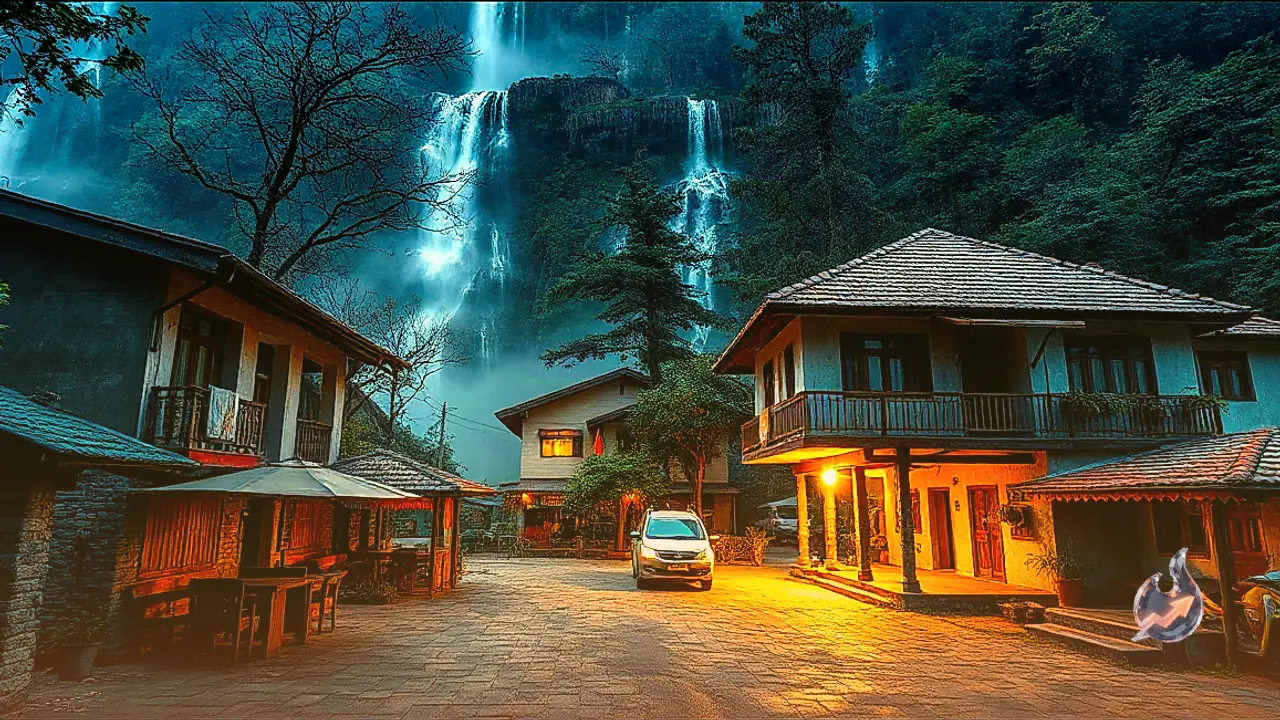
Neeraj, living in the Jharkhand capital of Ranchi, left behind his professional career to build a unique business rooted in the mountains of Uttarakhand. In his ancestral village, he maintains various mountain flowers and sheep, with the rhododendron flower standing out as particularly special. This specific blossom is used to create a distinctive pink tea leaves variant that exhibits blue and pink hues while offering a delightful taste. Priced at around ₹100 for just 100 grams, it sells at a rate of ₹1000 per kilogram, enabling him to generate substantial earnings through this venture.

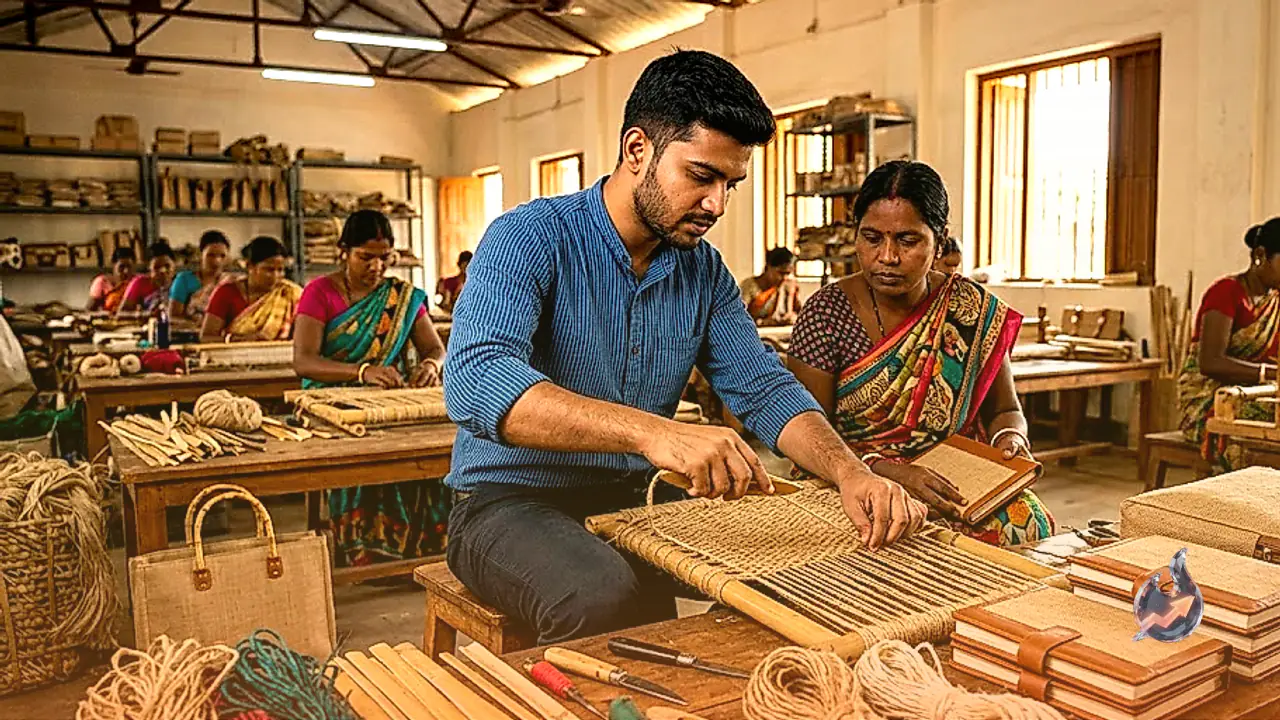
Alongside floral tea, Neeraj also manufactures natural silk fabric that commands prices of up to ₹80,000. He noted that they rear sheep at home and prepare all these items locally. Today, he owns an independent brand with supplies distributed on a pan-India level. He has also benefited from various government schemes, maintaining a close association with NABARD. Through government support and personal dedication, he has scaled his operations significantly.

Also read

The Advantages of Connecting with NABARD

Detailing his association with NABARD, he explained that artisans and manual creators who handcraft items receive substantial subsidies on loans through the institution. According to him, they receive subsidies of up to 90%. Additionally, they get completely free opportunities to set up stalls at government fairs and exhibitions all across India. Both of these provisions have played a vital role in propelling his business forward and expanding its reach nationwide.

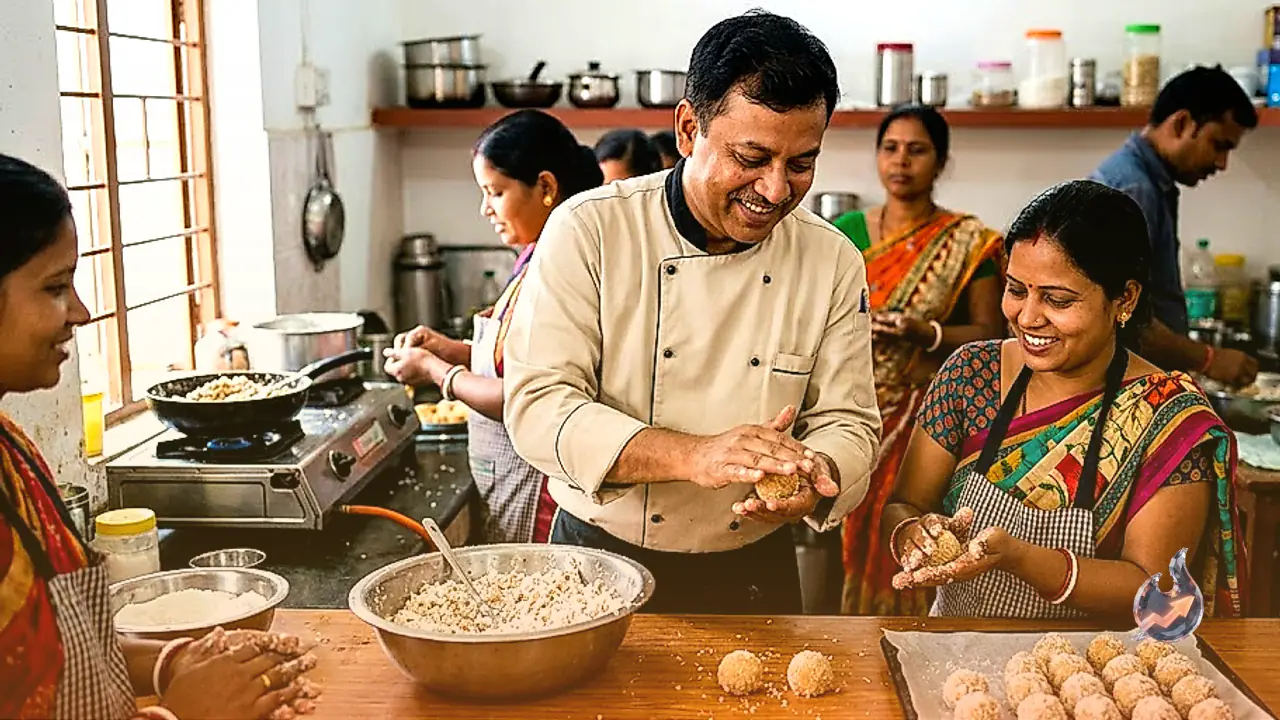
Discussing his product lineup, he mentioned that customers can find various options such as rhododendron, kafal, and spiced tea leaves. The spiced tea variant is prepared by grinding natural spices found in mountainous regions. Meanwhile, kafal is a pink mountain flower cultivated in their native area. They manage its cultivation in their own territory, followed by drying and packaging processes. All of these operations are handled by village women whom he personally trains.

Massive Demand and Crores in Annual Turnover

The market demand for his specialty tea remains remarkably high. He stated that despite selling at ₹1000 per kilo, the demand outstrips their ability to fulfill orders. This herbal tea has the unique characteristic that a tiny amount suffices, eliminating the need to add sugar or other sweeteners. His customer base spans every single state across India, and his annual turnover now runs into crores.

After completing his MBA, he worked in Delhi for about 40 years, but he always felt a strong desire to start an independent enterprise. Possessing ancestral land and farming fields in his village, the thought occurred to him to utilize these resources effectively. This sparked the idea of introducing the mountain flower tea beyond just the hills, sharing it with citizens nationwide. That journey began this enterprise, and today more than 200 women work alongside him while achieving financial independence.


Questions & Answers

Where is Neeraj based and where is his business located?
Neeraj lives in Ranchi, the capital of Jharkhand, while his ancestral village and operational base are located in the mountains of Uttarakhand.
Which flower is used to make this special pink tea?
This unique pink tea leaves variant is prepared from rhododendron flowers, which exhibit blue and pink color tones.
What is the market price of this tea?
The tea is priced at up to ₹100 for 100 grams, translating to a rate of ₹1000 per kilogram.
Which government institution provides support for this business?
He is associated with NABARD, which provides significant loan subsidies and free exhibition stalls to support rural artisans.
What other product does he manufacture besides tea?
In addition to tea, he also produces natural silk fabric that sells for up to ₹80,000.
How many people have gained employment through this business?
Today, more than 200 village women are associated with his enterprise, receiving training and achieving financial independence.

Comments 5

Ananya Iyer@ananya-iyer·1d ago

This success story demonstrates how the synergy between traditional mountain resources and government schemes can revitalize the local rural economy. Transforming local forest produce like rhododendron and kafal into premium herbal products for a pan-India market while fostering women empowerment proves that innovative execution in regional sectors holds tremendous potential, making such entrepreneurial journeys ideal subjects for future docuseries or inspirational content on streaming platforms.

Ravikash Gupta@ravikash·1d ago

This startup serves as a compelling model for reverse migration and rural economics, where 90% subsidies from institutions like NABARD and the utilization of local resources have created a scalable and sustainable business. Leveraging D2C branding and a pan-India supply chain to sell traditional mountain products at premium pricing proves that proper financial management and government scheme convergence can build multi-crore turnover enterprises in rural India.

Arjun Mehta@arjun-mehta·1d ago

This model stands as robust proof of how institutional financial backing can open new doors for sustainable livelihoods alongside rural job creation. Connecting remote local resources and women's workforce to modern markets effectively curbs migration while strengthening economic self-reliance.

Karan Malhotra@karan-malhotra·1d ago

From my perspective as a crime reporter, when such self-employment and rural development models succeed, they directly curb serious social issues like organized crime, migration, and unemployment. If this framework of institutional aid from bodies like NABARD and up to 90% subsidies remains transparent, the scope for financial irregularities will vanish, keeping youth away from crime and securing livelihoods.

Rohan Verma@rohan-verma·1d ago

Building on Karan's analysis, such rural enterprise models in hill and border regions play a crucial role in reversing migration and boosting local development. When local women secure employment through rhododendron and kafal-based products with a pan-India market reach, this economic stability discourages youth from migrating to metropolitan cities. Furthermore, ensuring grassroots transparency in institutional funding like NABARD is essential so that every eligible artisan receives the intended benefits without administrative hurdles.

Citizen journalism

Become a TrendKia journalist

Voice of the people

Share news, photos and videos from your area with TrendKia and let your voice reach the nation. Every citizen a journalist.

Join now
CH 01 LIVE
TrendKia TV ON AIR
Chamar no WhatsApp