




















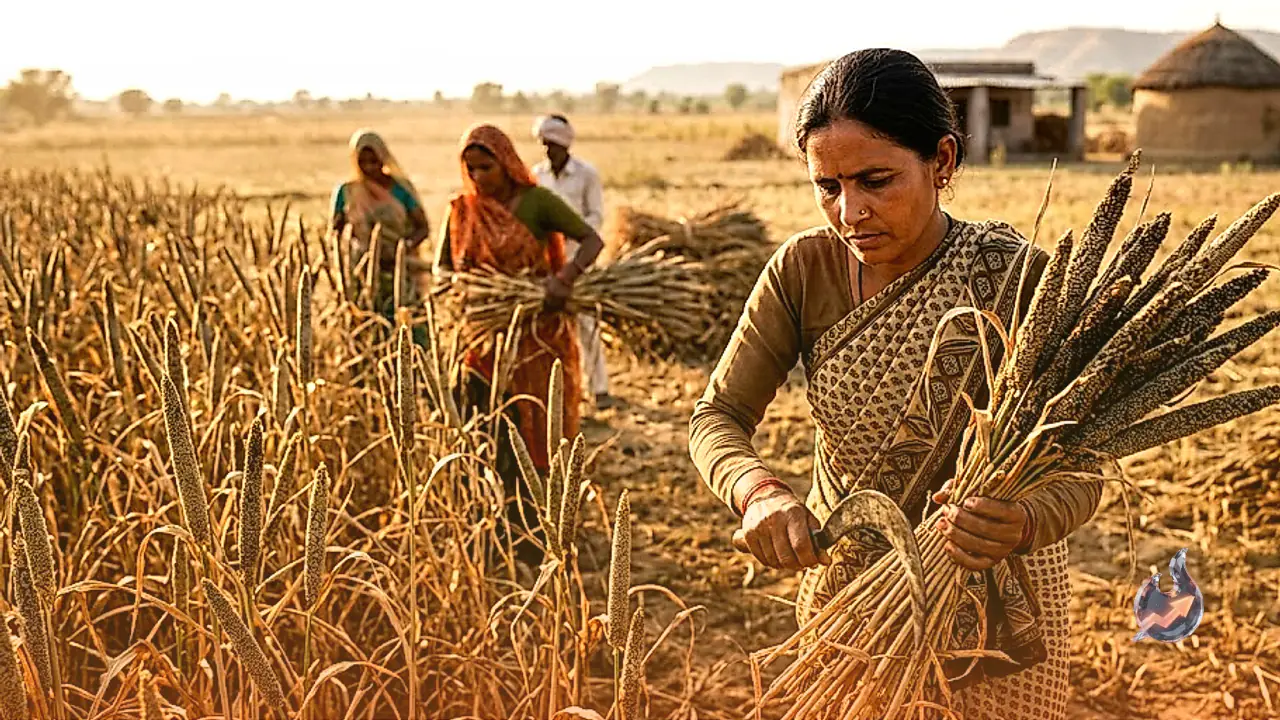

Harvesting of pearl millet is currently underway in fields, with farmers actively engaged in gathering their crops. Observing essential precautions during this harvesting window helps maintain high crop quality and prevents grain spoilage. Farmers should ensure that millet spikes are fully mature and the grains have achieved adequate dryness before initiating harvest. Premature harvesting leaves excess moisture in the grains, creating a significant risk of crop deterioration later during the storage phase.
Monitoring weather and maintaining purity during harvest
It is vital to monitor weather conditions in the field throughout the harvesting process. Avoid harvesting if rain is anticipated, and if the crop has already been cut, do not leave it exposed in the open for long periods. Separate the grains only after drying the spikes thoroughly in the sunlight. If moisture levels remain high, the grains must be sun-dried extensively. Additionally, prevent soil, debris, weed seeds, and other foreign materials from mixing with the crop during cutting and threshing operations.
Cleaning and drying procedures prior to storage
Following harvest, pearl millet must be thoroughly cleaned and dried prior to storage. Continue sun-drying the grains until all excess moisture is completely eliminated. Afterward, pack them securely into clean, dry sacks or appropriate storage containers. The storage location must be clean, dry, and well-ventilated. Instead of placing the crop directly on the floor, keeping it on wooden pallets or an elevated platform is much better to prevent moisture transfer from the ground.
Regular monitoring against pests and dampness
Conduct periodic inspections of the stored millet throughout the storage duration. If moisture, mold, foul odors, or insects appear in the grains, isolate them immediately. During the rainy season, take special care to prevent water accumulation or dampness near the storage area. Avoid mixing old and new grain together; store them separately instead. The sacks and spaces designated for storage should also be thoroughly cleaned in advance.
Preserving long-term crop quality
The most crucial takeaway for farmers after harvesting pearl millet is to store the crop only after complete drying. Select fully ripened crops at harvest, protect them from rain and moisture, and thoroughly clean the grains post-threshing. Proper drying methods and storage in dry environments preserve the quality of pearl millet over extended periods and safeguard farmers from financial losses due to crop damage.