


















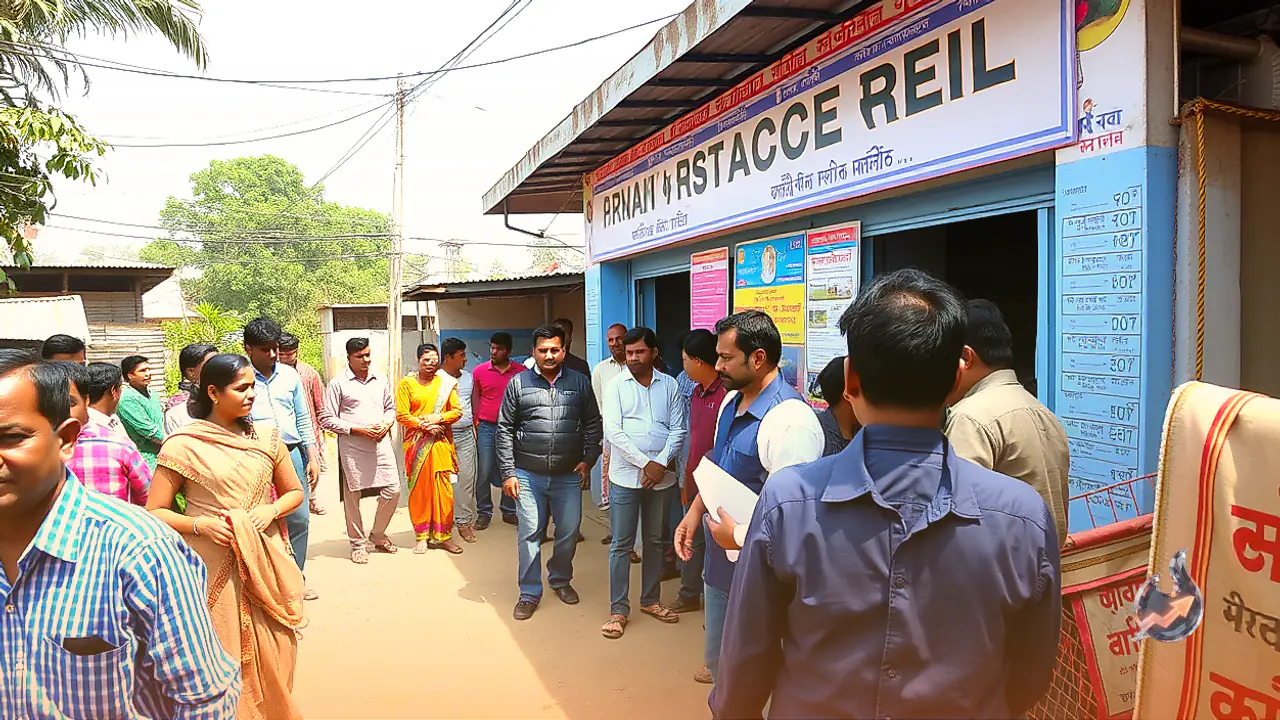

Digital administration has drastically curtailed the need for citizens to run between multiple government offices to access welfare schemes and utility services. Operating across both rural villages and urban townships, Common Service Centres, frequently known as Pragya Kendras in regions such as Jharkhand, function as an essential bridge between public administration and local beneficiaries. These centres consolidate government applications, banking facilities, healthcare consultations, educational training, and everyday online services under one roof, providing a reliable avenue for local self-employment.
Income Prospects and Essential Civic Services
For youth seeking independent livelihoods, establishing a Common Service Centre presents a steady commercial opportunity capable of generating over Rs 30,000 in monthly income by delivering digital services locally. According to Mahboob Alam, District Manager of Common Service Centres in Koderma, the network facilitates applications for caste, income, and residential certificates alongside various Jharsewa integrations and voter registration facilities. Citizens can also process Aadhaar-linked requests and settle regular utility expenses, including electricity bills, cooking gas cylinder bookings, and FASTag recharges through the Bharat Bill Payment System.
Registration Protocol and Infrastructure Requirements
Prospective operators must adhere to a standardized digital onboarding procedure. Alam stated that applicants must register for the Telecentre Entrepreneur Course (TEC) via the official portal at register.csc.gov.in. An online registration fee of Rs 1,479 is required to take the TEC examination, after which a qualifying certificate is granted.
The application checklist requires mandatory identity and background records, including an Aadhaar card, PAN card, voter identity card, bank passbook, cancelled cheque, and an official police verification certificate. On the physical infrastructure front, the venture requires a dedicated commercial space measuring approximately 10×12 feet. Necessary hardware and logistics comprise a laptop or desktop computer, a printing unit, a biometric verification scanner, an uninterrupted power setup with battery backup, and high-speed internet connectivity.
Physical Verification and Account Activation Steps
Once the digital submission is finalized, the compliance audit moves to authorization. Alam explained that initial clearances are completed through video KYC protocols. Following this, the District CSC Manager conducts an in-person physical inspection of the premises. During the physical check, officials inspect the visible service rate chart and capture geo-tagged photographs of the installed equipment and site infrastructure before uploading them to the central system. The formal CSC identification credentials are activated only after these compliance standards are met.
Public Welfare, Governance, and Telehealth Scope
Once operational, the centre handles PAN card issuance, passport applications, digital Jeevan Pramaan life certificates for pensioners, income tax return filing, e-court public utilities, and e-Mulakat registrations for family visits in correctional facilities. In public health, centres connect rural populations with affordable medications under the Pradhan Mantri Jan Aushadhi Yojana, homeopathic consultations, e-veterinary animal care, and specialized medical guidance through CSC Telemedicine networks.
Educational Modules and National Welfare Schemes
The academic suite provided through the centres includes specialized packages such as Vedic Mathematics, test preparation modules for government examinations, English speaking curriculums, Open Schooling programmes via NIOS, Topper learning modules, CSC Bal Vidyalaya initiatives, and legal literacy campaigns. Candidates can additionally enroll in technical skill sets covering computer hardware, networking, animation, and cyber security.
Centres also serve as primary facilitation hubs for major national welfare schemes. Operators assist eligible beneficiaries with enrolments under the Pradhan Mantri Shram Yogi Maandhan, Vyapari Maandhan, Pradhan Mantri Awas Yojana, Pradhan Mantri Fasal Bima Yojana, Ayushman Bharat Jan Arogya Yojana, and the Kisan Maandhan pension framework.
Financial Inclusion and Commercial Facilities
Beyond administrative services, Common Service Centres maintain commercial utilities including e-commerce transactions, digital learning platforms, agricultural support services, the Stree Swabhiman sanitary initiative, and reservations for rail and air travel. Under the financial inclusion mandate, centres function as local banking touchpoints, facilitating fresh bank account applications, retail loan processing, general insurance, life insurance coverage, and timely collection of policy premium payments.