






















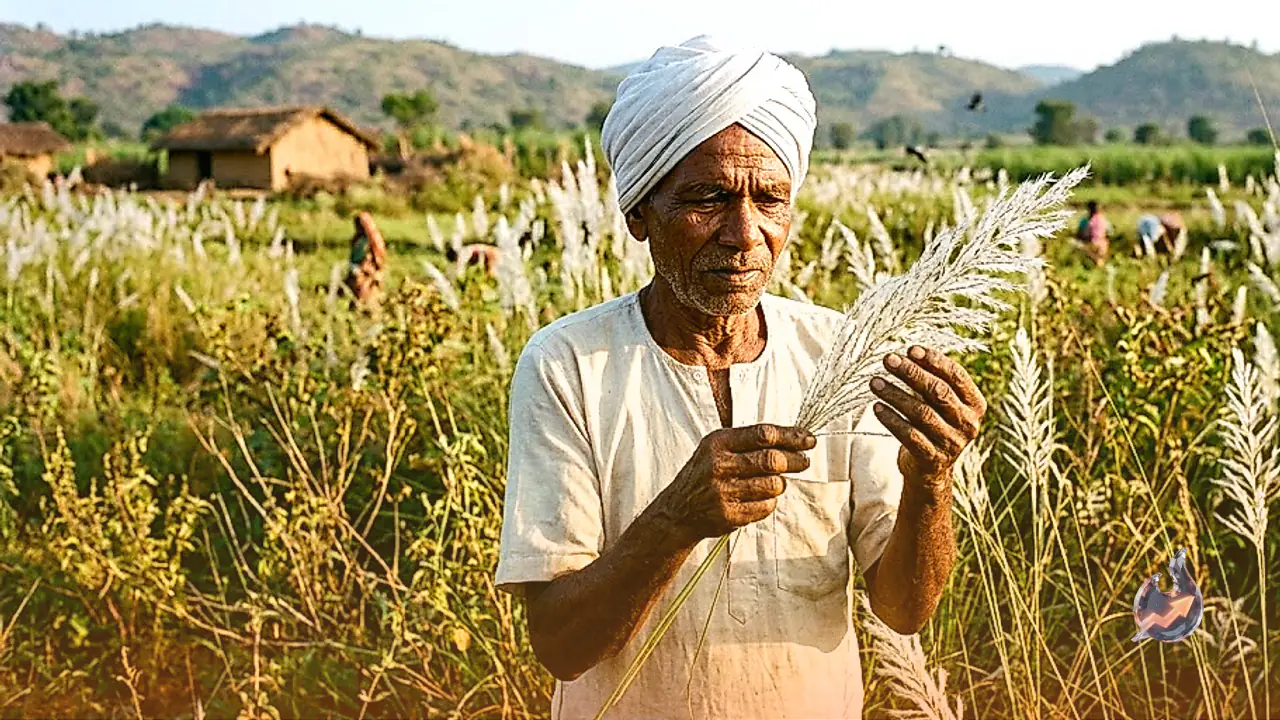

Every plant, tree, and living creature in nature holds secrets within itself, carrying a distinct purpose and value. In today's modern era, weather forecasts rely heavily on satellites, radars, and sophisticated technology, but our ancestors understood seasonal shifts simply by observing nature's own cues. One such powerful natural indicator is wild sugarcane, often considered far more impactful than contemporary forecasting systems. Scientifically named Saccharum spontaneum, this grass is a species of sugarcane and is commonly referred to in English as Wild Sugarcane.
Interpreting Weather Shifts Through Blossoms
Expert Parashuram Tiwari explained that when the white flowers of wild sugarcane begin to sway across fields, riverbanks, and vacant lands, it is not merely a scenic view. Traditionally, it is taken as a sign of receding monsoon rains and the onset of autumn. When these blooms appear between August and September, rural communities associate them with the final phase of the rainy season. While it does not replace a modern weather forecasting machine, it serves as a natural indicator of seasonal transition.
References Found in Ancient Literature
He noted that wild sugarcane finds mention in Indian literature as well. Saint Tulsidas beautifully described the arrival of autumn following the rains through wild sugarcane flowers in the Kishkindha Kanda of the Ramcharitmanas, where it is recognized as a weather indicator. The verses describe how the pleasant autumn arrives after the departure of the rains, with wild sugarcane flowers blanketing the earth, symbolizing the waning of the rainy season. The earth turning white with these blossoms signifies that the monsoon is retreating and autumn has arrived.
Folklore and Sayings by Mahakavi Ghagh
He also pointed out that folk traditions connect wild sugarcane to a famous couplet by Mahakavi Ghagh, which translates to that once the star Agastya rises and wild sugarcane blooms, one should stop expecting rain. The appearance of the Agastya star and the flowering of this grass have long been tied to the conclusion of the rainy season in rural folklore.
Role Beyond Weather in Rural Life
He added that the importance of wild sugarcane is not limited to weather prediction alone. In rural living, its long and sturdy stems were utilized to build thatched roofs for huts. Brooms and other utilitarian items were also crafted from it. Traditional knowledge includes extensive records of utilizing various parts of this plant.
Relevance of Wild Sugarcane in the Tech Era
While today's scientific instruments provide much more precise weather forecasts, wild sugarcane reminds us that nature itself is an open book. Through years of observation, our ancestors recognized the relationship between plants and seasons, preserving this wisdom in literature, folklore, and traditions. Therefore, the flower of wild sugarcane is not just a white sheet of scenic beauty, but a symbol of the age-old dialogue between humanity and nature.