























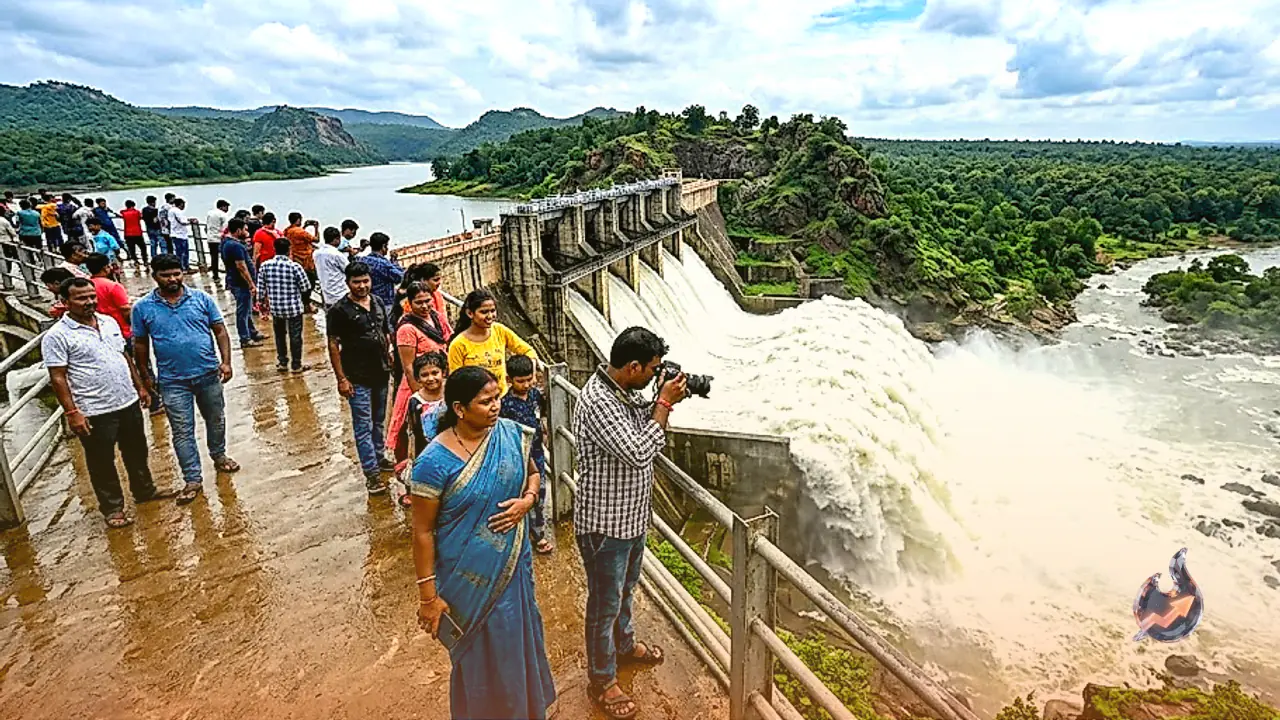

Continuous monsoon rainfall across Jharkhand has produced contrasting scenes throughout the region. While low-lying flood-prone areas are dealing with extensive waterlogging, locations situated away from major river basins have been transformed into lush green landscapes. The seasonal precipitation has revived scenic spots across the state, enhancing the overall natural aesthetic of rivers, hills, and reservoirs. In Palamu district, the Malay Dam located in Murma village within the Satbarwa block has reached its maximum storage capacity following heavy rainfall. The reservoir began overflowing through its spillway on the night of September 1, creating a visually striking waterfall effect that is drawing large crowds of visitors.
Milky Spillway Cascades Attract Nature Enthusiasts and Creators
According to regional operational data, the water level within the Malay Dam reservoir rose to between 70 and 80 feet before excess water began surging over the spillway gates. The forceful discharge of water creates a dense, frothy, white milky stream that tumbles down the structure. Beginning September 2, sightseers, nature lovers, and families from neighboring districts began arriving at the reservoir site. Visitors are spending hours enjoying the visual spectacle while taking photographs and recording high-definition videos of the rushing waters. Additionally, content creators and social media influencers have been visiting the location to film short video reels for digital platforms.
Sunil Kumar, a local resident of the area, noted that the dam had overflowed earlier in the season during August of the previous year. In contrast, rainfall patterns this season delayed the overflow event until September, extending the wait for local tourism enthusiasts. He mentioned that the atmosphere becomes uniquely thrilling whenever the spillway activates, adding that hundreds of people gathered at the site on the very first day. Many visitors approached the edge of the water channels to experience the mist and capture memory photographs.
The Seven Islands Landmark, Boating Amenities, and Visitor Trends
Renowned for its geographical formation, Malay Dam is popularly referred to as the "Dam of Seven Islands." This unique topography makes it a year-round attraction for ecological tourism and family outings. Anand Kumar, a boat operator working at the reservoir, explained that the peak tourist season traditionally spans from November through March. Nevertheless, substantial numbers of visitors continue to arrive during both the hot summer months and the ongoing rainy season to appreciate the surrounding environment.
To cater to visiting tourists, the reservoir management offers both pedal-powered boats and motor-driven vessels. These boats are available in four-seater and eight-seater capacities to accommodate small families and larger groups alike. In terms of pricing, pedal boat rides are charged at a rate of 50 rupees per person, while motor boat rides cost 100 rupees per person for a tour around the island waters.
Route Access from Palamu and Vital Safety Precautions
Traveling to Malay Dam from the main district headquarters in Palamu is simple and well-connected by road infrastructure. Travelers can cover the distance of approximately 30 kilometers by taking National Highway 39 (NH-39) directly toward the Murma area. Apart from personal cars and two-wheelers, regular public bus services and local auto-rickshaws provide convenient transit options for daily commuters and sightseers.
The continuous spillway overflow during the monsoon season establishes Malay Dam as one of the premier scenic destinations in the Palamu region. However, authorities and local residents strongly advise tourists to remain cautious while visiting the site. Visitors are instructed to maintain a safe distance from high-velocity water discharge zones along the spillway to ensure personal safety while taking photographs or enjoying the view.