

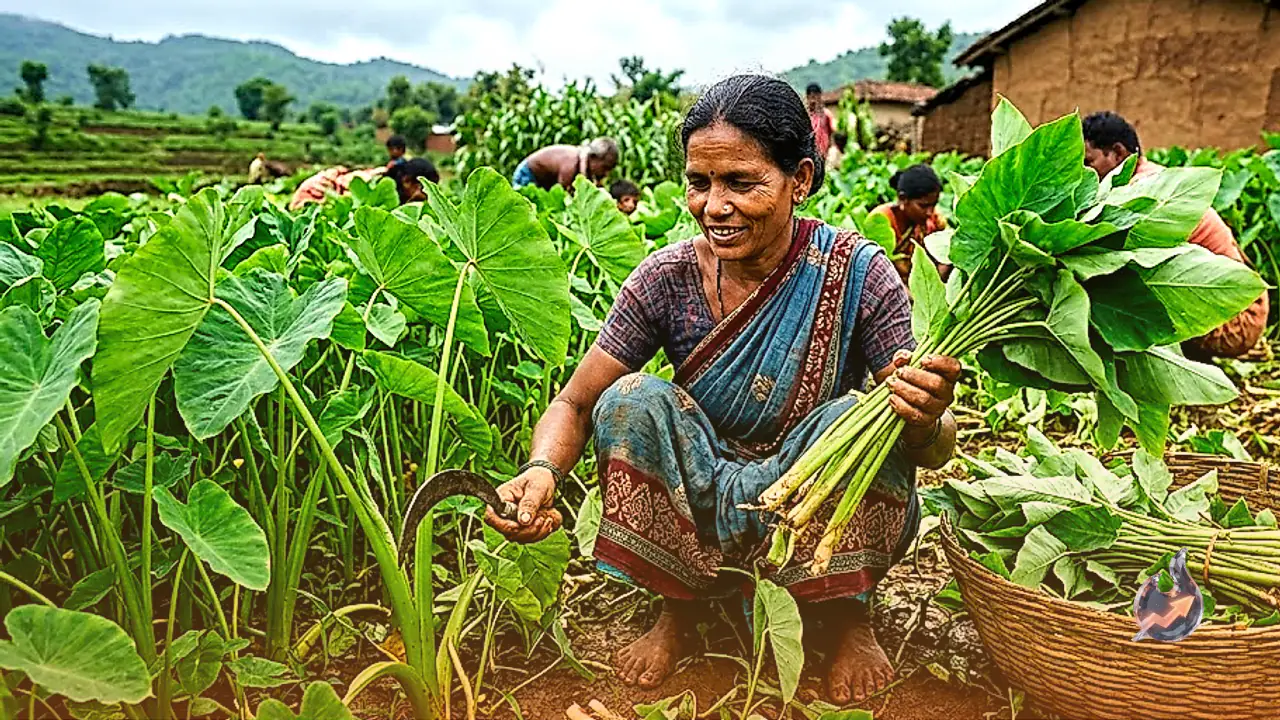















During the monsoon season, a traditional plant known locally as Maan sabzi is generating significant interest and income in rural markets. Naturally sprouting in home courtyards with the arrival of rain, every part of this plant—its leaves, stems, and underground root vegetable—finds eager buyers. Local resident Sunita Devi states that almost every household in her village grows Maan patta, turning a seasonal gift of nature into a steady daily earning stream.
Monsoon Harvest and Versatile Culinary Uses
The Maan plant thrives in rainy weather, growing to a height of up to 4 feet. Because it appears exclusively during the peak rainy months of July and August, locals refer to it as a seasonal monsoon vegetable. Its broad green leaves are harvested to prepare crisp fritters known as pakodi or bachka. Meanwhile, the long stems of the plant are chopped and cooked into a savory dry dish called bhujiya, making the upper portion of the plant completely zero-waste.
Underground Root Sabzi and Recipe Details
Beyond the foliage, the most sought-after component grows beneath the soil. This underground vegetable closely resembles Ol (elephant foot yam) in both appearance and taste. According to Sunita Devi, preparing Maan sabzi requires a traditional method similar to cooking yam. Four to five onions are finely sliced and golden fried in oil before ground household spices are blended in. The mixture is combined with the vegetable and simmered for 15 to 20 minutes to develop its rich flavor.
Market Prices and Daily Earnings Breakdown
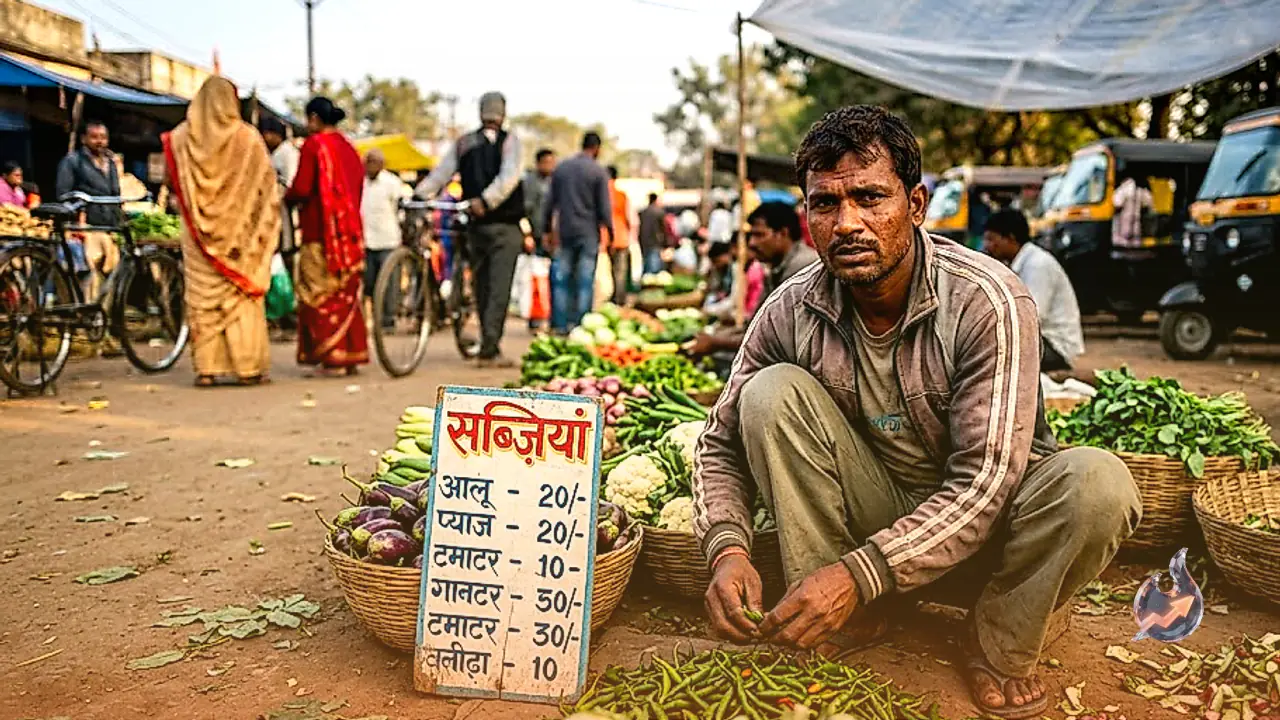
All three components of the plant command individual prices in local produce markets. The green leaves sell at ₹20 per kg, while the stems fetch around ₹50 per kg. The prized underground root vegetable commands the highest price, selling for ₹50 to ₹60 per kg. Sunita Devi notes that selling just one stem and leaf combination can yield up to ₹200 in daily income. Because the supply lasts only two months, consumer demand remains consistently high throughout the season.