






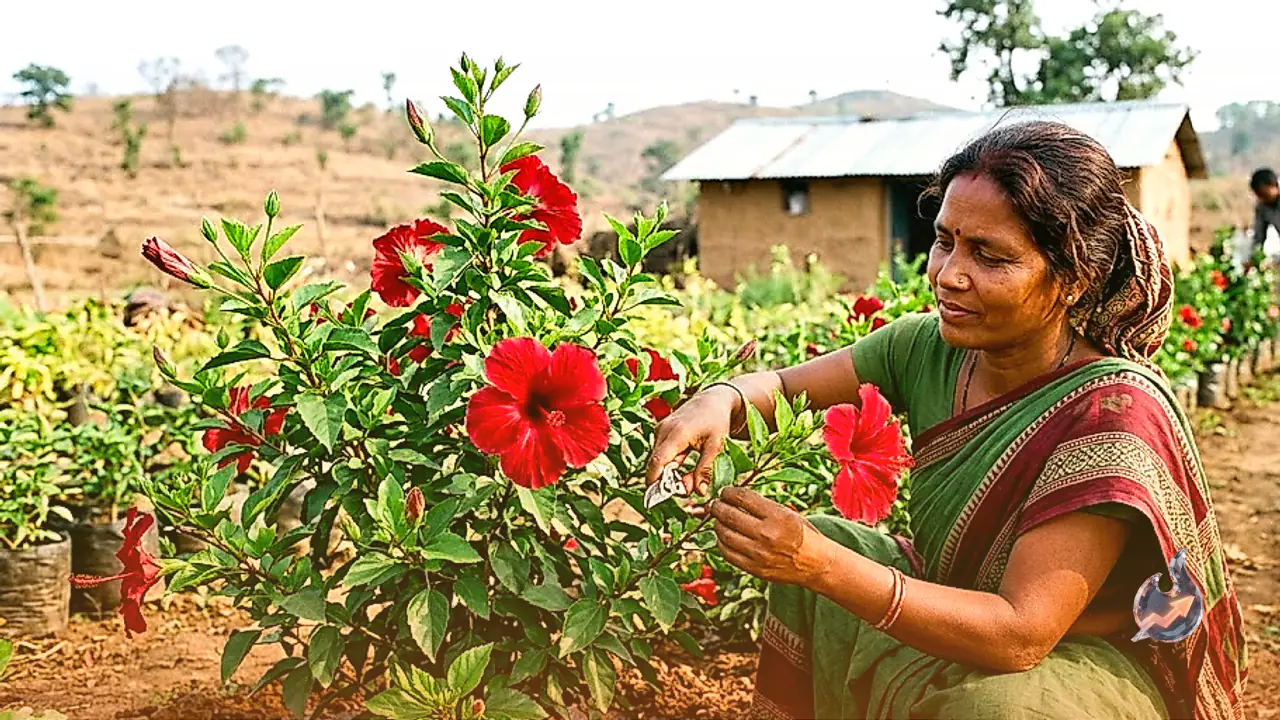
















Households across Palamu often encounter a common gardening puzzle where their hibiscus plants appear lush and green, yet stubbornly refuse to produce any flowers. As the auspicious festival of Navratri approaches, the demand for red hibiscus flowers dedicated to Goddess Bhagwati spikes significantly in local markets. Because these blooms hold immense religious significance for daily rituals and prayers, gardeners naturally look for ways to maximize their plant's yield. When a plant maintains dense foliage without developing a single bud, it usually signals a deficiency in proper nutrition, sunlight, or hydration. To overcome this hurdle and encourage heavy blossoming, local agricultural experts have outlined several practical maintenance steps that every plant owner can easily implement at home.
Ensuring Adequate Sunlight and Placement
According to Palamu district farmer Tarkeshwar Singh Chero, the hibiscus plant requires abundant direct sunlight to achieve robust growth and heavy flowering. Providing the plant with roughly five to six hours of direct sunlight each day plays a critical role in stimulating bud formation. Keeping the plant indoors or in shaded corners where natural light remains restricted can severely stunt its overall development. Therefore, positioning the pot in an open, well-ventilated area that receives ample sunshine throughout the day serves as a primary requirement for healthy blooms.
Managing Nitrogen and Balanced Nutrition
Another major reason behind a lack of flowers is the excessive use of nitrogen-rich fertilizers, which inadvertently promotes leaf and stem growth at the expense of blossoms. While high nitrogen makes the foliage look exceptionally green, it suppresses the plant's natural reproductive cycle. Hibiscus plants require a balanced intake of nitrogen, phosphorus, and potassium, which can be achieved by applying an NPK fertilizer formulated in a seven to six to five ratio. After feeding the soil with the recommended fertilizer, gardeners should water the plant lightly and place it back under direct sunlight to help the roots absorb the nutrients efficiently.
Water Control and Timely Pruning
Maintaining gentle moisture in the hibiscus soil is vital, but continuous waterlogging must be avoided at all costs to prevent root rot and diminished flowering. Ensuring proper drainage holes in the container allows excess water to escape, protecting the root system from decay. Water should only be applied when the top layer of soil begins to dry out. Furthermore, carrying out light pruning sessions at regular intervals encourages fresh lateral branches to emerge, which in turn bear the highest number of flowers. Gardeners should promptly trim away any dry, weak, or damaged stems to keep the plant vigorous.
Organic Fertilizers and Pest Management
To sustain long-term plant health, organic compost or well-rotted cow dung manure should be applied every ten to fifteen days. At the same time, gardeners need to watch out for aphids and other destructive pests that commonly attack hibiscus foliage and suck the sap from developing buds. Spraying a properly diluted solution of neem oil over the affected areas acts as an effective organic deterrent against these pests. Ultimately, combining adequate sunlight, balanced nutrition, controlled watering, efficient drainage, and timely pruning guarantees that a hibiscus plant will burst into a rich display of vibrant flowers.