





















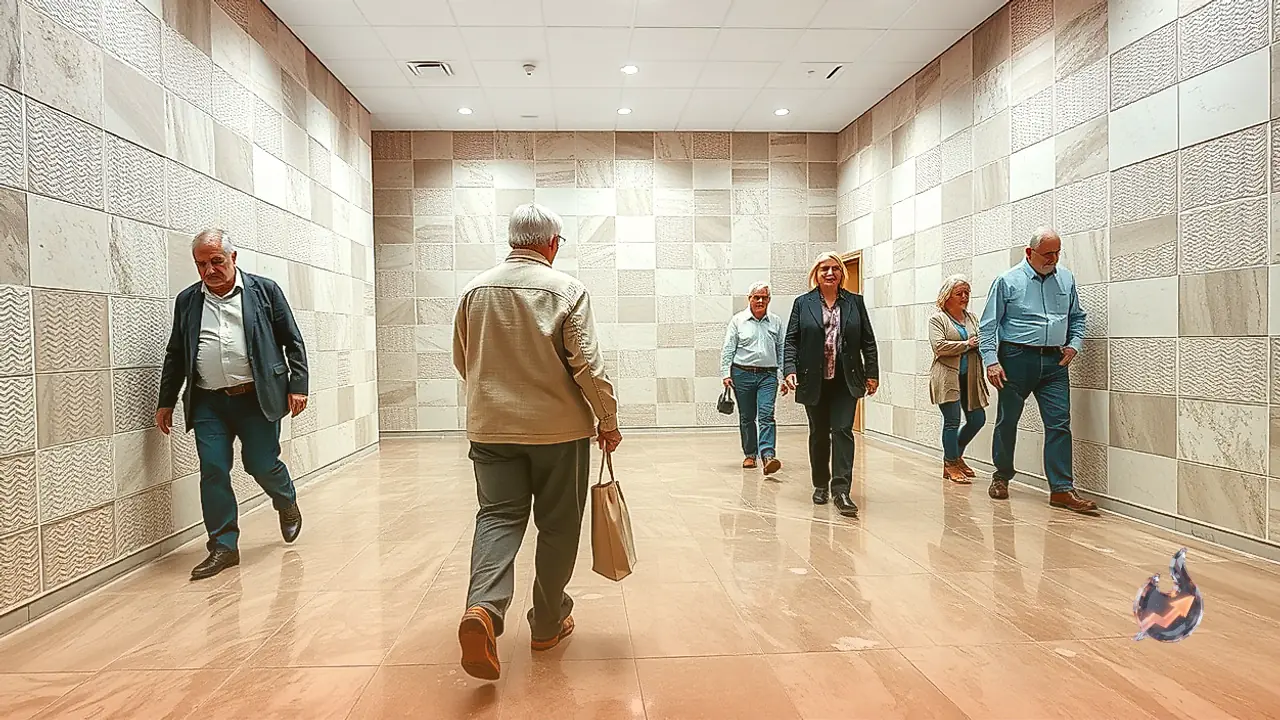

Slipping on wet household surfaces remains a major hazard for elderly family members, often resulting in severe physical trauma that requires immediate hospitalization. These accidents predominantly happen inside bathrooms or around dining spaces where liquid spills frequently occur. To eliminate such recurring risks, homeowners are increasingly adopting specialized anti-slip floor tiles designed to maintain steady footing under slick conditions.
Surface Grip Engineering and Matte Texture
Suraj, who operates a tile enterprise with two to three showrooms in Ranchi, observes that households with individuals aged above 60 to 70 years represent the primary buyers of these safety-oriented tiles. Multiple variations are currently offered in this category. The distinguishing attribute of these tiles lies in their meticulously engineered micro-grip structure, which firmly engages with the soles of the feet to halt unwanted sliding.
Effective Traction Against Oils, Soap, and Foaming Liquids
The operational reliability of these surfaces comes from embedded fine dust particles integrated into a completely matte finish. This texture ensures that even when slippery cooking oils spill across the floor, friction remains intact and footsteps lock securely in place. Similarly, heavy accumulation of water, soap lather, foam, or shampoo does not compromise traction. Because this resilience holds across diverse moisture levels, buyers are installing them beyond shower zones, extending coverage to dining halls, living quarters, and bedrooms.
Pricing Differential and Designer Specifications
Upgrading to slip-resistant flooring does not demand an excessive budget expansion compared to standard fittings. A typical regular tile costing 500 rupees stands against a 6/6 dimension anti-slip counterpart priced at 550 rupees, reflecting a marginal difference of just 50 rupees. For households seeking elevated aesthetics or alternative build grades, decorative and high-end variants range between 1000 rupees and 1500 rupees. Given this manageable cost differential, residential orders continue to pour in from families housing elderly dependents.