























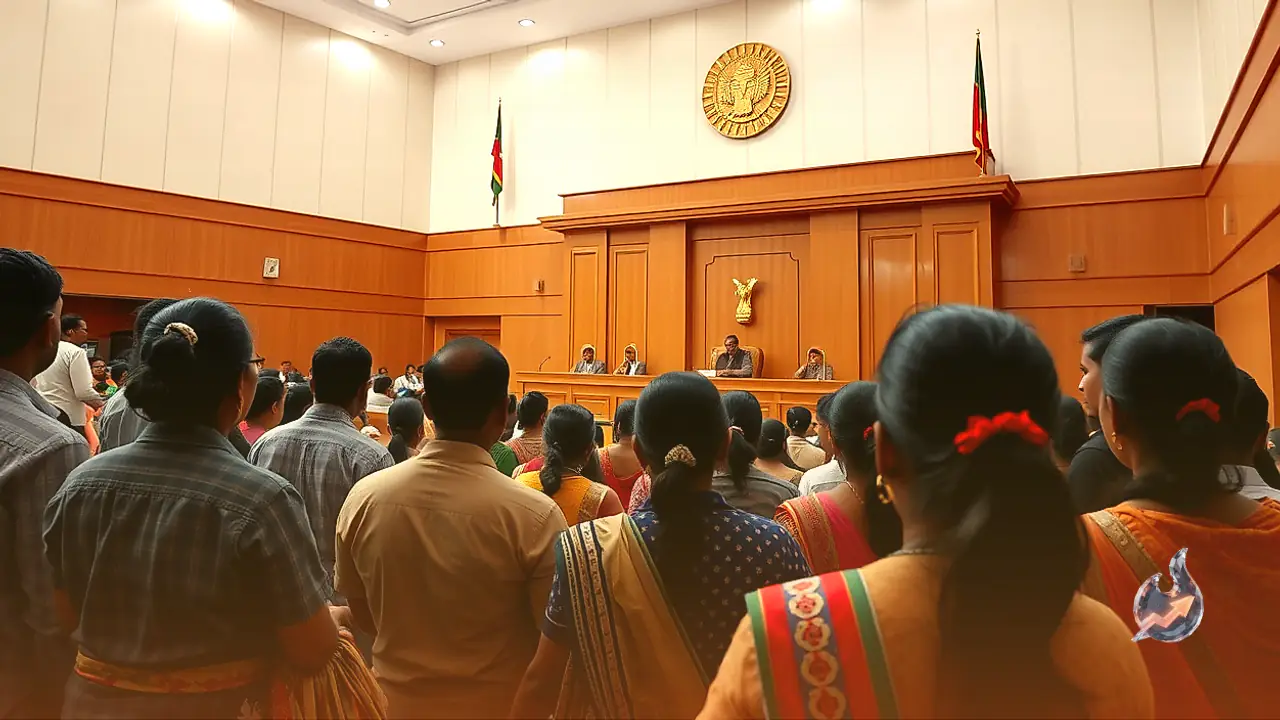

The Karnataka High Court has clarified the legal boundaries surrounding allegations of sexual relations established on deceitful promises to marry under the Bharatiya Nyaya Sanhita. In an important ruling regarding gender-specific statutory applicability, the court held that Section 69 of the BNS cannot be invoked against a female accused. Consequently, the criminal proceedings initiated against a woman under this particular penal provision have been partially quashed, setting a clear precedent on who falls within the scope of this offence.
Partial Relief Granted to Female Petitioner
The decision was delivered by Justice Anant Ramanath Hegde while adjudicating a petition filed by an accused woman seeking the quashing of proceedings against her. Following an analysis of the statutory wording of Section 69, Justice Hegde observed that because the petitioner is a woman, the penal offence relating to obtaining sexual intercourse through deceitful means or fraudulent promises of marriage does not apply to her. The relief, however, remains strictly limited to this specific charge. The High Court expressly refused to halt the broader criminal investigation, directing authorities to continue probing accompanying charges involving extortion, blackmail, and offences registered under the Information Technology Act.
Allegations of Deceit and Broken Marital Promises
The controversy stems from a formal police complaint lodged by an aggrieved woman, who alleged that the petitioner's husband had pursued an intimate relationship with her. According to the complaint, the man represented that his marital ties with his wife were strained and irretrievably damaged, assuring the complainant that he intended to marry her. Believing these representations, the complainant entered into physical relations with him, only to later discover that the commitments were not honoured.
Accusations of Blackmail and Unauthorised Sharing of Intimate Media
The dispute escalated further when the complainant accused both the husband and his wife of colluding to target and harass her. The formal complaint stated that the couple had accessed her private photographs and video clips, subsequently sharing them with third parties without her knowledge or consent. Furthermore, these explicit materials were allegedly used to blackmail and coerce the victim, prompting her to approach law enforcement authorities. The police subsequently registered criminal charges against both spouses, encompassing offences under the BNS alongside cybersecurity provisions. Challenging her inclusion in the case, the wife approached the High Court, which has now affirmed that she cannot be prosecuted under Section 69.