


















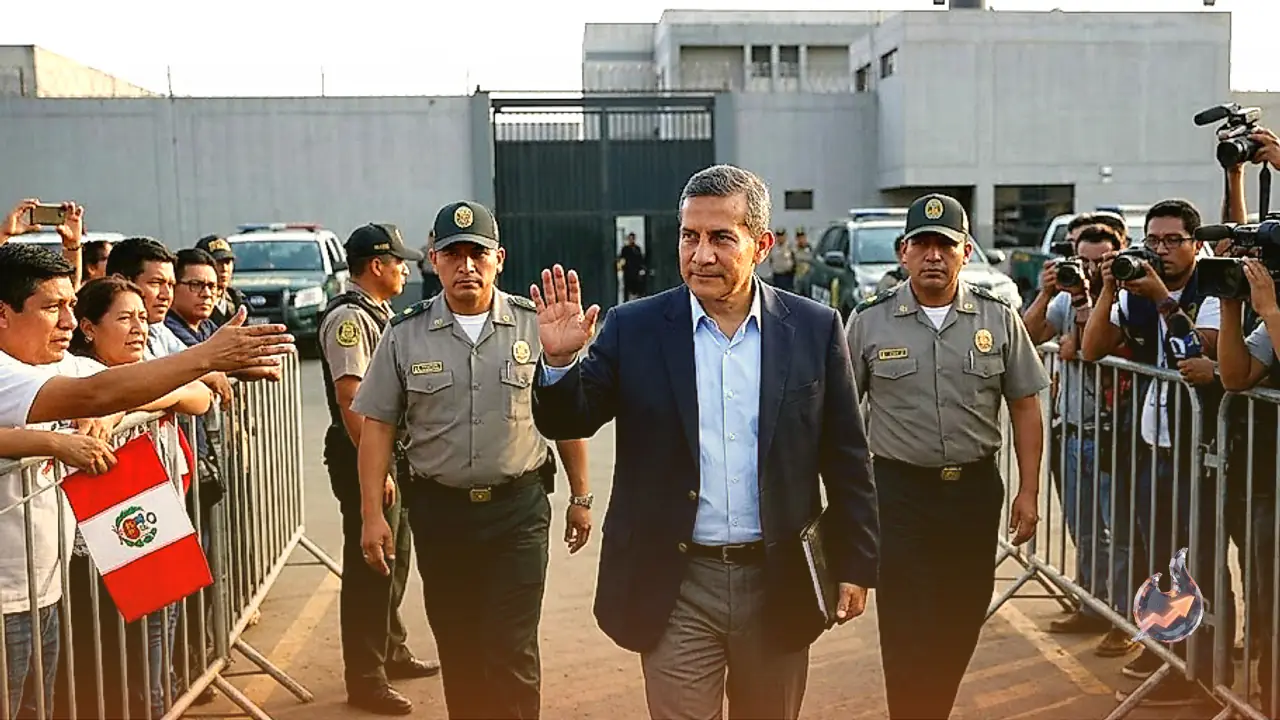

Peru's highest constitutional tribunal has annulled the 15-year imprisonment sentence previously imposed on former president Ollanta Humala, declaring the entirety of the criminal prosecution against him null and void. Humala, who occupied the nation's presidency between 2011 and 2016, had been convicted in 2025 on corruption and financial misconduct charges. The landmark ruling paves the way for his imminent release from Barbadillo Prison, located in the national capital of Lima. The judicial decision brings a dramatic turn to a multi-year legal battle surrounding political campaign financing and allegations of illegal monetary contributions from foreign entities and corporate giants across Latin America.
Constitutional Court Nullifies Proceedings and Defense Reaction
The constitutional court determined that the criminal trial conducted against Ollanta Humala suffered from fundamental legal flaws, rendering the entire judicial process invalid. Following the publication of the verdict, Humala's defense attorney, Julio Espinoza Goyena, publicly shared the court's rationale on social media platforms. According to Goyena, the magistrate panel concluded that political campaign contributions received during electoral races do not legally constitute the offense of money laundering under the nation's penal framework.
Espinoza Goyena emphasized that the Criminal Chamber currently retaining jurisdiction over the ongoing legal case is now obligated to execute the court's directive without delay. The defense counsel stated that the judicial body must order the definitive dismissal of all legal proceedings against the former head of state and guarantee the immediate restoration of freedom for Ollanta Humala. Prior to this constitutional intervention, Humala had explicitly stated his intention to appeal the 2025 conviction, maintaining that the original trial failed to adhere to statutory principles and evidentiary standards.
Scope of Corruption Allegations and Odebrecht Campaign Financing
The criminal charges that led to the 2025 conviction centered on allegations of illicit financial support delivered to fund two separate presidential campaigns. Prosecutors alleged that Humala, along with his spouse, accepted illegal monetary contributions totaling $3 million from the Brazilian construction conglomerate Odebrecht to finance his successful 2011 presidential run. In addition, investigative authorities charged that the couple received approximately $200,000 in unauthorized funds from Venezuelan leader Hugo Chávez to bankroll Humala's initial 2006 presidential bid.
Throughout the legal proceedings, Humala and his defense team consistently rejected all accusations of financial wrongdoing. The former leader maintained that the monetary transfers received during election campaigns did not violate existing statutes at the time and asserted that he and his family were targets of systematic political persecution. The broader judicial inquiry into political corruption in Peru also touches upon other figures, including former president Pedro Pablo Kuczynski, who has similarly maintained that payments connected to his activities were entirely legal as ongoing investigations proceed.
Status of Nadine Heredia and Asylum in Brazil
The legal downfall of Ollanta Humala was closely tied to that of his wife, Nadine Heredia, with whom he co-founded the Nationalist Party. In 2025, Heredia was simultaneously convicted of money laundering offenses and handed a matching 15-year prison sentence by the trial court. The prosecution had presented joint charges against both spouses, claiming they orchestrated the collection and distribution of illicit campaign funds from Odebrecht and foreign political figures.
However, Heredia avoided incarceration in Peru after taking refuge inside the Brazilian embassy in Lima. Following diplomatic negotiations, she was officially granted safe passage to travel to Brazil, where she secured political asylum. The constitutional court's latest ruling invalidating the core criminal proceedings raises major questions regarding the long-term status of the charges previously leveled against Heredia and the Nationalist Party structure.
Political Ascent, Military Background, and Electoral Victories
Ollanta Humala's trajectory in Peruvian public life began in the military ranks as an army officer. He first vaulted into national prominence in 2000 after spearheading a short-lived military uprising against the administration of then-president Alberto Fujimori. That rebellion established Humala as a prominent figure within national political discourse, leading to his eventual transition into civilian electoral politics.
In 2006, Humala made his first bid for the presidency, adopting a left-wing populist platform heavily influenced by the socialist ideological model of Venezuela's Hugo Chávez. Although that campaign ultimately proved unsuccessful, Humala recalibrated his political strategy for the 2011 presidential election. Shifting toward a more moderate political stance modeled after the pragmatic social-democratic policies of Brazil's president Luiz Inácio Lula da Silva, Humala successfully built a broader coalition. In the 2011 run-off election, he defeated conservative candidate Keiko Fujimori, the eldest daughter of Alberto Fujimori, to secure the presidency for a five-year term lasting until 2016.
Odebrecht Scandal Aftermath and Legal Battles Since 2016
Humala's post-presidential period was quickly overshadowed by massive judicial investigations across Latin America. Shortly after he stepped down from office in 2016, Brazilian construction giant Odebrecht entered into a landmark plea agreement with international law enforcement authorities. The company publicly confessed to distributing hundreds of millions of dollars in bribes to government officials, political parties, and presidential candidates across multiple Latin American nations in exchange for lucrative public infrastructure contracts.
Peruvian prosecutors subsequently launched extensive criminal probes into former presidents and high-ranking officials. Humala and Heredia were formally targeted by investigators over millions of dollars in alleged Odebrecht payments and the earlier 2006 Venezuelan campaign funding. As part of the pre-trial judicial process, the couple spent a full year in pre-trial detention before being released pending trial. The legal proceedings dragged on for nearly a decade, culminating in their initial 2025 convictions before Peru's constitutional court issued its definitive ruling invalidating the entire case.