



















In the Ecuadoran city of Durán, an urban area heavily afflicted by illicit drug trafficking and violent gang warfare, frontline law enforcement officers face an uphill battle against ruthless criminal syndicates and internal betrayal. Beyond confronting armed enforcement squads that murder and dismember rivals, officers must navigate systemic corruption that reaches deep into state institutions, law enforcement units, and political offices.
Frontline Operations and Internal Corruption in Durán
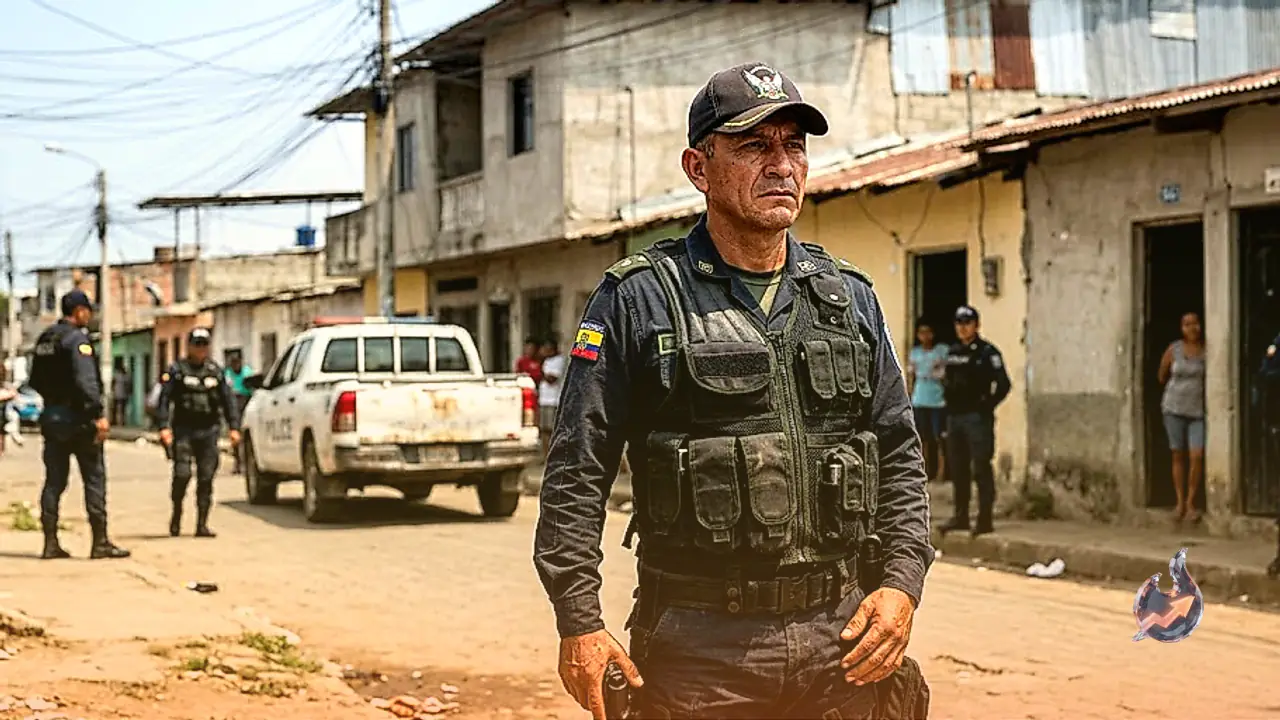
Police Captain Jean Carlos Bustamante, a 34-year-old former special forces officer, leads an elite, hand-picked tactical team through some of the country's most dangerous neighborhoods. At 34, Captain Bustamante is the oldest among his specialized crew. He emphasizes that internal corruption poses as great a threat as the street gangs themselves, observing that numerous individuals within the police force, state bureaucracy, and political spheres remain on the payrolls of powerful criminal groups.
During evening operations in Durán’s hardscrabble neighborhoods, where home windows are reinforced behind heavy iron grills, silence is enforced through fear. The territory is controlled by 'Los Aguilas' (The Eagles), a notorious gang known for executing any resident who speaks out against their activities. Because of this constant lethal threat, local civilians refuse to share information with law enforcement officers.
Tactical teams frequently execute raids on abandoned structures used as hidden armories, as gang shooters systematically avoid storing weaponry in their personal residences. In one such operation, officers deployed heavy battering rams to breach fortified entry doors, securing two handguns, one degraded by rust and another fully operational, alongside assault rifle ammunition. Captain Bustamante frames such seizures as crucial tactical wins that protect his men and remove deadly weapons from circulation, even while acknowledging that organized crime networks possess financial resources and firepower that far exceed state capabilities.
The Transnational Cocaine Pipeline and Ecuador's Strategic Crisis
The violence devastating Durán is inextricably tied to global drug consumption networks. According to President Daniel Noboa, approximately 70 percent of the cocaine destined for European and North American markets passes through Ecuadoran territory. Flanked by Colombia and Peru, the world's primary cocaine producers, Ecuador serves as a primary transit corridor. Local gangs, operating in coordination with Mexican cartels and the Albanian mafia, exploit underfunded security forces, porous border checkpoints, and an expansive Pacific coast to move multi-ton shipments across the globe.
In less than a decade, Ecuador has shifted from a peaceful South American tourist destination into one of the world's most violent nations. Official figures from the Interior Ministry recorded more than 9,200 violent homicides last year. Despite an aggressive militarized crackdown initiated by President Noboa over the past two years, analysts note that the targeting of top cartel figures has fragmented major criminal organizations into smaller, highly volatile sub-factions that violently compete for territorial control.
Micro-Trafficking, 'H' Street Drugs, and Local Enforcement Challenges
To combat localized drug distribution networks, tactical units utilize drone technology to monitor high-risk urban spaces. In one recent operation, aerial surveillance captured three micro-traffickers distributing narcotics near a public playground. Unlike high-level cartel operators handling bulk tonnage, these street-level dealers distribute small quantities directly within residential neighborhoods.
Using battering rams to gain access to suspects' residences, officers perform systematic searches using flashlights in properties lacking electrical power. During one raid, three suspects were detained, including one located in a concealed space behind an upper-story window. Searches of the premises uncovered small paper packets of 'H', a highly addictive street mixture containing low-purity heroin and synthetic additives. Sold locally by street dealers for approximately $1.00 (£0.75) per packet, the cheap narcotic has devastated local youth populations.
Systemic Judicial Failures and Infiltration of Law Enforcement
Operational successes on the street are frequently undermined by structural failures within the judicial system. Colonel Santiago Gavilanes, deputy commander of the Durán police force, reports that corruption among prosecutors and judges frequently leads to the immediate release of apprehended gang operatives. Officers routinely re-arrest the same individuals during subsequent tactical raids, only to find them implicated in ongoing homicides and violent offenses after securing quick releases through bribed officials.
The extent of gang infiltration within law enforcement is further highlighted by accounts from active officers who have received direct bribe offers via encrypted text messages. Offers promising sum payments large enough to fund immediate retirement have been extended to officers, complete with precise internal details regarding their assigned duties and operational locations. Such breaches demonstrate that internal informants actively feed sensitive police intelligence directly to cartel leaders.
Gang Operations, Bribes, and Child Recruitment
Outside of central police control, criminal organizations operate with near impunity. In gang-controlled territories situated an hour outside the city center, gang leaders operate elaborate counter-intelligence systems. One 37-year-old gang leader, operating under the alias 'Jonathan', confirmed maintaining four active police officers on his monthly payroll, paying between $1,500 (£1,100) and $2,000 (£1,500) per month for advance warning of law enforcement operations. This advance notice allows gang members to clear weapons and illicit contraband before raiding parties arrive.
Jonathan, who joined gang networks at age 18 to secure income for his family, leads heavily armed groups that patrol streets openly during daylight hours carrying semi-automatic rifles and handguns. Human rights organizations report that child recruitment into street gangs in Ecuador begins as early as age 12, with adolescents functioning as active hitmen by age 15. In an interview, Jonathan acknowledged personally committing around eight homicides, asserting that the global drug trade can never be dismantled because newly formed gangs instantly replace eliminated organizations.
Relentless Street Violence and Community Impact
The human toll of this unrest remains evident across the streets of Durán. In a recent night incident, a young man was gunned down beside his motorcycle by two assailants on a motorbike who fired six rounds, striking him first in the back and executing him with a final shot to the head. Forensic personnel transferred the victim into refrigerated morgue transport vehicles already containing additional homicide victims.
Residents describe an environment dominated by persistent fear where everyday activities carry severe personal risks due to stray gunfire and sudden executions. While senior police officials cite tactical progress, including a reported 50 percent drop in Durán's homicide rate during the first six months of the current year and the reduction of public decapitations, local communities remain trapped between state security forces and deeply entrenched criminal cartels.