






















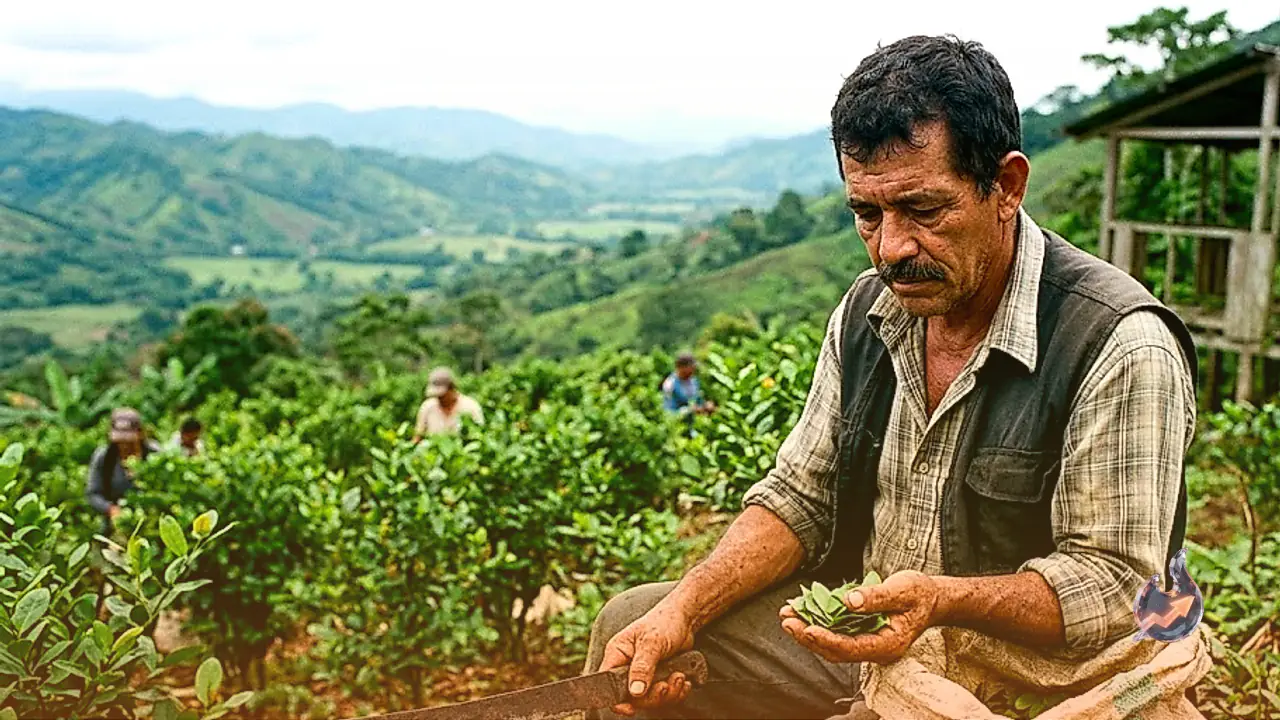

In the dense, river-bound expanses of the Meta province in Colombia, a farmer named Perea made a solemn resolution to permanently walk away from the illicit drug trade. For years, his small plot of land had been dedicated to cultivating the coca leaf, the essential raw material that fuels the global cocaine industry. However, weary of the shadows of illegality, Perea chose to uproot every single green coca bush from his property. He replaced the controversial crop with entirely legal alternatives, specifically planting large fields of cassava and plantain. This decision was not merely a change in agricultural practice; it was a profound leap of faith into a government-backed vision of a legally sustainable future for rural Colombia.
Perea's transition was part of a massive, nationwide effort. He was just one of thousands of agricultural workers who eagerly enrolled in a highly publicized government-run crop substitution initiative. The core objective of this state-sponsored programme was straightforward yet ambitious: to provide the necessary financial and structural scaffolding to help impoverished farmers abandon the lucrative but illegal coca trade for good. The promise was that the state would stand shoulder-to-shoulder with these communities, ensuring that the pivot to legal farming would not lead to financial ruin.
The reality on the ground, however, rapidly devolved into a logistical and economic nightmare for Perea and many of his peers. The crucial assistance that had been formally promised by the government authorities simply failed to materialize. Beyond the absent financial aid, the physical geography of the Meta province aggressively worked against the legal farmer. Perea's remote farm is so isolated that it is accessible only by navigating the local river systems. This severe lack of basic infrastructure, notably the complete absence of paved roads, meant that transporting bulky legal crops like plantain and cassava to market was nearly impossible. Compounding this isolation, recurring floods frequently devastated the region, ruining harvests and washing away any slim hopes of profitability. While the illicit drug cartels have the resources to extract compact coca paste from deep within the jungle, the legal agricultural market offers no such logistical miracles.
Faced with mounting debts, rotting crops, and a hungry family, Perea's resolve eventually broke under the crushing weight of economic reality. In the year 2024, utterly disillusioned by the broken promises of the state and the physical impossibility of his situation, he made the agonizing decision to begin planting coca bushes once again.
Perea explained that it is a tragedy, noting that without work and with children to feed, he has no alternative. "If no help ever arrives, you go back to growing it," he said.
The Ancestral Root and the Modern Cartel Economy
To understand the grip of the crop on Colombia, one must understand its dual nature. The coca leaf is fundamentally an ancestral plant, deeply woven into the cultural fabric of indigenous communities across the Andes. For centuries, it has been used safely and traditionally in mild teas and traditional medicinal practices. However, in the modern era, that benign history has been entirely hijacked by international organized crime. Today, the vast majority of the coca cultivated in Colombia is chemically processed into the highly addictive narcotic, cocaine. The scale of this illicit industrialisation is staggering, with estimates indicating that an overwhelming 70 percent of the entire global supply of cocaine originates from within Colombia's borders.
From a purely agricultural and economic standpoint, competing with the illicit market is an incredibly tall order for any legal alternative. Lucas Marín Llanes, a prominent Colombian researcher who dedicates his work to analyzing the intricacies of the coca economy and the efficacy of state substitution strategies, points out the inherent disparities.
Llanes explained that the illicit crop possesses significant advantages over legal alternatives, such as offering guaranteed prices. "Harvests are quick - farmers can get three or four a year," he noted.
This economic certainty is a powerful magnet. Research to which Llanes has contributed vividly illustrates just how deeply this illicit economy underpins rural financial ecosystems. The data reveals that robust coca cultivation has the power to significantly supercharge local economies. In fact, between the years 2014 and 2019, the influx of drug money was so substantial that it actively drove up municipal Gross Domestic Product (GDP) by as much as 10 percent in certain heavily cultivated areas.
It was precisely this deep-rooted economic dependency that the state's substitution programmes were formulated to sever. The strategic goal was to meticulously detach the Colombian farming demographic from the narcotic supply chain, replacing cartel cash with state-supported, legal livelihoods that would integrate these rural zones into the formal national economy.
Despite these sweeping policy designs, the current agricultural landscape paints a picture of systemic failure. Today, the planting of coca has not just rebounded; it has surged to unprecedented record levels, covering an astonishing expanse of more than 250,000 hectares across the nation. Amidst this green ocean of illicit crops, countless Colombians who participated in the substitution programmes echo Perea's sentiment, stating unequivocally that they have been abandoned and let down by the state.
A History of Boom, Bust, and Bloodshed
The story of Elena Hernández offers a stark window into the historical cycles of the coca trade. During the massive drug boom of the 1990s, Hernández made the life-altering decision to relocate to the heavily cultivated region of Guaviare, directly lured by the promise of significantly better financial compensation than any legal work could offer.
She recounted that the financial prosperity was highly visible during that era. "I managed to save and buy a small house," she noted.
However, the influx of narco-dollars was inevitably accompanied by a devastating wave of violence and profound insecurity. The coca industry transformed the countryside into a warzone. Various heavily armed factions and guerrilla groups fought ruthless territorial battles to secure control over the lucrative cultivation zones and trafficking routes. In response, the Colombian government launched aggressive counter-narcotics offensives, attempting to physically destroy the industry through massive manual eradication campaigns, highly controversial aerial fumigation flights spraying herbicides, and widespread arrests of rural workers.
These heavy-handed state efforts succeeded in periodically devastating the incomes of thousands of vulnerable families, but they comprehensively failed in their primary objective: they did not manage to permanently stem the overall tide of coca cultivation.
Recognizing the futility of an exclusively punitive approach, the government shifted tactics. When a sweeping nationwide substitution programme was officially introduced by the administration in power in 2017, there was a genuine wave of optimism. Hernández was among the highly eager participants, signing up alongside approximately 100,000 other farming families. The grand bargain was clear: the state promised substantial financial support, and in return, the farmers pledged to permanently transition away from the illicit trade.
The financial architecture of the agreement was highly specific. Each participating household was officially slated to receive a total of 36 million Colombian pesos, which translated to roughly $11,000 or £8,000 at the time. This vital cash injection was designed to be strategically spread over a comprehensive two-year transition period.
"The way it was presented to us, it seemed very promising for the development of our territory," Hernández stated.
The Ambition and Collapse of the PNIS Programme
This landmark initiative was formally designated as the National Comprehensive Programme for the Substitution of Illicit Crops (PNIS). Its creation was not an isolated policy decision, but rather a central pillar born directly out of the historic 2016 peace agreement struck between the Colombian government and the Revolutionary Armed Forces of Colombia (Farc), which was the country's largest and most powerful guerrilla organization. The peace deal recognized that lasting stability required dismantling the drug economy that had funded the decades-long insurgency.
Under the PNIS framework, the government's obligations extended far beyond mere cash handouts. In direct exchange for manually uprooting their coca plants, the rural farmers were guaranteed comprehensive technical support to ensure their new agricultural ventures succeeded. This included the deployment of professional agronomists to the rural territories and expert advice on modern soil management techniques.
While various localized substitution programmes had certainly existed in Colombia prior to this, their scale and funding had always been severely limited. The PNIS represented the most ambitious and well-funded attempt to date to rewrite the country's agricultural destiny. And, for a brief, hopeful period, it genuinely appeared to be working.
In specific pockets of southern Meta and Guaviare, the landscape physically transformed. Vast fields previously blanketed in bright green coca bushes were steadily replaced by sprawling lemon tree orchards, broad banana plantations, and newly established small-scale livestock farms. A significant number of the participating farmers, much like Hernández, faithfully kept their end of the bargain and completely stayed away from the illicit trade.
Yet, their compliance with the programme does not translate into an endorsement of its execution. Many of those who stayed legal absolutely do not consider the government's handling of the initiative to be a success.
Hernández explained that the state lacked genuine commitment to their welfare. "We were treated badly," she observed.
The implementation of the PNIS was plagued by critical failures. The promised financial payments, the absolute lifeline for families transitioning away from their only source of income, were routinely and severely delayed. Furthermore, the specialized technical support and agronomy advice frequently failed to materialize entirely. The fundamental issue was a chronically weak state presence in the deep rural areas, combined with abysmal coordination between the various government agencies tasked with executing the rollout. Consequently, the desperately needed support simply did not reach the isolated communities that were depending on it.
Shifting Politics and Glimmers of Success
The momentum that initially propelled the PNIS programme forward rapidly weakened as the national political winds changed direction. Following the election of Iván Duque, who assumed the Colombian presidency in 2018, the national government's strategic approach underwent a significant pivot. The new administration systematically refocused state resources and policy priorities back toward hardline eradication tactics and militarized security strategies, leaving the substitution efforts to languish.
By the time the current head of state, President Gustavo Petro, officially took office in 2022, the PNIS initiative was completely derailed. It was massively behind its original schedule and fiercely struggling to establish meaningful contact with the rural communities it was designed to serve.
Despite the overwhelming narrative of failure, there are isolated pockets where the original vision actually took root. Some farmers did ultimately experience the promised improvements, providing a glimpse of what a functional programme could achieve. For Doralba Bejarano, a resident of Puerto Rico located in the southern reaches of Meta, her economic and social situation tangibly improved once the heavily stalled government support finally began to arrive in her community.
For Bejarano, the transition was not just about economics, but about basic human freedom and psychological relief from the constant threat of state violence.
She vividly recalled the constant fear that predated the state initiative, explaining that they were forced to conceal the coca paste to avoid being jailed by the military. "Before the programme we were terrified," she stated.
Her reference to coca paste highlights the economic mechanics of the trade; it is a significantly more concentrated, semi-processed form of the leaf utilized in the direct production of cocaine, which critically allows the rural growers to earn a substantially higher margin than they would by simply selling raw, unprocessed leaves.
Having successfully transitioned away from that dangerous livelihood, she now experiences a profound sense of liberty.
"I go wherever I want," she stated, adding that she no longer has any reason to hide.
Furthermore, she noted that a significant portion of her local community is now actively receiving the vital government support necessary to effectively promote, transport, and sell their newly cultivated non-coca crops and various other agricultural foodstuffs in the legal markets.
Global Appetite and the Search for Total Peace
However, the monumental challenges hindering the total success of crop substitution within Colombia are heavily driven by massive macroeconomic forces located far beyond the nation's sovereign borders. The primary engine of the crisis remains the continuing, insatiable, and huge appetite for cocaine residing in the affluent markets of the United States and Europe, alongside rapidly expanding newer consumer markets emerging elsewhere across the globe.
Michael Weintraub, who serves as the co-director of the Centre for the Study of Security and Drugs at the prestigious University of the Andes, based in Colombia's bustling capital city of Bogota, emphasized the sheer power of this international market dynamic.
Weintraub bluntly assessed that the expanding international demand ensures an ongoing supply. "That means Colombia will grow coca for the foreseeable future," he stated.
Beyond the simple economics of global supply and demand, Weintraub also described the ongoing internal security context within Colombia as highly "fragile." This pervasive instability makes it extraordinarily difficult, and often physically dangerous, for unarmed state substitution programmes to operate effectively and safely within many of the nation's most remote rural areas.
Although the landmark 2016 peace deal successfully orchestrated the disarmament and disbanding of large factions of the Farc guerrilla army, the resulting power vacuum in the countryside did not remain empty for long. A multitude of other heavily armed militant groups and sophisticated criminal cartels rapidly moved in to fill the void. Today, these violent organizations maintain a stranglehold over the rural territories, violently controlling the lucrative illicit trafficking routes and completely dominating the local economic structures.
The current Petro administration has actively sought to address this deeply entrenched violence through its highly ambitious "Total Peace" policy. Under this broad framework, the national government is actively attempting to hold comprehensive peace negotiations and demobilization talks with all of the various armed factions and criminal gangs simultaneously. However, independent political and security analysts broadly maintain that tangible progress on this front has been severely limited thus far.
RenHacemos and the Skepticism of the Abandoned
In an attempt to reboot the agricultural transition, the government initiated the rollout of a revised strategy last year. The new substitution programme, officially branded as RenHacemos (also referred to by officials as RedHacemos), was launched in specific pilot areas. The stated goal of this revamped initiative is to deliberately build upon the foundational ideas of the original PNIS framework while comprehensively addressing and rectifying its glaring historical shortcomings.
Under this updated model, participating farmers will fundamentally still receive direct financial support to ease their transition. However, the overarching focus of the RenHacemos programme has shifted dramatically toward comprehensively diversifying the entirety of the local rural economies, moving far beyond the simple, one-to-one concept of crop replacement. The government is promising a much wider umbrella of infrastructural assistance. This expanded vision will purportedly include massive regional road improvements, direct access to higher university education for rural youth, the rollout of broad digital internet connectivity, and the provision of significantly better housing for the farming communities.
Gloria Miranda, the director of the primary government agency actively in charge of illicit crop substitution across Colombia, articulated the administration's modernized understanding of the challenge they face.
Miranda stated plainly that the illicit drug trade operates precisely like a standard business enterprise. "RedHacemos aims to replace not only the coca plant, but the entire economy surrounding it," she elaborated, pointing to the processing, transport, and logistics sectors.
Yet, despite the grandeur of these newly minted policy promises, deep-seated skepticism remains pervasive among those who have studied the history of the conflict. For many experienced analysts, serious questions remain entirely unanswered regarding whether such sweeping, state-led approaches can ever truly deliver lasting, structural change in the deep jungle. Llanes pointedly observed that the continuing, explosive growth of nationwide coca cultivation provides undeniable, empirical proof that decades of repeated state interventions simply haven't worked.
Down in the isolated, flood-prone fields of Meta, Perea remains highly sceptical that any genuine, life-altering government support designed to help him permanently move away from the coca trade will actually arrive for him or his equally desperate neighbours anytime soon.
He declared that they are living day to day, often running completely out of food. "The state has completely abandoned us," he stated.
For the immediate future, Perea confirmed that he will continue to cultivate the illicit coca crop. He stressed that this decision is not born out of a desire to be a powerful criminal, but rather stems from the stark reality that it is fundamentally his only viable option for sheer survival.
He concluded by pointing out that his severe poverty proves his lack of cartel involvement. "We are not the drug traffickers," he stated.