
The United States and Venezuela have formally re-established military ties in a landmark shift, less than a year after US forces seized the South American nation's former leader, Nicolás Maduro, during a raid in the capital of Caracas.
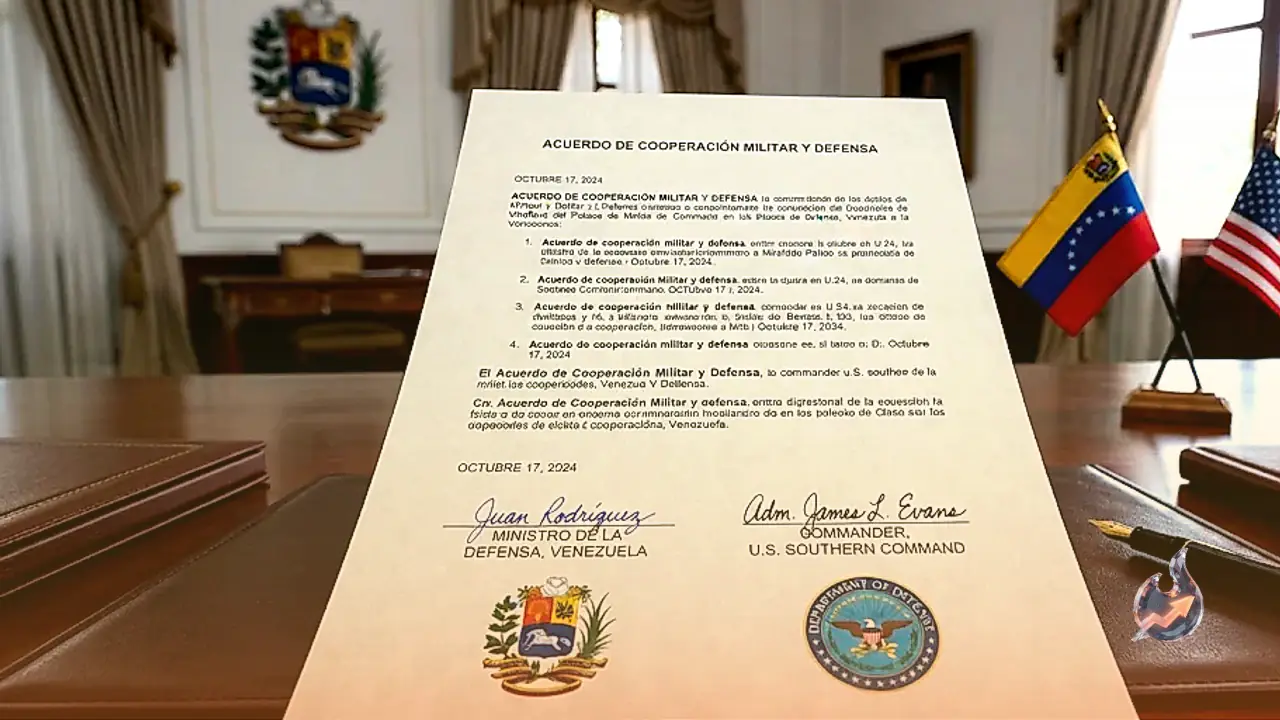
The interim government, headed by Delcy Rodríguez who previously served as Maduro's vice-president, signed a comprehensive military cooperation pact with US Secretary of Defence Pete Hegseth on Wednesday. While specific operational details of the agreement remain sparse, Hegseth highlighted that Venezuela has transitioned from being one of the region's most aggressive security threats into a compliant partner in under twelve months. Interim President Rodríguez echoed this sentiment, stating that the agreement is vital for addressing shared regional threats.
A Turbulent History and Broken Ties
Military collaboration between Washington and Caracas was officially severed back in 2005 by then-President Hugo Chávez, a prominent left-wing leader. Chávez at the time alleged that US military personnel deployed to train Venezuelan counterparts had made derogatory remarks about his administration. He further accused the US military office situated inside Fuerte Tiuna, the country's largest military installation, of acting as a CIA front conspiring against the sovereign government.
Under Nicolás Maduro, who assumed power following Chávez's passing from cancer, bilateral relations continued a steady downward spiral. Diplomatic and security channels hit absolute rock bottom late last year when Washington doubled its financial bounty for information leading to Maduro's arrest to $50m (£38m). This escalation culminated on January 3 when US military forces executed a dramatic raid in Caracas and seized the long-serving leader.
Hegseth Address at the US Embassy
Speaking at the US embassy in Caracas on Wednesday, Secretary Hegseth reflected extensively on the dramatic transformation in relations since Maduro's capture. He noted the profound weight of the occasion, highlighting that he is the first United States Secretary of War to set foot in Venezuela this century. He added that a year prior, such a diplomatic presence would have been considered entirely unimaginable.
Recalling the defiant public posturing of the deposed leader, Hegseth reminded audiences of the exact moment a year ago when an indicted narco-terrorist fugitive stood on a stage nearby and openly taunted authorities to come and get him. He stated that the United States answered that call, and the resulting military operation unfolded exactly as predicted, quoting Maduro's own words of no war and peace.
New Security Frameworks and Regional Strategy
Describing the newly signed pact alongside Venezuela's defence minister, Hegseth termed it a fresh chapter for both nations and the wider Western Hemisphere through the framework of the Americas Counter Cartel Coalition. President Rodríguez characterized the meeting as extraordinarily relevant for bilateral diplomacy, pointing out that both nations have managed to convert a historically difficult period into an avenue for mutual benefit and security cooperation.
Although comprehensive text of the agreement has not been made public, Rodríguez noted that provisions include specialized military training, upgrades to operational equipment, and enhanced technological access to combat common criminal syndicates. In his broader remarks, Hegseth issued a stern warning to illicit drug networks utilizing Venezuelan territory as a safe haven, vowing absolute accountability and pursuit.
Following his engagements in Caracas, Hegseth traveled onward to neighboring Colombia, where President Abelardo de la Espriella maintains close diplomatic ties with the Trump administration. Colombia already participates in the US-led counter-cartel coalition, with discussions previously centering on joint security operations while maintaining strict adherence to local sovereignty, constitutional guidelines, and national laws.