






















Vibrant flowering creepers bring charm and tranquility to home gardens, balconies, and courtyards. In traditional Indian gardening and cultural beliefs, Parijat, Madhukamini, and Aparajita are revered as sacred flora believed to have arrived on Earth directly from the celestial realm. Aparajita, recognized as a symbol of victory, peace, and domestic prosperity, is traditionally positioned facing the east or northeast direction to invite auspicious energies into the household. The plant is widely known by various botanical and vernacular names, including Shankhpushpi, Butterfly Pea Flower, Vishnukanta, Gaukarni, and Neelkantha. Under ideal conditions, the vine showcases its most lavish flush of flowers from June through November. However, gardeners frequently encounter situations where the climber flourishes with foliage but fails to develop buds. Understanding its cultural requirements and utilizing natural soil amendments can effortlessly resolve this issue.
Floral Characteristics and Everyday Uses
While the blossoms of Aparajita carry no scent, their striking visual appeal more than compensates for the lack of fragrance. The flowers display captivating shades of deep blue, white, and purple, making the vine an exceptional decorative addition to outdoor spaces. Beyond their ornamental value, these blooms are esteemed for their therapeutic properties and religious importance. They are offered during devotional rituals and are increasingly harvested by wellness enthusiasts to brew herbal blue tea. When individuals bring home saplings from commercial nurseries, common complaints include stunted growth and an absence of blossoms. In most instances, these setbacks stem from selecting inadequate potting containers and failing to adhere to primary horticultural maintenance.
Pot Specifications and Soil Formulation
Because the Butterfly Pea vine produces an extensive root structure, container dimensions directly dictate the plant's blooming capacity. A single specimen requires a container measuring at least 12×12 inches. If a larger 15 inch pot is utilized, growing two plants together creates a fuller appearance and yields superior flowering results. Crucially, the pot base must feature adequate drainage holes to evacuate excess irrigation and keep root rot at bay.
The vine thrives best in well-drained, airy soil that prevents waterlogging around root zones. When recycling old potting soil, it should first be spread out in direct sunlight for two to three days to eliminate lingering pathogens. If preparing a fresh substrate, mix 40 percent garden soil, 20 percent coco peat, and 30 to 40 percent vermicompost or aged cattle manure. Enrich this substrate with a modest measure of calcium powder and neem cake powder. Neem cake enhances foliar luster while serving as a natural shield against subterranean fungal pathogens. Incorporating 200 grams of seasonal flower food further stimulates heavy blossoming. Gardeners should strictly avoid bone meal and synthetic chemical fertilizers on Aparajita. As a revered medicinal plant, synthetic additives deteriorate its therapeutic integrity.
Climate Requirements, Sunlight, and Seasonal Maintenance
Aparajita is inherently a warm-weather specimen that prospers within an ambient temperature range of 15 to 35 degrees Celsius. Ample direct sunlight is non-negotiable; the vine demands a minimum of 5 hours of sunlight daily to initiate bloom production. As a rapid climber with vigorous underground root development, the stems must be guided onto trellises, nets, or string supports to spread gracefully.
With the onset of cold winter conditions, the plant slips into dormancy, shedding leaves and appearing lifeless. During chilly winter nights, cover the foliage with light fabric or insulate the soil surface with straw mulch to protect against frost damage. Once winter recedes in February, carry out hard pruning by removing barren, brittle twigs to spur fresh springtime growth. Similarly, during the intense heatwaves of June, shield the plant from severe heat stress. Routine aeration of the root zone and intermittent light trimming will encourage bushier side branches. If small caterpillars or insect larvae attack the foliage, an organic neem oil spray diluted in water provides safe pest control.
Homemade Organic Boosters for Abundant Flowering
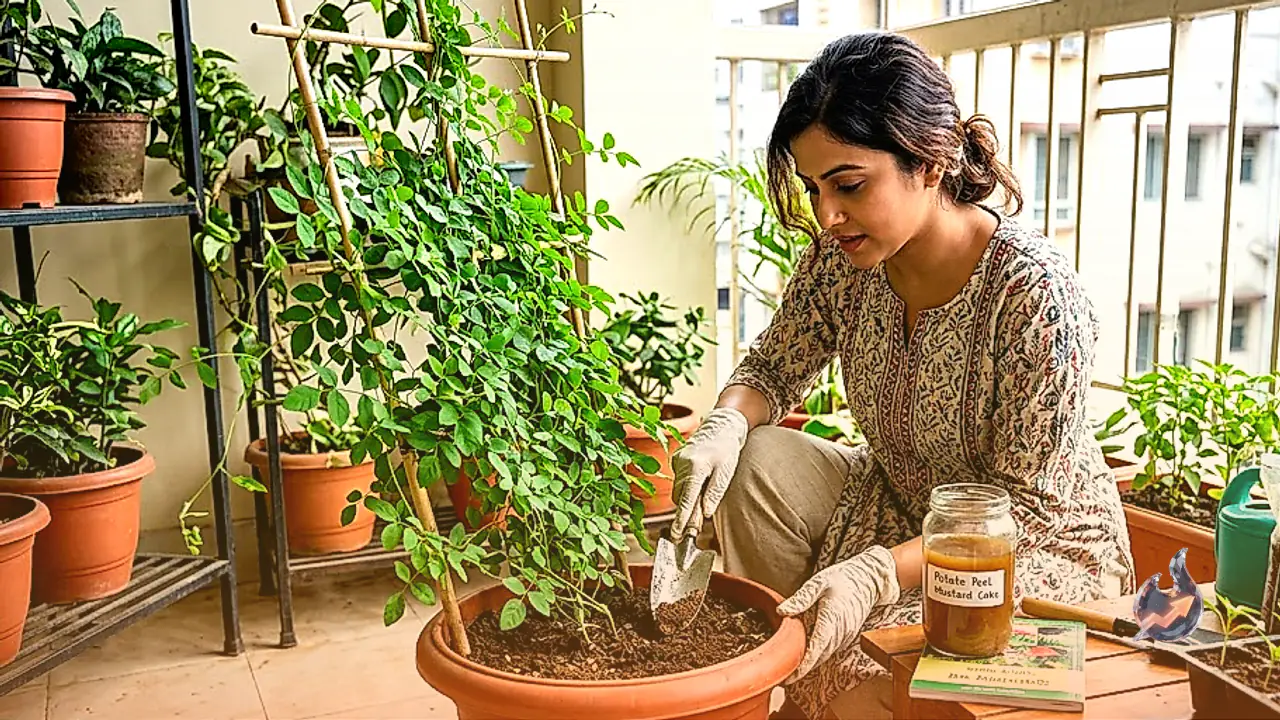
When an established vine displays dense greenery but stubbornly refuses to flower, gardeners can decrease regular vermicompost applications in favor of high-energy kitchen amendments. A highly potent liquid tonic can be made using yellow mustard and potato matter. Grind yellow mustard seeds into a fine powder using a mixer grinder. Similarly, pulverize dehydrated potato peels into a powder. If dried skins are unavailable, fresh raw potatoes can be pureed directly in the mixer grinder. Blend the potato mixture into water, stir in two to three tablespoons of yellow mustard powder, and leave the preparation to ferment overnight. Drenching the root zone with this liquid the following morning supplies natural starches and enzymes that prompt vigorous bud initiation.
An alternate quick technique involves processing yellow mustard seeds and whole potatoes together inside the mixer grinder. Blend this puree into water and allow the solution to rest undisturbed for 24 hours before pouring it directly into the potting soil. Additionally, spent tea leaves can be rinsed, dried thoroughly, and combined with a pinch of turmeric powder to be worked into the topsoil. For uninterrupted flowering, pluck mature blossoms on a daily basis, which signals the vine to continually produce fresh replacement buds. Amending the potting medium with seaweed granules also provides trace minerals that sustain resilient growth and consistent blooming cycles.