























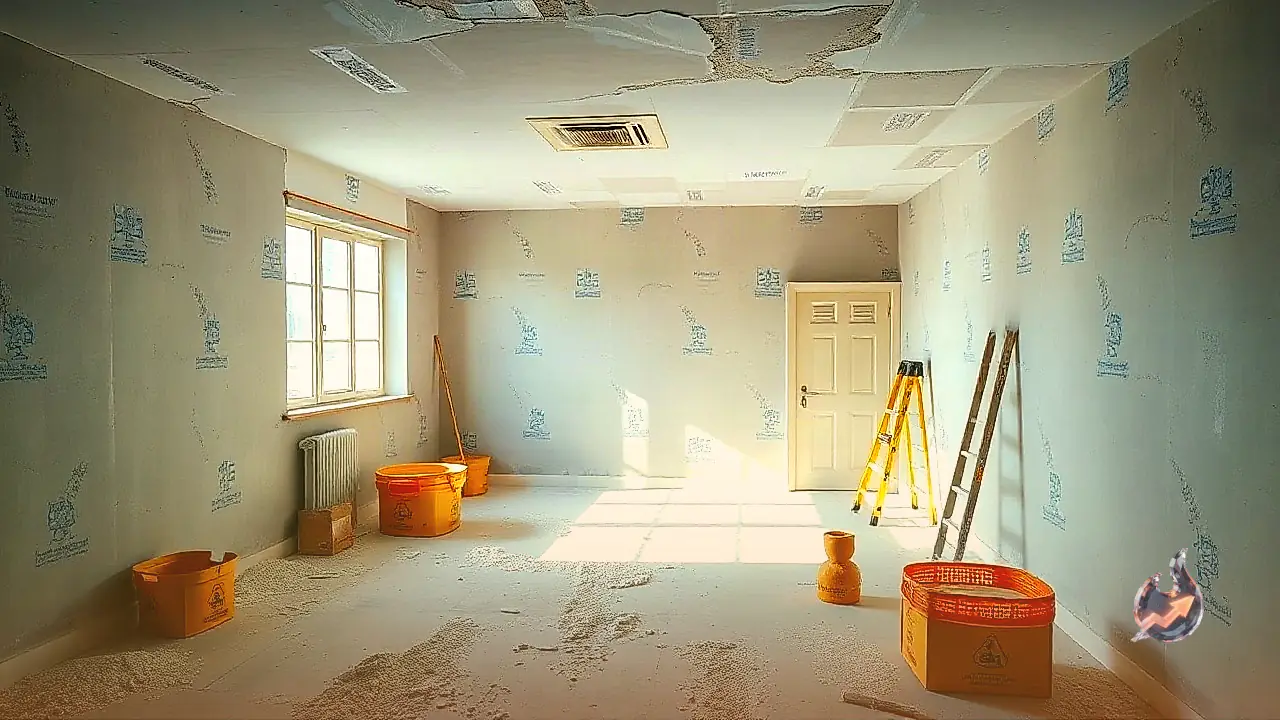

When constructing a house, plastering marks a critical phase that transforms raw brickwork into finished living spaces. Homeowners frequently encounter difficulties estimating the exact financial outlay required for finishing an individual room, often resulting in unanticipated budget overruns. For a standard 10x10 feet room, which measures 100 square feet, calculating the precise requirements for wall, ceiling, and floor plastering provides a practical benchmark for budgeting entire residential projects. Construction professional Virendra outlined the itemised expenditures covering sand, cement bags, and daily labor wages required to complete such a room.
Material Requirements and Pricing for Walls and Ceiling
The standard process begins with rendering the four perimeter walls alongside the ceiling overhead. According to Virendra, applying plaster strictly to the walls and ceiling of a 100 square foot room typically consumes approximately 40 to 45 cubic feet of sand. Based on prevailing local rates in Samastipur, procuring this volume of sand incurs an expenditure ranging between 1600 and 1800 rupees.
Regarding the bonding agent, the same work requires roughly 4 to 5 bags of cement. Factoring in an average price of around 320 rupees per bag of cement, the total outlay on cement stands between 2,000 and 2,400 rupees. Consequently, the combined expenditure strictly for sand and cement falls between 3600 and 4200 rupees. It is worth noting that variables such as the actual ceiling height, the applied thickness of the mortar layer, and regional retail fluctuations can shift these material totals slightly upward or downward.
Factoring in Floor Plastering and Daily Labor Costs
Incorporating floor plastering alongside the ceiling and wall surfaces substantially increases both material requirements and manual effort. Virendra pointed out that plastering the floor raises sand consumption to an estimated 55 to 60 cubic feet, carrying an estimated procurement cost of about 2200 to 2400 rupees. Simultaneously, cement requirements expand to approximately 6 to 7 bags, requiring an expense of roughly 2000 to 2400 rupees.
Labor charges represent another major component of the overall masonry budget. Executing the comprehensive plastering of walls, ceiling, and floor within a 100 square foot area requires approximately two and a half to three skilled masons alongside an equal number of manual laborers. Standard local labor markets establish daily wages at around 600 rupees for a skilled mason and approximately 500 rupees for a general laborer. Under these wage parameters, total labor compensation amounts to roughly 2750 rupees. Consulting local builders and material suppliers prior to initiating plastering ensures accurate expense planning aligned with prevailing market prices.